Let “Neverland” Move from Guide Vocal to the Singer
By Broadwaytrax Content Studio · September 22, 2026
Broadwaytrax offers two different Peter Pan recordings of “Neverland”: a (guide-vocal demonstration) and an (instrumental accompaniment track). The first helps a singer learn the line; the second lets the singer carry it. If a student, voice-studio performer, or community-theater cast practices only with the demonstration, the first accompaniment-only run may expose an uncertain entrance or a phrase that depended on the recorded voice.
The practical fix is a planned handoff between the two versions. Listen to the exact previews, check the score and production requirements, then rehearse the opening, a middle passage, and the ending without the teaching voice before calling the number ready.
Confirm which “Neverland” file you have
The product labels matter more than a filename saved on someone's phone. Broadwaytrax calls the guide version a demonstration vocal track and the other an instrumental-only accompaniment track. The (Peter Pan album) also separates guide-vocal selections from accompaniment-only selections. A preview is for listening and comparison; check the purchased file before sharing an approved rehearsal copy.
Write the version on your rehearsal list. “Neverland — guide vocal — learning” and “Neverland — accompaniment — independent run” tell the music director and performer what job each file does. Do not assume a guide file can remove the voice, or that a file from a different production will have the same arrangement, length, key, and cue points.
Learn landmarks, then remove the model
Start with the guide vocal while following the score or the authorized rehearsal material. Identify where the track begins, what the singer hears before the first entrance, and the audible landmarks after rests. Sing along only long enough to settle the melody, rhythm, and shape of the phrases.
Then try a small, repeatable sequence:
- Play the guide once and mark the first entrance, one internal return, and the ending.
- Speak or sing the opening without the guide singer while following the accompaniment.
- Run the difficult return twice, starting a phrase before the actual entrance rather than jumping directly onto the note.
- Sing the whole selected passage with accompaniment only and note the one place that still needs rehearsal.
The goal is not to copy a demonstration singer's every breath or inflection. The recorded line is a reference; the actor still needs a truthful reason to begin and a thought to carry through the music.
Check the song in the actual room
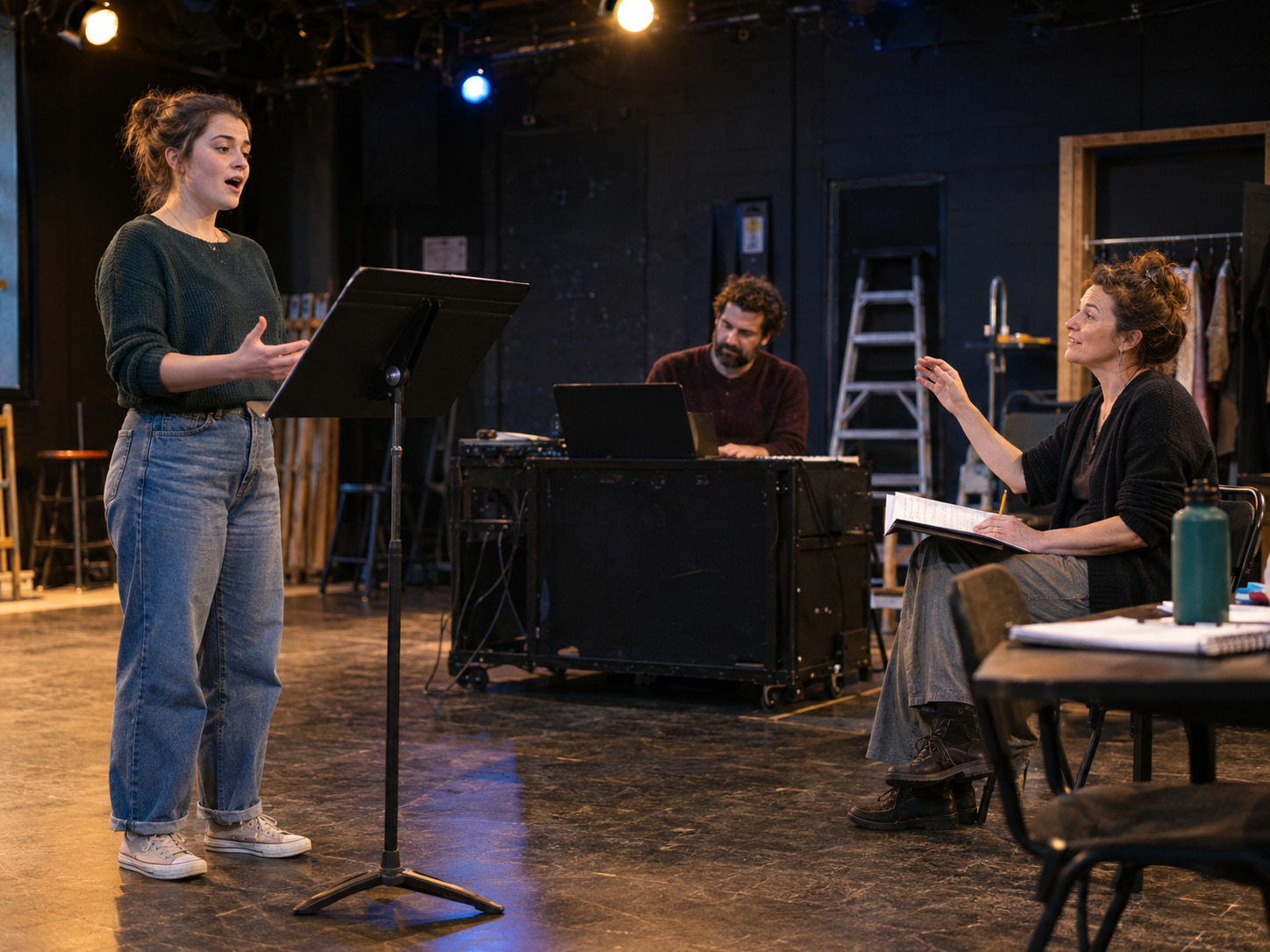
A singer may know the file well in headphones but lose the entrance after a spoken line, a movement, or a sound cue. Rehearse the event immediately before playback. Decide who starts the file, where the performer stands, what musical signal gives the first note, and whether the sound operator can hear the same cue.
If the line feels rushed, diagnose the cause before changing the tempo. Is the operator starting late? Does the intro provide too little preparation for the chosen staging? Is the singer waiting for the guide voice that will no longer be there? A count-in, adjusted lead-in, or rehearsal change solves a different problem from a slower entire track. (This guide to testing the first eight seconds) helps distinguish them.
Finish a run from the last phrase into the next stage action. The track's ending is part of the cue, not merely the end of the audio file. Let the performer and operator agree on what happens after it.
Decide whether a different key or cut is really needed
Do not order an edit based on one uncomfortable note in the first guide-vocal pass. Test the full intended passage in the actual key, with the performer singing independently and the agreed staging in place. If a repeatable mismatch remains, mark the exact start and end of the cut, the desired key or tempo, and the entrance or ending that needs to change. The (“Neverland” accompaniment page) is the relevant product starting point for an existing-track customization request.
Musical preparation and use permissions are separate. A Broadwaytrax recording license does not replace any required show or grand-rights permission. Confirm proposed changes and theatrical use with the appropriate publisher or rights holder; the (school theater-use guide) explains the distinction.
Before the accompaniment-only run
- Name the exact guide and accompaniment files; keep other versions outside the active folder.
- Mark the opening cue, a return after a rest, and the ending against the actual track.
- Test the singer's complete intended passage without the demonstration vocal.
- Run the spoken or visual event that triggers playback.
- Have the operator and performer agree on the start and the event after the final sound.
- Confirm the production's applicable recording and show permissions separately.
Is the guide vocal the same as the performance track?
No. Broadwaytrax lists a separate sung demonstration and instrumental-only accompaniment for “Neverland.” Compare the exact files and use the accompaniment when the singer needs to carry the line independently.
Should a singer practice with the guide vocal until opening night?
Use it for learning, then move to the accompaniment early enough to solve missing entrances and rests in rehearsal. The room should hear the version it plans to use well before a final run.
Listen to the accompaniment version, then compare it with the guide vocal and rehearse the exact file your singer will use.
Preview Neverland AccompanimentWhat if the standard accompaniment almost fits?
Document the repeatable key, cut, lead-in, tempo, or ending problem using the current file and score. Ask about an appropriate edit only after the performers and music director agree on the exact change.