One Song or the Whole Show? Scope the Track Work Before Rehearsal
By Broadwaytrax Content Studio · September 14, 2026
The shortest useful answer is this: customize one song when one song has one contained problem. Scope a full-show package when several numbers, transitions, or rehearsal teams need to work as one system.
The count alone does not decide it. Two difficult cues can require more coordination than ten catalog tracks that already fit. Before choosing a path, map what the cast will sing, what the stage will do, and which musical decisions have to stay consistent across the evening.
Start with the problem, not the package name
A single-track request usually begins with a local need. The singer needs another key. An approved audition cut needs a clean opening and ending. A dance section needs a few more counts. A spoken line needs a clearer lead-in.
A full-show need is different. The production is trying to keep many connected decisions aligned:
- keys across several roles and reprises;
- cuts that change later entrances or transitions;
- tempos shared by music and choreography rehearsals;
- overture, entr'acte, bows, scene changes, and underscoring;
- guide-vocal, rehearsal, performance, and backup versions;
- cue names and file order for the stage manager and playback operator;
- a consistent sound across the whole production.
If the problem can be described without referring to another number, one customization may be enough. If solving it changes what happens before, after, or elsewhere in the show, examine the full-show scope.
When one customized song is the clean choice
Choose a single-track path when the catalog version is already close and the requested change stays inside one piece.
Typical examples include:
- moving one song to a confirmed key for the current singer;
- making one approved cut for an audition, showcase, or licensed production;
- adjusting one tempo after the staging has settled;
- adding a countable lead-in or cleaning an ending;
- extending one repeat or vamp to support a specific stage action;
- preparing separate guide-vocal and accompaniment versions of the same number.
The request still needs detail. Name the exact source track, current and desired key, musical landmarks, use case, cue, and rehearsal deadline. The Broadwaytrax guide to (writing useful custom-track notes) explains how to turn a room problem into an edit someone can build.
Keep the approval path small. One music or production leader should collect the team's notes, resolve conflicts, and approve the proof. Three people sending separate instructions can turn a one-song edit into a larger coordination problem.
When the whole show needs one musical system
A full-show package becomes useful when consistency is part of the deliverable.
Consider the broader path when:
- several principal singers need different keys or rehearsal assets;
- cuts in one number affect a reprise, transition, dance break, or dialogue pickup;
- the production needs overtures, incidentals, scene-change music, or bows alongside main numbers;
- multiple departments are learning from different temporary files;
- the team needs coordinated revisions instead of isolated exports;
- a volunteer operator needs one complete, performance-ready cue sequence;
- the show must move from early rehearsals to tech without rebuilding its playback system.
This does not mean every track must be changed. A good full-show inventory separates catalog versions that already work from numbers that need custom production. The value is the shared plan: file roles, naming, sound, cue relationships, proofs, and final delivery all point to the same production.
Run a 20-minute scope meeting
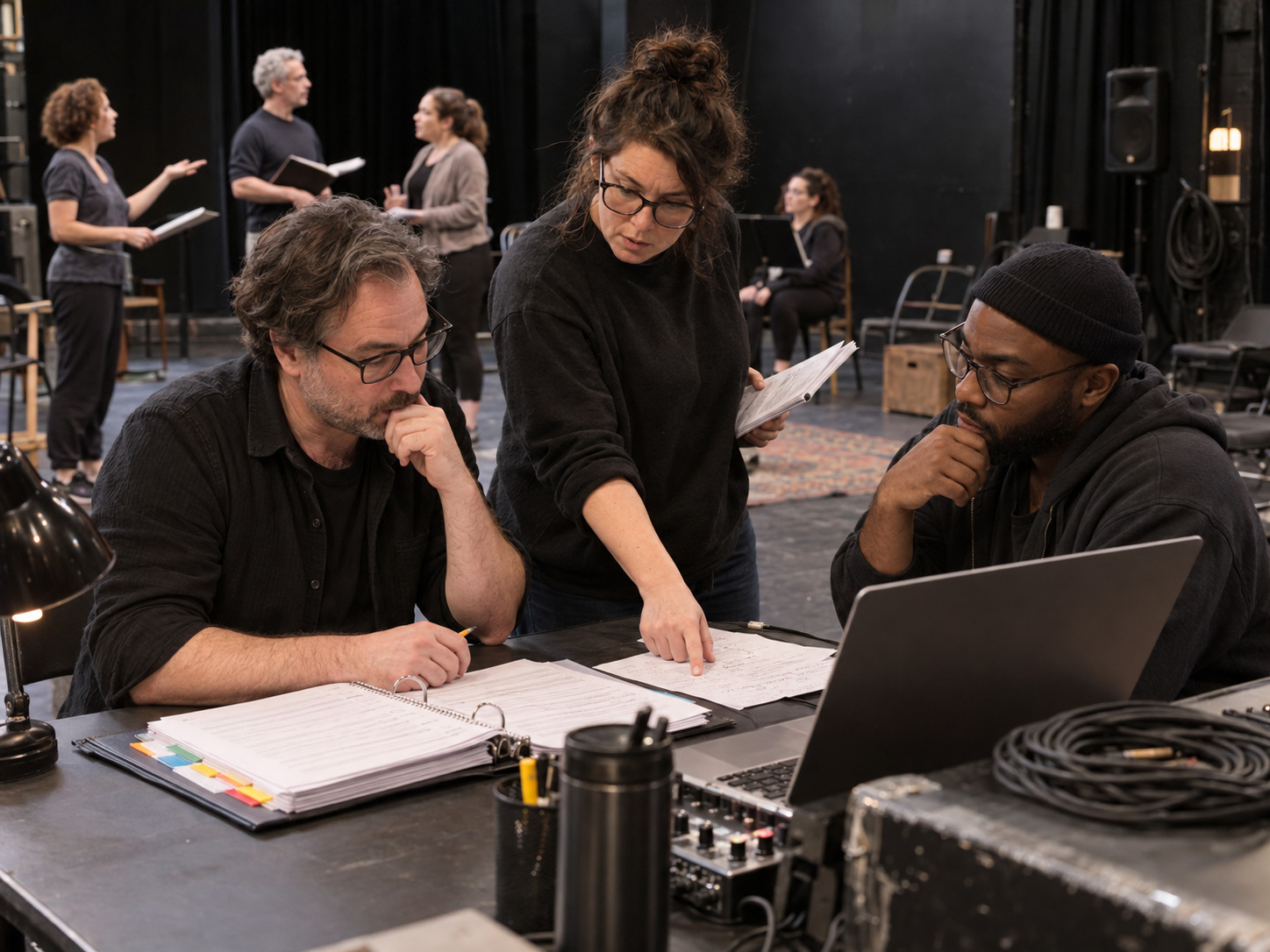
Bring the director, music director, choreographer, stage manager, and playback lead together before requesting a quote. The goal is not to solve every musical question. It is to find out whether the work is isolated or connected.
Use four columns:
| Number or cue | What works now | What must change | What else changes with it |
|---|---|---|---|
| Opening | Key and structure | Longer entrance music | Preset, first light cue, first vocal entrance |
| Solo | Tempo and ending | Lower confirmed key | Singer rehearsal file only |
| Dance number | Key and vocal sections | Extend dance break | Choreography count, next dialogue pickup |
| Bows | Nothing selected | New sequence needed | Curtain call order and applause plan |
Then mark each row:
- Contained: one edit can be tested and approved on its own.
- Connected: the change affects another cue, performer, department, or version.
- Unsettled: the production has not made the musical or staging decision yet.
Several connected rows usually point toward full-show coordination. Unsettled rows should not be rushed into final edits; schedule the decision and keep rehearsal drafts clearly separated from approved performance files.
Count versions as well as songs
One title can create several deliverables.
The cast may learn from a guide vocal, block with a rehearsal accompaniment, drill from a short loop, and perform with a final file. An understudy may need an alternate key. The operator needs a backup that exactly matches the active version.
List those jobs before comparing scope. Ten song titles do not mean ten files, and one custom number may require more than one intentional version.
The (full-show version map) offers a practical way to label guide-vocal, rehearsal, performance, alternate, and backup files. The (sound-operator cue-sheet guide) helps connect those files to the staged event.
Protect the show from premature custom work
Custom production should solve an approved need, not preserve a temporary rehearsal accident.
Before asking for a key, cut, tempo, vamp, or ending change, check:
- Has the singer or cast rehearsed the complete section in the proposed key and tempo?
- Is the staging stable enough to judge the timing?
- Is the cue being called from the right event?
- Does the problem repeat under the real rehearsal conditions?
- Has the appropriate production leader approved the requested change?
If the answer is no, keep a clear provisional note and test again. This avoids teaching the cast an edit the production will soon replace.
Prepare the quote without pretending every answer is final
Broadwaytrax's (custom-track page) separates single-track customization, full-show packages, and broader custom production. Its quote flow asks about the project, show, song list, needed date, available source materials, and musical notes.
Arrive with:
- the show and current production plan;
- a complete song-and-cue inventory;
- which catalog tracks already fit;
- confirmed keys, cuts, tempos, lead-ins, vamps, and endings;
- guide-vocal or rehearsal-version needs;
- the source materials the team actually has;
- the first date the cast needs usable files;
- one person responsible for approvals.
Label open decisions honestly. “Key pending after Thursday's sing-through” is more useful than a confident guess. A clear unknown can be scheduled; a hidden assumption becomes a revision.
Keep rights and recording work separate
Customizing a recording does not itself grant permission to perform a copyrighted musical, change protected show material, stream a performance, or distribute a recording. Confirm the production's show and performance permissions with the appropriate rights holder. Confirm recording use through the track provider.
Keeping those questions separate helps the production team discuss the musical build precisely without treating one license or purchase as permission for every use.
Questions production teams ask
Does a full show always require a full-show package?
No. If catalog tracks fit the production and only one number needs a contained change, one customization may be the cleanest path. Inventory the complete show first so the team knows the change is truly isolated.
Is three custom songs automatically a full-show project?
Not automatically. Three unrelated audition or concert pieces may remain separate. Three numbers inside one musical may need coordination if keys, reprises, transitions, cue order, or sound have to stay consistent.
Should we wait until tech week to decide?
No. Tech is the place to verify the finished playback system in the room. Start scope work early enough for the cast, choreographer, stage manager, and operator to rehearse with the intended versions.
What if our production plan is still changing?
Separate confirmed needs from provisional ones. Begin with the stable scope, name the decision dates for open items, and avoid calling a temporary rehearsal file final.
Can a full-show plan still use catalog tracks?
Bring Broadwaytrax the show, song list, source materials, confirmed musical changes, rehearsal deadline, and one approval contact. The custom quote flow can help separate a contained single-track edit from coordinated full-show production.
Scope Your Track ProjectYes. Coordinated production does not mean rebuilding music that already works. The inventory should preserve suitable catalog tracks and identify only the places that need custom support.
The right scope makes rehearsal calmer. Choose one customization when one approved change can stand alone. Choose full-show coordination when the production needs many files, people, and cues to tell the same musical story.