Wizard of Oz Backing Tracks for School Productions and Rehearsals
By Broadwaytrax Content Studio · May 13, 2026
Updated May 13, 2026
The Wizard of Oz feels familiar to almost every audience, but that familiarity raises the standard for a school or community theater production. The songs need to sound recognizable, the entrances need to be clear, and the rehearsal process has to support young performers, mixed-experience casts, choreography, scene changes, and tech-week cueing.
That is where a full-show backing track plan helps. The goal is not just to find a track for "Somewhere Over the Rainbow." The goal is to give the cast, director, music director, choreographer, stage manager, and sound operator one dependable musical map from first rehearsal through closing night.
Bring "Wizard of Oz Backing Tracks for School Productions and Rehearsals" to life with custom tracks
Get the exact arrangement you need—either customize an existing accompaniment or commission a bespoke build from our team.
Don't see this show in our library yet? We'll build it for you.Broadwaytrax offers (The Wizard of Oz full album), with guide vocal tracks for learning and accompaniment tracks for rehearsal and performance preparation.
Why Wizard needs more than one track
Many productions start by thinking about the famous solos. That is understandable, but the rehearsal challenges usually show up across the whole score: Munchkinland sequences, character songs, ensemble entrances, transitions, buttons, and numbers that need to line up with blocking.
A full-album workflow helps with:
- consistent tempos for choreography and staging,
- guide vocals for early learning,
- accompaniment tracks for performance preparation,
- clear starts and endings for the sound team,
- a shared show order for rehearsals,
- and fewer version mismatches between home practice and the rehearsal room.
If students practice from one file at home and rehearse from another in the room, entrances and cutoffs can drift. A coordinated track set keeps everyone listening to the same structure.
Use guide vocals early, then move toward accompaniment tracks
Guide vocal tracks are useful in the first part of rehearsal because they model melody, entrances, phrasing, and general song shape. They are especially helpful for younger actors, ensemble singers, and students who learn faster by ear.
The transition matters. Once the cast knows the material, start moving to accompaniment-only tracks so singers learn to carry their own entrances and storytelling. Do not wait until tech week to remove the guide vocal safety net.
A practical sequence looks like this:
- First music rehearsals: guide vocals for melody and entrances.
- Blocking rehearsals: the same track structure with cue notes added.
- Run-throughs: accompaniment tracks only.
- Tech rehearsals: final show-order files, exact starts, and backup playback.
Build the show-order folder before rehearsal gets messy
The Wizard of Oz can involve many hands: director, music director, choreographer, classroom teacher, parent volunteers, sound operator, and stage manager. A simple shared folder prevents confusion.
Before staging begins, create a production folder with:
- the final track list in show order,
- guide vocal and accompaniment versions labeled clearly,
- cue notes for starts, stops, reprises, and transitions,
- any approved cuts or custom edit requests,
- backup copies for the sound operator,
- licensing receipts and theater-use documentation.
Track names should be boring and obvious. During a rehearsal or performance, nobody should have to guess which file is final.
Watch the common cue trouble spots
Most backing track problems are practical, not musical. The song may be correct, but the production needs a cleaner lead-in, a longer transition, or a button that supports the staging.
Listen early for questions like:
- Does the cast hear the first entrance clearly?
- Does choreography need a few more counts?
- Does a blackout or scene shift need a longer musical bridge?
- Does a young performer need a more comfortable key?
- Does the ending line up with applause, dialogue, or movement?
- Does the sound operator have enough time to trigger the next cue?
These questions are easier to solve before the cast has spent weeks rehearsing the wrong version.
When custom edits help a school production
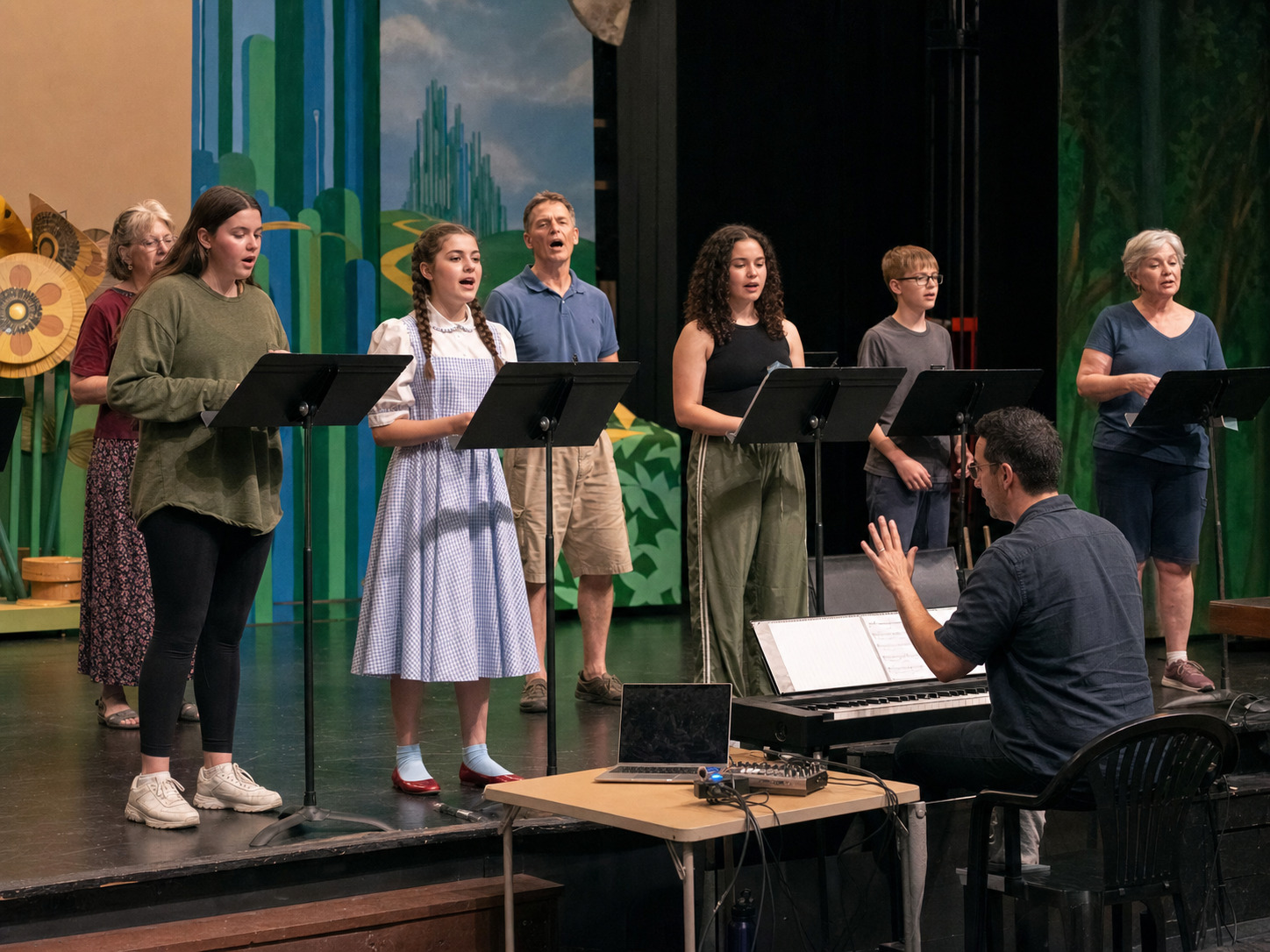
Stock tracks can be the right foundation, but school and community casts often need production-specific support. A custom edit is useful when the track is close but the staging needs something more exact.
Common Wizard of Oz requests include:
- key changes for student voices,
- shorter audition or showcase cuts,
- tempo adjustments for choreography,
- extended intros or vamps for movement,
- cleaner endings for scene transitions,
- guide vocal versions for early learning,
- and cue-friendly starts for the sound booth.
Broadwaytrax can also help with (custom tracks, keys, cuts, tempos, cues, and full-show packages) when a production needs the music built around the cast instead of forcing the cast around the file.
Licensing before public performance
Backing tracks and show rights are separate planning items. A theater-use license for a Broadwaytrax recording covers use of the sound recording in performance. It does not replace the grand rights or theatrical performance license needed to stage the musical.
Before rehearsals are announced or performances begin, confirm:
- the organization has permission to perform The Wizard of Oz,
- the track files are licensed for the intended use,
- any cuts or changes are allowed by the rights holder,
- video, streaming, archival recording, or social clips are handled separately if needed,
- and the production team knows where the rights paperwork and track receipts are stored.
Quick checklist for Wizard of Oz backing tracks
Use this before the first music rehearsal:
- Choose whether the production needs the full album, individual tracks, guide vocals, or custom edits.
- Label guide vocal and accompaniment files clearly.
- Build a show-order playback folder.
- Mark cue starts, stops, transitions, and buttons.
- Test the key and tempo for principal singers.
- Identify choreography or scene-change sections that may need edits.
- Test playback through the actual sound system.
- Keep a backup copy on another device.
- Confirm show rights and track-use permissions separately.
FAQ: Wizard of Oz backing tracks
Can backing tracks work for a full Wizard of Oz school production?
Yes. A full-show backing track plan can support rehearsals and performances when the production needs consistent accompaniment without relying on a full pit. The key is using a coordinated track set and clear cue plan.
Should students rehearse with guide vocals?
Guide vocals are useful early for learning melody, entrances, and phrasing. Move toward accompaniment-only tracks before tech week so performers can sing independently.
Can the tracks be changed for our cast?
Often, yes. Common custom requests include keys, cuts, tempo changes, vamps, lead-ins, and cue-friendly endings. Decide early so the cast rehearses the final structure.
Does a track license include the rights to perform the show?
No. Track licensing covers use of the recording. Theatrical performance rights for the musical are handled separately through the appropriate rights holder or licensing agency.
The takeaway
Rehearse The Wizard of Oz with a complete Broadwaytrax album that includes guide vocals, accompaniment tracks, instant MP3 downloads, and theater-use licensing options.
View the Wizard of Oz AlbumThe Wizard of Oz works best when the music feels secure enough for the story to move. A complete backing track plan gives the cast consistent rehearsal support, gives the production team clearer cues, and gives the sound operator a cleaner path into performance.
Start with the (Broadwaytrax Wizard of Oz full album), then identify any keys, cuts, tempos, or cue edits your production needs before rehearsals lock in.