Using Backing Tracks to Teach Musical Theatre Performance
By Broadwaytrax Content Studio · February 25, 2026
Updated February 25, 2026
Imagine a room where the music starts with a click. Your student's eyes light up. The story begins. Many singers today face auditions with both a live pianist and self-tapes at home. Backing tracks help them stay steady and focused in both situations. Most Equity auditions have an accompanist, but practicing with tracks builds timing and trust (Actors’ Equity). Self-tapes also demand clear audio and understandable words, which backing tracks support (Casting Society).
Choosing the Right Track Start with a good track. Pick a key that allows high notes to shine without straining. A good rule is to select the lowest key where the high notes still sound bright. If the last phrase feels tight, try lowering by a half step. Use a guide vocal version to model phrasing for a few runs, then mute it. This encourages students to develop their own ideas. Aim for a cut of 45 to 75 seconds, and keep both 16-bar and 32-bar cuts handy for in-person auditions (Musical Theater Common Prescreen).
The Count-In is Important Teach a breath plan that stays the same. If there is a two-bar count, have the student stay calm in the first bar, then breathe on the 4 of the second bar. This habit can lower anxiety and start the song with confidence.
Building the Cut Focus on a story with a clear start, lift, and finish. Trim long intros and cluttered sections. If there's a vamp, decide whether to take it or skip it, and stick to your choice. Place any modulation where the voice is ready, not just where it appears in the song. Time breaths to make them reliable. For fermatas or endings, time them once and copy that length across your runs to maintain a confident finish.
Use a track-led plan for your lessons. In a short 25-minute session, start with a 5-minute warmup, loop two trouble spots for 10 minutes, run the full cut, give three notes, and then run it again. For longer 50-minute sessions, set the target tempo and gradually adjust it. Tracks make these changes exact, and you can hear where words blur or breath plans fail. Mark those areas to correct them.
Drills for Success with Tracks For rhythm work, use a track from Company. Speak the consonants on beat at a slower tempo, then sing at full speed. This pairs well with our focused tips on Sondheim’s rhythm in Company, which you can find here: (Company Audition Tips). To practice, try the album here: (Company Accompaniment Album).
For belt control, Dreamgirls is perfect. Teach the student to start the first big belt softly to allow for growth to the final note. Tracks help maintain tempo, so singers should shape the song with vowels, not speed. Use this resource for practice: (Dreamgirls Full Album).
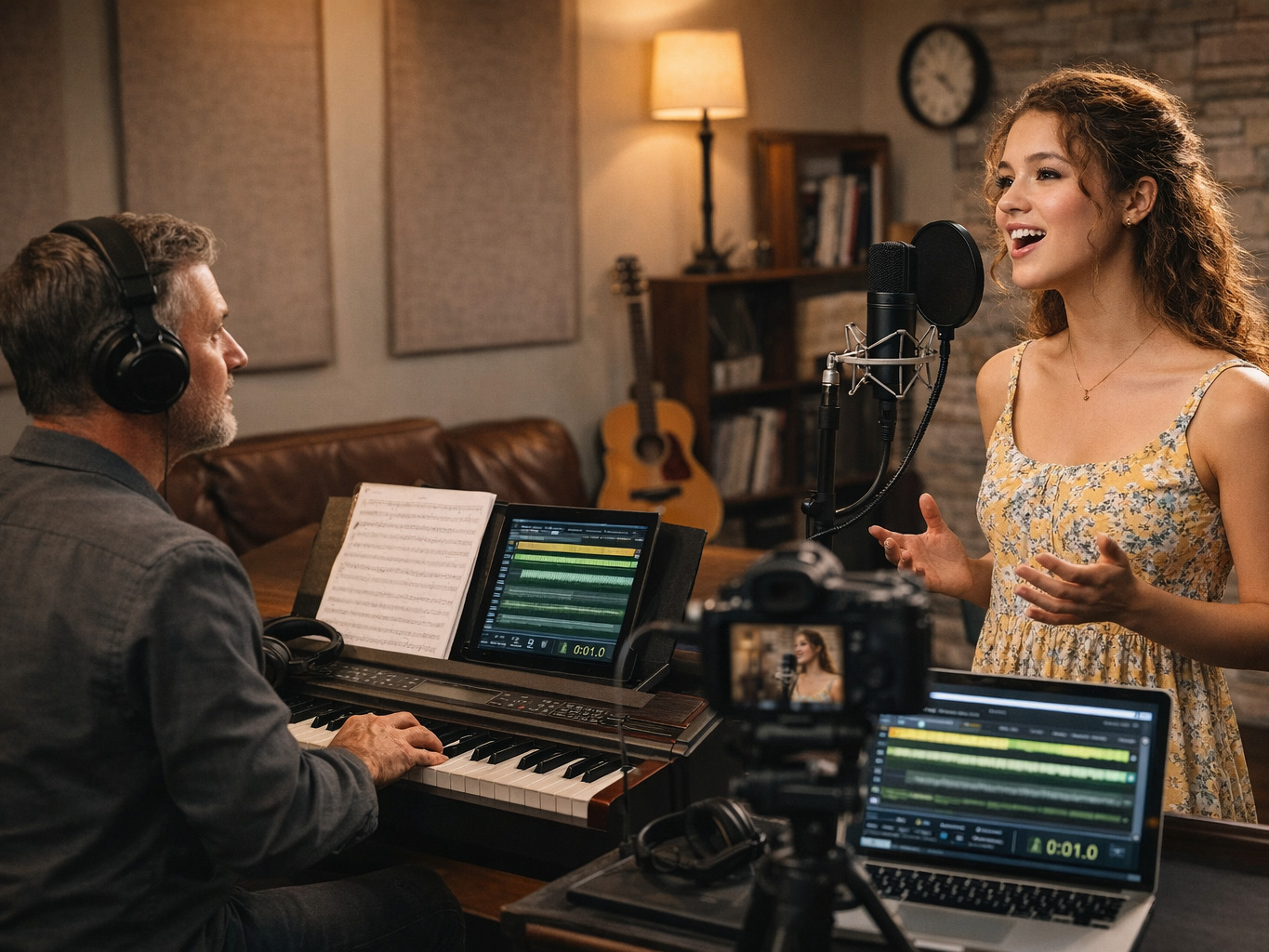
Self-Tape Tips For self-tapes, a phone mic can work if set 3 to 4 feet away at chest height. The backing track should be a few decibels softer than the voice. Avoid Bluetooth devices because they can cause delays. Use a wired speaker or monitor pointing at the camera so you sing into the lens, not down (Casting Society). Keep the slate and song in one take to feel natural. Practice the whole thing with the track.
Simulate the audition room to calm nerves. Do three full takes without stopping. If a mistake happens, encourage your student to breathe and stay on beat. This skill is vital both on camera and in person. Build their stress tolerance with timed entrances. Start the music, count, and go without resets. The goal is not perfection but readiness.
Preparing for Auditions As auditions approach, keep two paths open. For Equity auditions, you will hand music to the pianist. Clearly mark cuts, vamps, fermatas, and tempo notes on the sheet music. Bring a short spoken map of the cut so the pianist follows along (Actors’ Equity). Your experience with tracks helps you lead with confidence. For self-tapes, confirm the file format and length before recording (Musical Theater Common Prescreen).
Create custom rehearsal tracks to practice and prepare for performance.
Start a Customization TodayIn the day before the audition, back up your track on multiple devices. During the test, set your speaker volume so the mic doesn't clip. Practice the intro timing so it feels natural. On audition day, trust your plan, press play, and tell your story.
Good tracks do more than keep pitch. They help focus and show where the story lives. When your student can deliver their cut three times in a row, you know they're ready for the stage or the lens.