Spelling Bee Rehearsals Work Better When Every Cue Is Named
By Broadwaytrax Content Studio · May 21, 2026
Updated May 21, 2026
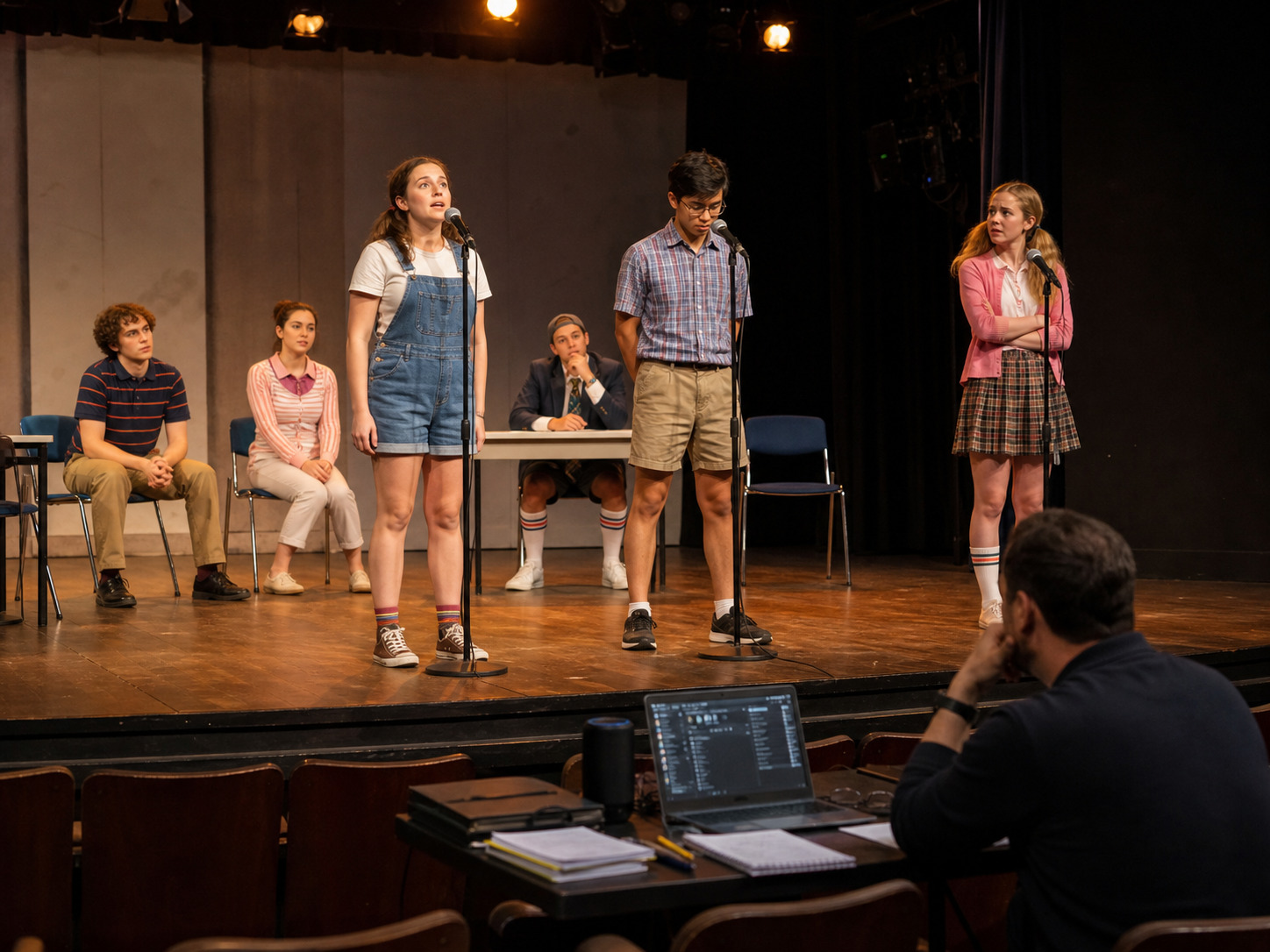
The 25th Annual Putnam County Spelling Bee is funny because it feels loose. In rehearsal, that looseness has to be engineered. The score depends on quick entrances, character interruptions, underscored jokes, and small cue points that can drift if the room is only following memory.
A backing track plan gives the cast and sound operator a shared map. Broadwaytrax offers the (full Spelling Bee album), with guide vocal tracks for learning and accompaniment tracks for rehearsals, auditions, and production planning.
Bring "Spelling Bee Rehearsals Work Better When Every Cue Is Named" to life with custom tracks
Get the exact arrangement you need—either customize an existing accompaniment or commission a bespoke build from our team.
Don't see this show in our library yet? We'll build it for you.Start with the cue sheet, not the playlist
Before the first full run, build a simple cue sheet that names every musical start, stop, pickup, and transition. Spelling Bee has numbers that can feel conversational, but the track still needs a precise entrance point.
For each song, write down:
- who gives the cue;
- whether the cue follows dialogue, blocking, or a visual action;
- which track version is being used;
- whether guide vocals are still part of rehearsal;
- where the ending, button, or transition lands.
That document does not need to be complicated. It just needs to be clear enough that a substitute rehearsal pianist, stage manager, or sound operator can understand the plan without guessing.
Use guide vocals while character choices are forming
Guide vocal tracks are useful early because the cast is learning more than notes. They are learning where the joke sits, where a breath belongs, and how a phrase hands off to the next character.
Use guide vocals when the cast is first learning entrances, harmonies, and song structure. Then move toward accompaniment tracks once the singers can carry the material. If the guide vocal stays too long, performers may follow the demo instead of listening to the scene.
Rehearse interruptions and restarts deliberately
Spelling Bee is full of moments that can change energy quickly. A laugh can land longer than expected. A pause can stretch. A character choice can slightly change the handoff into the next musical phrase.
That is why the production team should rehearse the material around the song, not only the song itself. Practice the line before the cue, the first measure, the final cutoff, and the next spoken moment. Those edges are where most track problems show up.
Check keys and cuts before habits settle
The (Spelling Bee album) gives a strong rehearsal foundation, but every cast is different. A school production, college group, or community theater cast may need a key change, shorter rehearsal cut, clearer lead-in, or cue-friendly ending.
If a track is close but not exact, Broadwaytrax can help with (custom track work), including keys, cuts, tempos, lead-ins, and production-specific edits. Make those decisions early so the cast rehearses the version it will actually use.
Keep licensing separate from show rights
A theater-use license for a Broadwaytrax recording covers use of the sound recording. It does not replace the grand rights or theatrical performance license needed to stage the musical.
Before performance week, keep three things together in the production file: the show license, the track-use receipt or license, and the final show-order cue sheet. That protects the school or theater and gives the production team a clean record of what was approved.
A practical rehearsal workflow
A simple sequence works well:
- Listen through the album with the music director, director, and stage manager.
- Mark songs that need guide vocals during early rehearsals.
- Build a show-order folder with final file names.
- Add cue notes for starts, stops, buttons, and transitions.
- Move to accompaniment-only tracks before full runs.
- Test the exact playback device and speakers before tech.
- Keep backup files available for the sound operator.
The goal is not to make the show rigid. The goal is to make the music dependable enough that the actors can stay playful.
FAQ: Spelling Bee backing tracks
Can a school rehearse Spelling Bee with guide vocals?
Yes. Guide vocals can help students learn entrances, phrasing, and ensemble timing. Move toward accompaniment tracks once the material is secure.
What should the sound operator know before tech?
The operator should have the final show-order folder, cue sheet, track versions, and notes for starts, stops, fades, and any custom edits.
Can tracks be adjusted for a specific cast?
Often, yes. Common requests include key changes, rehearsal cuts, cue-friendly intros, tempo adjustments, and cleaner endings.
Does buying a backing track license the show?
No. Track licensing and show performance rights are separate. Confirm both before public performances.
Rehearse Spelling Bee with the Broadwaytrax full album, including guide vocal tracks, accompaniment tracks, MP3 downloads, and theater-use licensing options.
View Spelling Bee AlbumThe takeaway
Spelling Bee works best when the room can move quickly without losing the cue. Start with the (Broadwaytrax full album), teach with guide vocals, rehearse the handoffs, and request (custom edits) when the production needs keys, cuts, or cues shaped around the cast.