Peter Pan Rehearsals Need Tracks That Help the Room Fly
By Broadwaytrax Content Studio · May 27, 2026
Updated May 27, 2026
Peter Pan looks simple when the audience sees flying, pirates, Lost Boys, and a story everyone already knows. In rehearsal, the score asks for something much more practical: steady cues, clean entrances, confident young performers, and tracks that keep the room moving when staging changes from week to week.
For schools and community theaters, the music plan often has to support a mixed cast. Some singers may be comfortable with musical theater phrasing. Others may be learning how to count, enter after dialogue, or stay with an accompaniment track while moving. That is why a full-album plan matters before tech week.
Bring "Peter Pan Rehearsals Need Tracks That Help the Room Fly" to life with custom tracks
Get the exact arrangement you need—either customize an existing accompaniment or commission a bespoke build from our team.
Don't see this show in our library yet? We'll build it for you.Start with the numbers that organize the room
The fastest way to make rehearsals calmer is to treat each song as a production cue, not just a track title. Build a shared list that includes:
- The show order for every rehearsal and performance version
- Whether the room is using accompaniment tracks, guide vocals, or both
- Who gives the start cue
- Where dialogue or choreography leads into the track
- Which songs need extra count-ins, vamps, or ending notes
- Any keys, cuts, or tempo adjustments requested for the cast
The (Peter Pan full album) is the best starting point because it keeps the show together instead of forcing the team to assemble production music one song at a time. From there, individual accompaniment tracks and guide vocal tracks can support the rehearsal details.
Match the track plan to how the show actually rehearses
A director may begin with scenes and blocking. A music director may want to drill vocals. A choreographer may need repeatable tempo for movement. If those plans live separately, the cast can end up learning three different versions of the same moment.
A useful production track plan gives everyone the same reference. For a song such as "I'm Flying," the cast needs the pulse, the entrance, the musical shape, and the staging count to agree. For ensemble numbers, the room needs to know whether guide vocals are helping early in rehearsal or whether singers should switch to accompaniment-only tracks by a specific date.
That switch matters. Guide vocals are useful while the cast is learning lines, harmony, and entrances. Accompaniment tracks are what the production ultimately needs to trust for performance.
Watch the transitions around dialogue and movement
Peter Pan has moments where the problem is not the song itself. The problem is what happens right before the song starts.
Common pressure points include:
- A spoken line that has to land before the first note
- A group entrance that follows movement or staging business
- A young cast waiting too long after a cue
- A soloist rushing because the track feels exposed
- A scene change that needs more music, less music, or a cleaner start
Mark those moments early. If the production needs a lead-in, a cut, a repeated section, or a slightly different key, it is better to know that while rehearsals are still flexible. Broadwaytrax can help with (custom keys, cuts, tempos, and cues) when the stock track needs to fit a specific staging choice.
A practical rehearsal sequence
Use the tracks in stages instead of waiting until the final run-through.
- Learn the song with guide vocals so singers hear entrances, melody shape, and endings.
- Rehearse the same number with accompaniment tracks while the music director still has time to stop and reset.
- Add staging and choreography only after the cast can find the track entrance reliably.
- Create a tech-week playlist in exact show order, with file names that match the calling script.
- Run transitions separately so the stage manager, operator, and performers agree on the cue language.
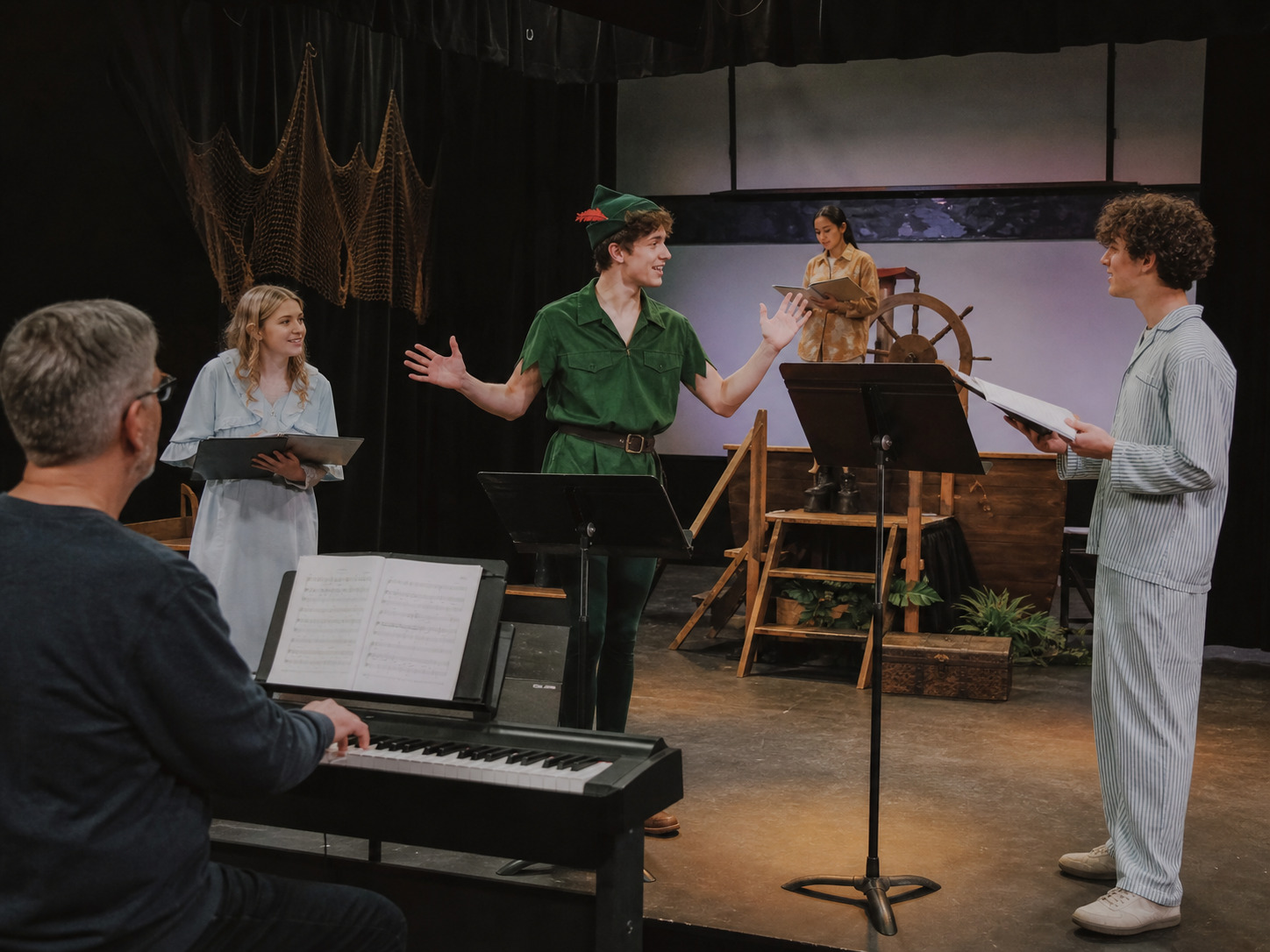
That sequence helps prevent the most common track problem: the cast knows the songs, but the room does not know how the songs begin.
What to decide before ordering custom edits
Not every production needs custom work. But if the cast, staging, or venue calls for changes, get specific before requesting them.
Useful notes include:
- The current key and requested key
- The exact measure or lyric where a cut should begin and end
- Whether the ending needs to hold, button, fade, or continue under dialogue
- Whether a dance break needs more counts
- Whether the track needs a spoken cue, click, or lead-in
- Whether the performance license and theater-use needs are already understood
For licensing questions, keep the same distinction in mind that applies to every school or community production: show rights and recording rights are separate. Broadwaytrax theater-use licensing covers use of the sound recording. It does not replace permission to perform the musical.
FAQ: Peter Pan backing tracks
Can a school use backing tracks for a full Peter Pan production?
Yes, if the production has the proper show rights and the track use is licensed for the intended setting. A full album gives the team a consistent accompaniment source for rehearsal and performance planning.
Are guide vocals helpful for young casts?
Often, yes. Guide vocals can help singers learn entrances, melody, and phrasing before the room moves to accompaniment-only rehearsal.
What if a song sits too high or too low for the cast?
A key change can make a major difference, especially for young performers or mixed-experience community casts. Identify the singer's comfortable range before tech week so the track can support the performance instead of forcing it.
Should we rehearse with tracks before choreography is finished?
Yes. The earlier the cast learns to enter with the track, the easier it is for choreography, blocking, and scene transitions to settle around the same musical map.
The takeaway
Start with the full Peter Pan album, then add guide vocals, custom keys, cuts, and cues as your cast plan takes shape.
View Peter Pan AlbumThis show works best when the music feels light, confident, and organized. Start with the full album, use guide vocals while the cast is learning, move to accompaniment tracks before tech, and request custom edits only where the production actually needs them.
When the rehearsal room shares one track plan, the story has more room to fly.