The Sound of Music Works Because the Family Story Comes First
By Broadwaytrax Content Studio · November 26, 2025
Updated May 13, 2026
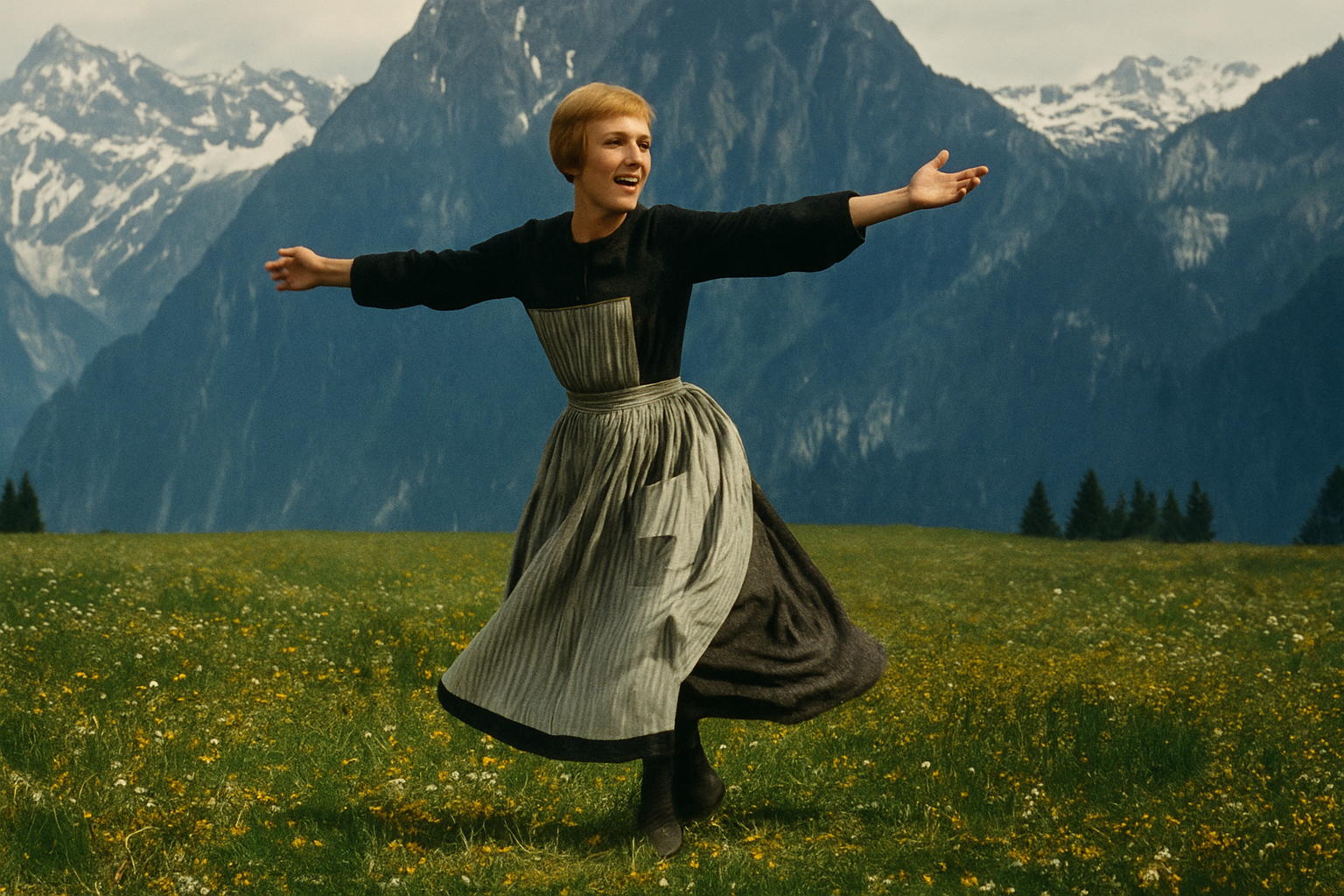
A young woman steps into the hills and listens. The wind seems to sing. She answers with a clear, open tune. From that first moment, The Sound of Music shows us what this story values: music as hope and music as home.
The plot is simple and strong. Maria is a postulant in an Austrian abbey. She becomes a governess for the seven von Trapp children. Their father is a widowed Navy captain. His house is silent and strict. Maria brings songs, play, and care. The family wakes up again. As the shadow of Nazism grows, they must choose courage and leave their country together. It is a love story and a family story, told through melody.
Bring "The Sound of Music Works Because the Family Story Comes First" to life with custom tracks
Get the exact arrangement you need—either customize an existing accompaniment or commission a bespoke build from our team.
Don't see this show in our library yet? We'll build it for you.This was the final collaboration of composer Richard Rodgers and lyricist Oscar Hammerstein II. The book is by Howard Lindsay and Russel Crouse, and the show is based on Maria Augusta Trapp’s memoir, The Story of the Trapp Family Singers (R&H). Their craft is steady and clear. The lyrics are plain on purpose. The tunes sing like speech. Yet each song serves a purpose in the story. Nothing is extra.
The Broadway premiere opened at the Lunt-Fontanne Theatre in 1959 and ran for 1,443 performances, placing it among the long-runners of its time (IBDB). At the Tony Awards, it tied for Best Musical with Fiorello! and both Mary Martin (Maria) and Patricia Neway (Mother Abbess) earned acting honors (Tony Awards). Those details matter, but the lasting power comes from how the music feels inside a listener’s body.
Signature Songs
Start with the title song. The Sound of Music is a gentle waltz in 3/4 time. The melody opens like a view across a valley. Maria listens before she sings, which shapes her character. Directors often have the landscape respond to her. This matches the show’s idea of nature as a safe place (R&H). For performers, let consonants lead and keep the pulse light. A bit of rubato at phrase ends makes the song feel more human.
Do-Re-Mi is the show’s engine. It teaches through play, with each solfège word as a building block. We watch the children learn music and trust. This sequence can be adapted for teaching, as it allows flexibility without losing flow (R&H). In rehearsals, plan clear breath points so young voices do not rush.
My Favorite Things transforms fear into joy. The list is simple, but the rhymes are sharp. The song often appears in winter concerts, even though it isn’t a holiday piece. In rehearsals, allow the piano or strings to create a gentle feel. Use a small pause before each new line to highlight comfort, not speed.
Sixteen Going on Seventeen is a lively dance. The melody feels like a conversation. The reprise sung by Maria and Liesl changes the meaning—from advice to shared trust. Shape dynamics across both versions so the story’s growth is clear. In rehearsal, ensure enough breath before the last phrases so they feel natural.
Edelweiss may be the quietest song in the score, yet it carries deep weight. It reads like a private prayer to home and is the last song Rodgers and Hammerstein wrote together (R&H). Use spare textures, like guitar or plucked strings, to support the emotion. Keep the Captain’s delivery raw and genuine, allowing the reprise to bloom later.
The Act I finale, Climb Ev’ry Mountain, is a powerful call to action. The Mother Abbess sings with warmth and strength. Treat the higher notes as advice rather than just volume. Plan breaths carefully. If you have organ colors or sustained strings, they add to the sound without overwhelming it (Tony Awards).
Many know the show from the 1965 film with Julie Andrews and Christopher Plummer. The movie added I Have Confidence and Something Good, which are now licensed for many stage productions (R&H). The film won five Academy Awards, including Best Picture, which helped share the story worldwide (R&H).
Production History
The original Broadway run was a hit, helping to define the late golden age style (IBDB). A Broadway revival in the late 1990s introduced the show to a new generation, and a major West End revival in the 2000s did the same in the UK. Live TV events in the 2010s showed that it could reach homes in a big way (R&H). Today, schools and community theaters often produce it, and tourism in Salzburg thrives on the story’s fame (R&H).
Performance Tips for Educators
As you prepare in Fall 2025, keep the waltz heartbeat central. The score is often in 3/4, so let the words carry the rhythm. Use folk colors for smaller groups: a guitar or harp can evoke an alpine feel without a large orchestra. In musical sequences like Do-Re-Mi and Sixteen Going on Seventeen, extend pauses only for staging moments. Long holds can tire performers. Choose keys that work for the story. Edelweiss can be a whole step lower for baritones, while Climb Ev’ry Mountain may sit best at its original pitch or a half-step down for blend.
For auditions, match the role to the material. A Maria who leads with The Sound of Music shows clarity and heart. A Captain who sings Edelweiss with honest tone shows truth over bravado. For Mother Abbess, plan the ascent in Climb Ev’ry Mountain with breath strategy, not just volume. In concerts, think about pairing My Favorite Things with a string medley and closing with a community sing on Climb Ev’ry Mountain. This fits the season and invites the audience to join.
Rehearse with full-orchestra backing tracks from The Sound of Music.
Download the AlbumAs you listen, notice how Rodgers lifts hope in ascending lines, like in Climb Ev’ry Mountain. Watch how play becomes learning in Do-Re-Mi, where small phrases grow into a complete scene. Hammerstein’s plain words invite a conversational style that feels personal. Their craft is invisible, and that is why it feels so impactful (R&H).
More than just a beloved movie, this show connects people to themselves. It teaches, comforts, and calls us to act. That is why these songs continue to resonate year after year.