The Music Man Turns Rhythm and Salesmanship Into Community Theater Gold
By Broadwaytrax Content Studio · November 25, 2025
Updated May 13, 2026
A stranger arrives in River City, Iowa, and claims the town is in trouble. This leads to excitement, rhythm, and community spirit. Welcome to The Music Man. It's not just about a con artist; it's about how a community can come together and create something real.
Creative Team
Meredith Willson wrote the book, music, and lyrics, along with Franklin Lacey. Because one person creates the score, the songs feel like a single conversation. This unity makes the show resonate with audiences today (Music Theatre International).
Bring "The Music Man Turns Rhythm and Salesmanship Into Community Theater Gold" to life with custom tracks
Get the exact arrangement you need—either customize an existing accompaniment or commission a bespoke build from our team.
Don't see this show in our library yet? We'll build it for you.Synopsis
Harold Hill, a traveling salesman, arrives in River City. He frightens the townsfolk about “trouble” and sells them instruments and uniforms for a boys’ band, with no plan to teach them. Marian Paroo, the librarian, sees through his charm. Yet as the town's enthusiasm grows, Marian's feelings for him soften. By the end, belief turns into action. The con turns into a real band, showing how the community finds its voice (Music Theatre International).
Signature Songs
The music sets the stage for transformation. “Ya Got Trouble” is a captivating song about persuasion, filled with quick words that create a sense of urgency. “Seventy-Six Trombones” transforms fear into hope as it becomes an anthem of dreams. “Goodnight, My Someone” offers a gentle contrast, connecting the characters of Marian and Hill. “Till There Was You” serves as an honest confession that has taken on a life of its own. “The Wells Fargo Wagon” spreads joy, while “Shipoopi” brings joy to the ensemble (Music Theatre International).
Premiere History
The Music Man first played on Broadway in 1957 for 1,375 performances. It won five Tony Awards in 1958, including Best Musical, and surprisingly beat out West Side Story that year (Wikipedia).
Notable Revivals
Revivals of the show keep it alive. The 2000 Broadway revival introduced it to new fans. The 2022 revival, featuring Hugh Jackman and Sutton Foster, presented it through a modern lens. This version examined how charm and salesmanship can influence a community's beliefs positively or negatively (The New York Times).
Cultural Impact
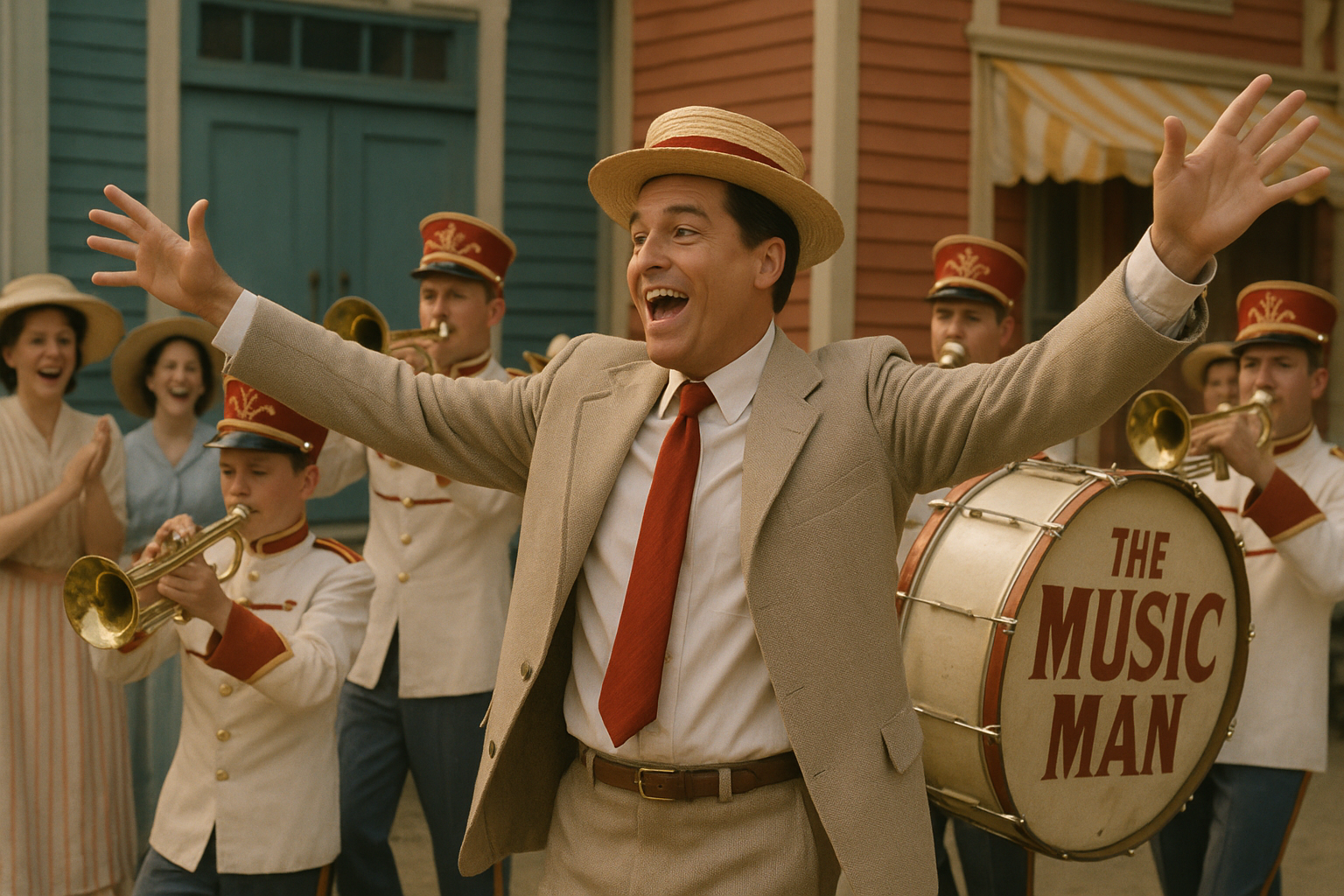
In today's world, where we hear loud voices and quick fixes everywhere, The Music Man reminds us that charm should be responsible. Hill's slick words can incite fear, but music can unite a community through teamwork. As the children raise their horns, parents cheer, showing how trust is built in practice, not just talk.
Consider using songs for training. In rehearsals, pair “Goodnight, My Someone” with “Seventy-Six Trombones.” This showcases the character connections through melody. When staging “Ya Got Trouble,” consider it a town hall discussion rather than a showy solo, ensuring Harold's convincing words speak clearly.
Casting Notes
River City comes to life best with a diverse cast that reflects its audience. Harold Hill is best portrayed by a baritone with a crisp, agile singing style. Marian should have a strong soprano voice, especially for “Till There Was You” (Music Theatre International).
Education Connections
The show works well in schools. Partner it with lessons on persuasive language. The barbershop quartet offers humor and insights into singing in harmony, perfect for group warm-ups. It can also guide students to recognize how Hill uses persuasion effectively.
Rehearse The Music Man with fully-orchestrated backing tracks.
Download the AlbumListening and Practice Tips
Study recordings carefully. In “Ya Got Trouble,” focus on clear syllable divisions. In “Seventy-Six Trombones,” plan breaths to allow energy to flourish. In “Till There Was You,” keep lyrics clear to showcase the heartfelt message.
Reflecting on The Music Man, we see it has a timeless structure. It teaches us that while charm can sway us, music has the power to unite. The story encourages us to choose the kind of sound our community can create together. That is why it continues to matter.