The King and I Still Challenges Performers to Listen Before They Lead
By Broadwaytrax Content Studio · December 1, 2025
Updated May 13, 2026
A teacher steps off a ship into a new land carrying books, pride, and a promise to herself. Across from her is a king who needs to prove his country’s strength. This is the beginning of The King and I. In this spotlight, we explore how the show tells a story about power and personal freedom, not just romance. Unlike our recent article on The Sound of Music, we focus on politics and culture, along with how artists stage these ideas carefully today.
The story unfolds in the 1860s in Siam, now known as Thailand. Anna Leonowens, a British governess, is hired to teach the king’s many children. She seeks respect and a home, while the king desires knowledge on his own terms. Their conflict drives the story. Around them, the royal court flows with tradition. Young lovers, Tuptim and Lun Tha, hide a tender secret. The king’s first wife, Lady Thiang, watches over her family and the nation with clear eyes. By the end, we see how change affects everyone involved (Rodgers & Hammerstein).
Bring "The King and I Still Challenges Performers to Listen Before They Lead" to life with custom tracks
Get the exact arrangement you need—either customize an existing accompaniment or commission a bespoke build from our team.
Don't see this show in our library yet? We'll build it for you.Creative Team and Source Material Richard Rodgers wrote the music, and Oscar Hammerstein II wrote the book and lyrics. The musical is based on Margaret Landon’s novel, which draws from Anna Leonowens's own writings about her time in the royal court. Jerome Robbins instilled movement into the original production with the famous Act II ballet, The Small House of Uncle Thomas. This ballet tells an anti-slavery tale in a Siamese style and pushes the king to confront his own power (Rodgers & Hammerstein).
Premiere History The King and I opened on Broadway at the St. James Theatre on March 29, 1951, with Gertrude Lawrence as Anna and Yul Brynner as the king. The show ran for more than three years and became a major hit. Brynner's portrayal of the king became iconic, and he returned to the role for revivals and tours. The 1956 film featuring Deborah Kerr and Yul Brynner further popularized its music (Rodgers & Hammerstein).
Signature Songs Audiences easily recall the score. Getting to Know You builds trust in a classroom. Hello, Young Lovers carries private grief with grace. I Whistle a Happy Tune shows courage for a child and the adult guiding her. The March of the Siamese Children breathes character into ceremony. We Kiss in a Shadow and I Have Dreamed reveal the quiet pains of forbidden love. Something Wonderful lets Lady Thiang express leadership through care. And Shall We Dance? goes beyond a dance; it’s a choice both partners risk (Rodgers & Hammerstein).
Notable Revivals Many stagings have changed how we view the piece. The 1996 Broadway revival refreshed its design and context. The 2015 Lincoln Center Theater revival, directed by Bartlett Sher and featuring Kelli O'Hara and Ken Watanabe, highlighted lush sound and rich details, winning multiple Tony Awards, including Best Revival. This revival has become a reference point for productions today (Lincoln Center Theater). PBS Great Performances broadcast a filmed version of the London Palladium production, allowing teachers and students a closer look at the staging and choreography (PBS Great Performances).
Cultural Impact Why does this musical still matter now? It reflects a real debate about power. In the 1860s, Western nations were colonizing Asia. Siam aimed to remain independent. The king strives to show the West that his country is educated and modern but still true to itself. Anna’s lessons appear friendly but carry political weight. Objects like cutlery and books serve as tools that can either open doors or set rules. The royal court’s grand displays play the same role. They compel the world to respect Siam. This tension is what drives the show forward (Rodgers & Hammerstein).
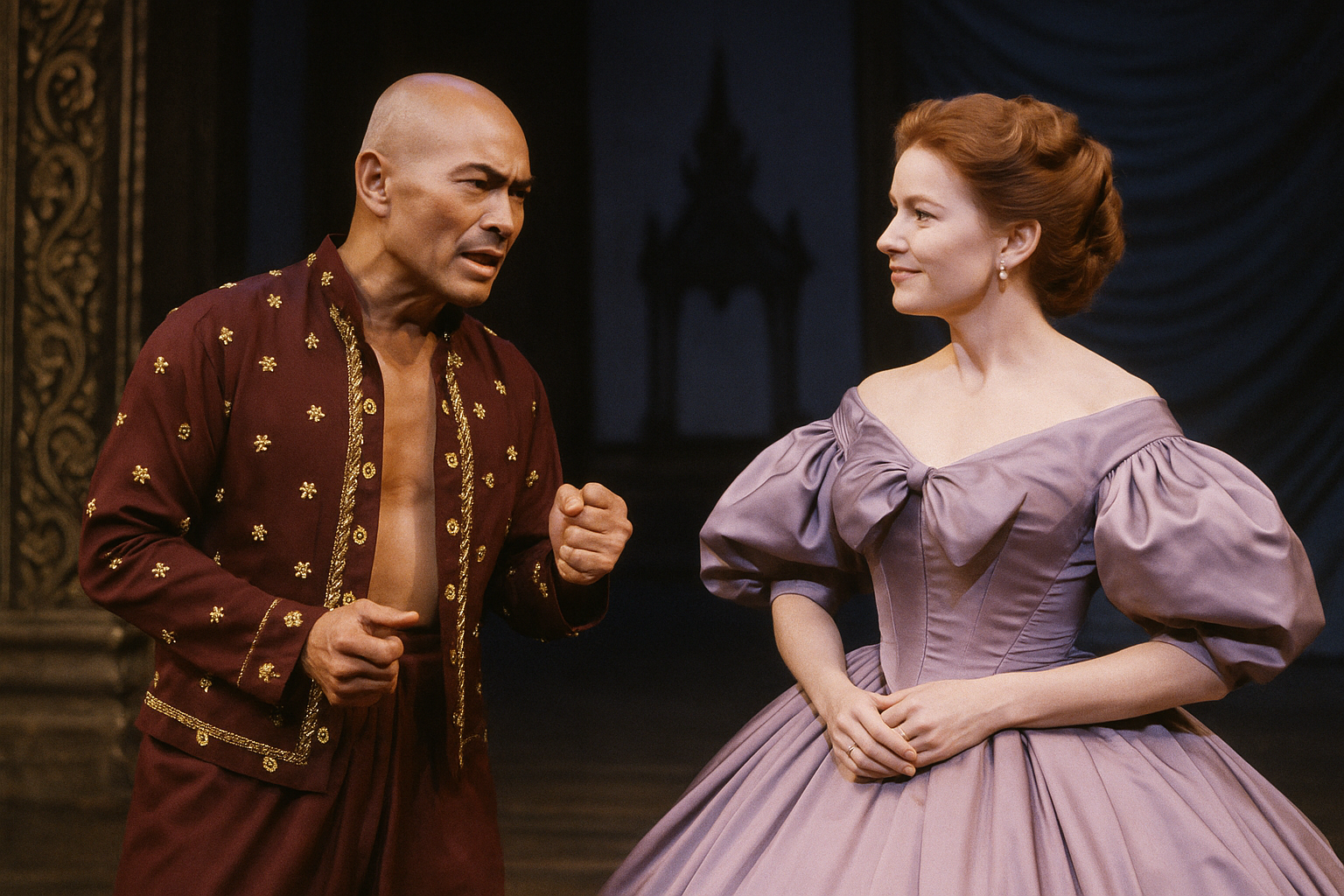
Personal Freedom in Relationships The theme of personal freedom runs through every relationship. Anna stands firm in her beliefs, asserting that a woman can define her own space. Tuptim and Lun Tha dream of a life beyond the palace, despite the walls closing in. Lady Thiang longs for peace at home and within her nation, knowing love and duty can coexist even when difficult. These choices may seem simple but bear deep significance.
Choreography as Storytelling In The Small House of Uncle Thomas, a familiar Western tale is told by court dancers through masks and gestures. The ballet becomes a safe way to express a dangerous idea: freedom for those enslaved, hinting at the freedom of all people under the king's care. This artistic expression raises the stakes for reform, as the king can no longer ignore what is right (Rodgers & Hammerstein).
Current Best Practices for Artists Artists today can keep the material strong by using three key practices: First, ground the production with real research to understand Siam's history, especially from the 1950s perspective. Second, honor culture through careful casting, dialect, movement, and design. Finally, provide context for audiences via program notes, lobby displays, and talkbacks to help families and students appreciate the story. Sher's revival model—combining full orchestral sound with thoughtful politics—is a strong reference point for this season (Lincoln Center Theater).
To help performers highlight agency in their roles, focus on how Anna’s gentle patience in Getting to Know You works alongside her firm resolve. For Lady Thiang, approach Something Wonderful with a strategic mindset, balancing affection with political savvy. For Tuptim and Lun Tha, convey the costs of secrecy with breath and stillness rather than loudness. Educators can pair scenes with short historical notes, encouraging students to identify where power shifts occur within a song. Incorporating full-color backing tracks can assist young actors in expressing the majesty of the court's environment, especially in classroom settings.
Bring Siam’s palace to your rehearsal room with full-orchestra backing
Download the AlbumIf you want to see the world on its feet, the 2015 revival materials and clips provide clear examples of acting, spacing, and tone (Lincoln Center Theater). The PBS capture of the London Palladium production offers a high-quality viewing experience, complete with helpful extras for lesson plans (PBS Great Performances).
Conclusion The King and I continues to resonate because it raises important questions in simple words and music. How do we bridge our differences? What must a leader sacrifice to keep their people free? And what will we risk to stand by our own names? The score is beautiful, and the visuals are stunning. At its heart lies a simple image: two people circling the floor, choosing to move together.
In The King and I, the polka is also a treaty.