Sweeney Todd Turns Precision, Fear, and Comedy Into One Score
By Broadwaytrax Content Studio · January 8, 2026
Updated May 13, 2026
A fog blankets Fleet Street. A whistle slices the air. People gather to hear a chilling story. Sweeney Todd is not a warm musical. It is sharp, cold, and thrilling. This show invites us to consider tough questions about anger, class, and how far someone will go when broken by the world.
The show has music and lyrics by Stephen Sondheim and a book by Hugh Wheeler. It is based on Christopher Bond's play. The original Broadway production was directed by Harold Prince, with orchestrations by Jonathan Tunick and music direction by Paul Gemignani(MTI). They built a world that feels both grand and gritty. It is billed as a musical thriller, a title that fits its tone and pace.
Bring "Sweeney Todd Turns Precision, Fear, and Comedy Into One Score" to life with custom tracks
Get the exact arrangement you need—either customize an existing accompaniment or commission a bespoke build from our team.
Don't see this show in our library yet? We'll build it for you.The story centers on Benjamin Barker, a good barber torn from his family by a corrupt judge. Years later, he returns to London as Sweeney Todd. He encounters Mrs. Lovett, who runs a failing pie shop. His need for revenge grows into a terrifying plan that pulls her in. Justice darkly twists into a grim business.
Listen closely to how the score tells this story. Sondheim mixes operatic moments with music-hall style. The opening number, The Ballad of Sweeney Todd, sets a fierce rhythm. The waltz-time songs sound charming, but danger lurks beneath the surface. Tunick’s orchestrations paint the city in rich, dark colors. A recent revival featured an orchestra of 26 musicians, restoring the powerful sound(Playbill). The brass dazzled, the strings soared, and the drums beat like footsteps in a narrow lane.
The score is full of unforgettable moments. The Worst Pies in London offers quick jokes and energetic sounds. My Friends wraps warm feelings around cold steel. Green Finch and Linnet Bird and Johanna float gracefully, like caged songs longing for freedom. Pretty Women unveils a twisted connection through melody. Epiphany unleashes raw passion. A Little Priest turns dark thoughts into playful wordplay. Not While I’m Around gives a brave promise in a cruel world.
The show carries weight from history. The original Broadway production opened in 1979 at the Uris Theatre, featuring Len Cariou and Angela Lansbury. It ran for 557 performances and won eight Tony Awards, including Best Musical and Best Score, reflecting both skill and the emotional impact of the story(IBDB).
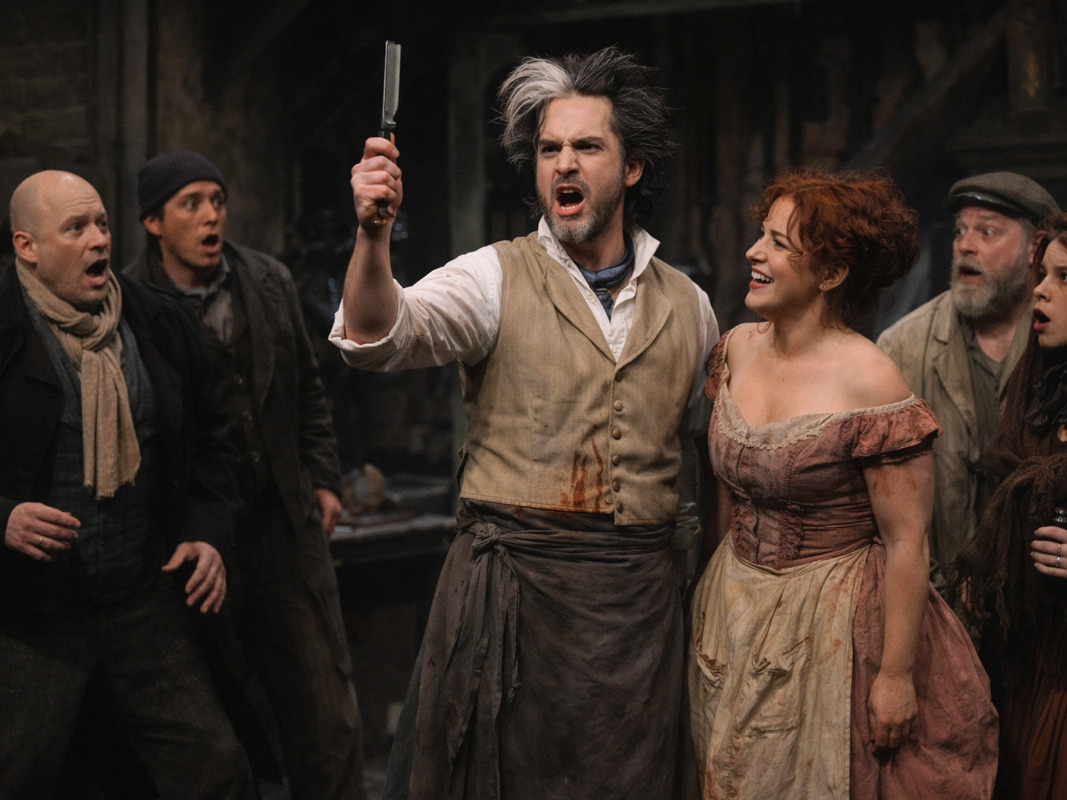
Revivals continue to uncover new aspects. An intimate 1980s version brought danger close. In 2005, director John Doyle staged actors with instruments on stage. That approach added focus, making the text pop. A later immersive pie shop experience placed audiences close to the action. Most recently, a grand revival showcased the show’s full scale, with Tunick's orchestrations roaring in a big Broadway venue. Each revival proves the story works both lean and lush.
Sweeney Todd's cultural impact spans beyond the stage. Tim Burton's film adaptation introduced the story to new viewers and stamped it onto pop culture. The musical often sparks discussions about horror themes and morally complex heroes.
For performers and educators, the challenges are clear. Clarity of text is key, especially in The Worst Pies in London and A Little Priest. In My Friends and Pretty Women, keep the smooth flow without losing the scene's intensity. Epiphany needs stamina and control to keep the passion from muddling. Ensembles must have precise diction and tempo, or the show risks losing its drive. Teach students to understand recurring musical themes so they see how meanings change.
Bring Sondheim’s razor-sharp score into your room. Download the complete Sweeney Todd accompaniment album.
Download the AlbumWhy does this story resonate today? At its heart, it explores how pain turns into a cycle that harms everyone. Themes of class struggle, corrupt power, and rage make the show feel timely. The recent revival reminds us how the scale of music shapes emotions. This can guide even smaller productions in planning clear sounds and contrasts.
Start your listening experience with the original Broadway cast to grasp the foundation. Then, compare a smaller revival with a full-orchestra version. Notice how the same melody can feel like a lullaby in one setting and a threat in another. Educators can assign one ballad, one fast song, and one ensemble piece to study how the music drives the story. This musical cuts deep. It is thrilling, beautiful, and brave enough to ask hard questions about justice.
At its heart, Sweeney Todd asks what revenge costs, and who pays.