Mamma Mia Backing Tracks for School and Community Theater
By Broadwaytrax Content Studio · May 14, 2026
Updated May 14, 2026
Mamma Mia looks simple from the audience because the songs are familiar. In rehearsal, it is a different story. The score asks singers to lock into pop grooves, fast entrances, tight ensemble vocals, and scene changes that can feel loose if the room is guessing at the track.
That is where a clear backing track plan helps. Schools, community theaters, voice studios, and small production teams can use guide vocals early, accompaniment tracks later, and a full-show album when the cast needs one consistent musical reference from the first read-through through tech week.
Bring "Mamma Mia Backing Tracks for School and Community Theater" to life with custom tracks
Get the exact arrangement you need—either customize an existing accompaniment or commission a bespoke build from our team.
Don't see this show in our library yet? We'll build it for you.Broadwaytrax offers the (Mamma Mia full album), with guide vocal tracks and accompaniment tracks for the show. The useful question is not simply whether to use tracks. It is how to use them at the right stage of rehearsal.
Start with the full-show map
Before the cast starts drilling individual songs, build a simple track map for the production. List every musical number, whether the cast will rehearse with guide vocals or accompaniment only, and whether the production needs a custom cut, key, lead-in, or cue adjustment.
For Mamma Mia, that map matters because the show has several different kinds of musical work:
- Solo-driven songs that need a comfortable key and a clean entrance.
- Ensemble numbers that depend on steady pulse and choreography.
- Scene transitions where the track cue has to land at the right emotional moment.
- Finale and reprise material that needs confidence, not surprise.
If the track plan lives only in the music director's head, tech week becomes harder than it needs to be. Put the plan where the stage manager, choreographer, sound operator, and rehearsal team can all see it.
Use guide vocals early
Guide vocal tracks are especially helpful in the first part of a Mamma Mia rehearsal process. They show entrances, melody, phrasing, and the shape of the arrangement before the cast has enough repetition to sing confidently on its own.
Use guide vocals when teaching ensemble entrances, helping new singers understand the form of a song, rehearsing outside scheduled calls, giving understudies a stable reference, or checking whether a cut still makes musical sense.
The important part is to retire the guide vocal at the right time. Once the cast knows the material, move toward accompaniment-only tracks so the singers stop leaning on the demo and start listening to each other.
Move accompaniment tracks into staging rehearsals
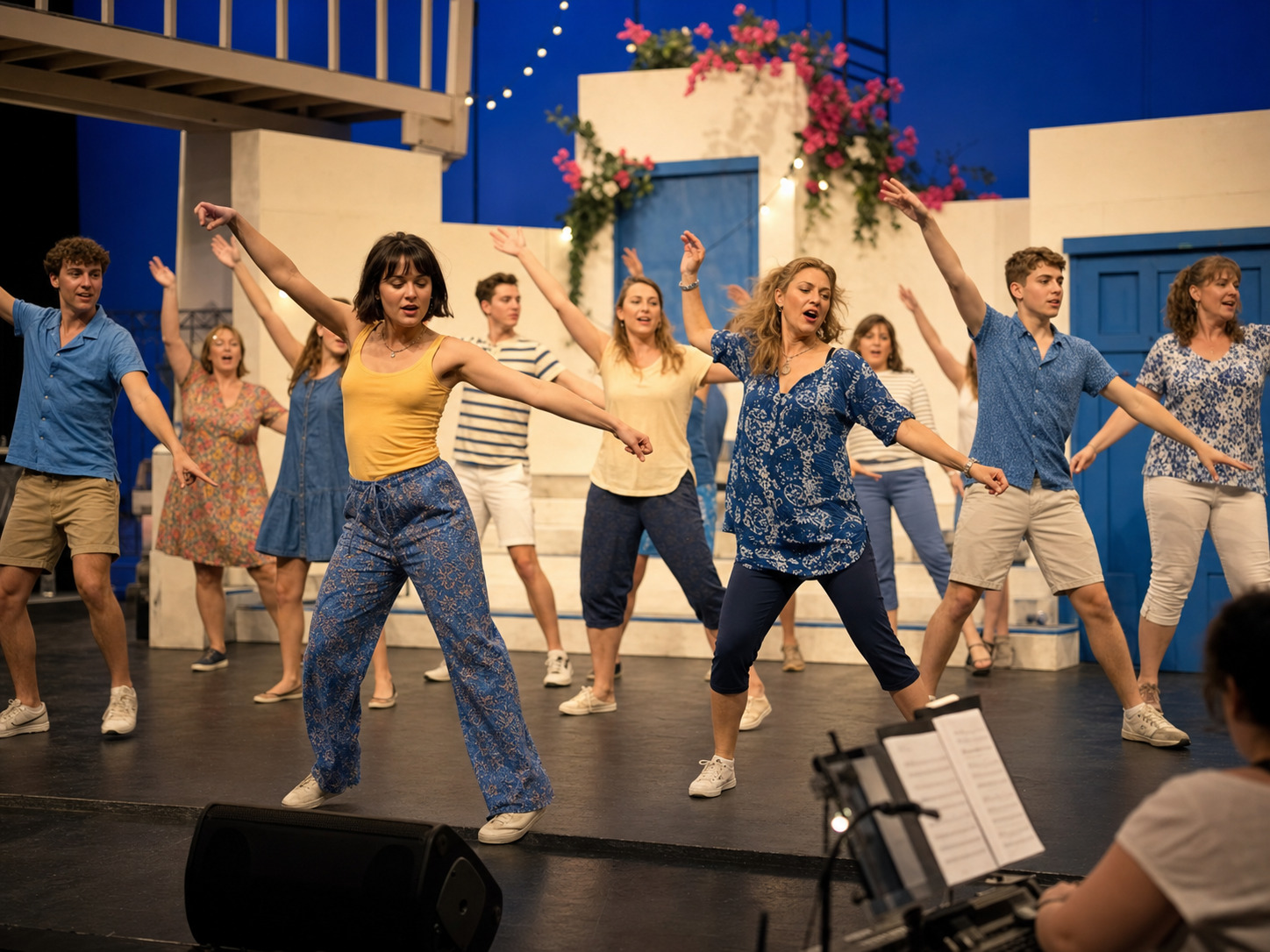
Mamma Mia lives in rhythm. Choreography, scene energy, and vocal phrasing all need the same pulse. That makes accompaniment tracks useful before tech, not only during performances.
When staging the larger numbers, rehearse transitions into and out of the track. The first measure matters. So does the final button. If the cast only practices the middle of the song, the show may still feel uncertain when the sound operator presses play.
For each major number, mark who gives the cue, whether the cue is visual or verbal, whether there is a count-off or lead-in, where the track should stop or fade, and whether the next scene begins over applause, underscoring, or silence.
Check keys before habits form
The (Mamma Mia album) is built around the show arrangement, but every cast is different. A school production, adult community theater cast, or mixed-age ensemble may need a different approach for a featured singer.
Do not wait until final runs to find out that a key is uncomfortable. Test the solo material early, especially songs that sit high, build emotionally, or need a clean final phrase after movement.
If a catalog track is close but not exact, Broadwaytrax can support (custom track work) such as key changes, cuts, tempos, lead-ins, and cue edits. The best custom request is specific: name the song, describe the issue, and explain how the moment works on stage.
Keep licensing clear
Backing tracks and show rights are separate. A theater-use license for a Broadwaytrax recording covers use of the sound recording in performance. It does not replace the grand rights or performance rights required to stage Mamma Mia.
For schools and theaters, the practical checklist is simple:
- Secure the proper show license from the rights holder.
- Confirm whether the production will use live musicians, tracks, or a hybrid.
- License the Broadwaytrax recording for theater use when using the recording in performance.
- Keep receipts and license details with the production file.
That keeps the music plan clean for directors, administrators, and anyone approving the show budget.
FAQ: Mamma Mia backing tracks
Can schools use Mamma Mia backing tracks for rehearsals?
Yes, backing tracks can be useful for rehearsals, vocal learning, choreography, and production planning. For public performances, make sure the production has the required show rights and the correct license for any recording used in performance.
What is the difference between a guide vocal and an accompaniment track?
A guide vocal includes a reference singer so the cast can learn melody, phrasing, and entrances. An accompaniment track is the performance-style backing track without the guide singer.
Can a Mamma Mia track be changed for a singer?
When a track needs a different key, cut, tempo, cue, or lead-in, a custom track request may be the right solution. Send clear notes before the cast has built habits around the wrong version.
Rehearse Mamma Mia with the full Broadwaytrax album, including guide vocal tracks, accompaniment tracks, theater-use licensing options, and custom edit support.
View the Mamma Mia AlbumThe takeaway
Mamma Mia works best when the music plan is organized before the show gets loud. Start with the (Broadwaytrax Mamma Mia full album), teach with guide vocals, move toward accompaniment tracks, and request (custom edits) when the production needs keys, cuts, cues, or lead-ins built around the cast.