Little Shop of Horrors Backing Tracks for Rehearsal and Performance
By Broadwaytrax Content Studio · May 3, 2026
Updated May 3, 2026
Little Shop of Horrors moves fast once rehearsal begins. The score needs tight doo-wop entrances, comic timing, clear character vocals, and steady momentum through songs that can fall apart if the cast is guessing at cues. Backing tracks help, but only when the rehearsal plan matches the way the show actually works onstage.
For directors, music directors, schools, and community theatres, the goal is not just to find a track for each song. The goal is to build a track workflow the cast can trust from the first music rehearsal through closing night.
Bring "Little Shop of Horrors Backing Tracks for Rehearsal and Performance" to life with custom tracks
Get the exact arrangement you need—either customize an existing accompaniment or commission a bespoke build from our team.
Don't see this show in our library yet? We'll build it for you.Start with guide vocals, then move to performance tracks
Little Shop has a lot of style packed into a short evening. The street trio needs clean harmony, Seymour and Audrey need honest storytelling, and ensemble numbers need rhythmic confidence. Guide vocal tracks are useful early because they give singers a clear reference for entrances, melody shape, and phrasing.
Use guide vocals for learning, not for hiding. Once the cast knows the material, switch to accompaniment tracks so performers can hear themselves and make acting choices without leaning on the demo vocal.
A practical rehearsal path looks like this:
- First music rehearsals: guide vocal tracks for melody, harmony, and entrances.
- Staging rehearsals: accompaniment tracks with the same starts, endings, and tempos.
- Run-throughs: performance tracks only, with cue notes added for the stage manager.
- Tech week: the exact files, order, levels, and playback device used for performance.
Match track versions to the production map
The full Broadwaytrax Little Shop album includes both guide vocal demonstration tracks and accompaniment backing tracks. That matters because a production usually needs different references at different stages.
Before rehearsals get too far, make a production map:
- List every song and reprise in show order.
- Mark which tracks are for learning and which are for performance.
- Identify cuts, vamps, dance breaks, or scene transitions that may need custom edits.
- Decide where the cast needs a lead-in, count-in, or cleaner button.
- Keep old or test versions out of the performance folder.
Little Shop is especially sensitive to transitions. A track can be musically correct but still feel wrong if a puppet entrance, blackout, plant reveal, or dialogue cue needs more room.
Plan the tricky songs before tech
The biggest track questions usually show up in the same places. "Skid Row (Downtown)" needs ensemble precision and clear energy without rushing. "Grow for Me" has to leave Seymour room to act. "Dentist!" depends on comic drive. "Suddenly, Seymour" needs enough support to feel full without covering the singers. "Finale (Don't Feed the Plants)" has to land with confidence.
Do not wait until tech week to solve those moments. Listen for practical problems early:
- Are singers consistently late after an intro?
- Does choreography need a shorter or longer musical section?
- Does a character song need a more comfortable key?
- Does a puppet cue need more time before the next entrance?
- Does the ending support applause, blackout, or movement?
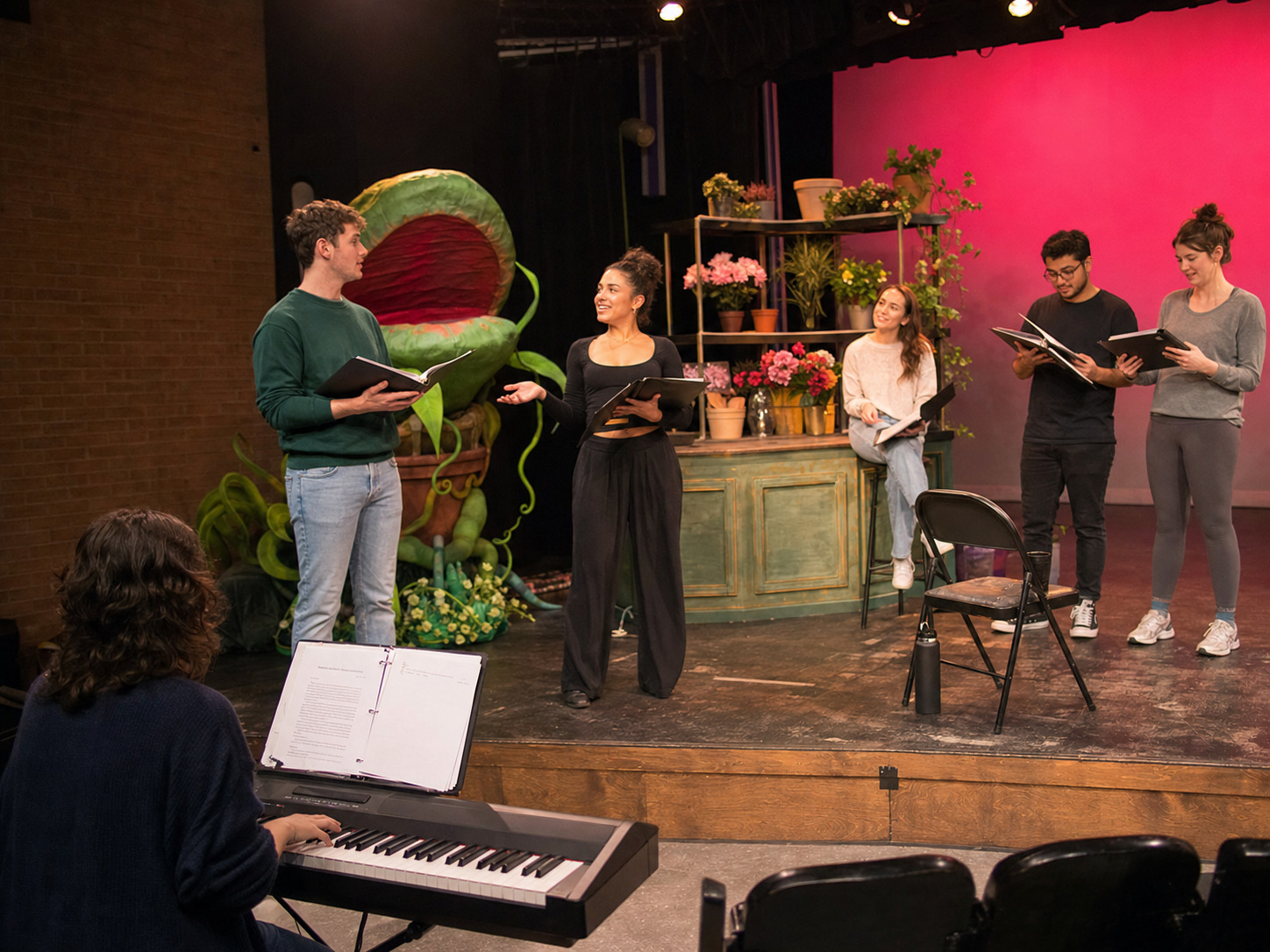
Those are track decisions, not just rehearsal notes.
Use custom edits when staging needs them
Little Shop productions often have staging needs that do not match a standard track exactly. A school cast may need a lower key. A community theatre may need a cut for a scene change. A director may need a longer vamp while Audrey II moves into place. A sound operator may need a cleaner start for a called cue.
Custom track support can help with:
- Key changes for Seymour, Audrey, Audrey II, or ensemble numbers.
- Cuts for auditions, showcases, or shortened school versions.
- Tempo adjustments for choreography and comedy timing.
- Lead-ins, count-offs, endings, and cue-friendly starts.
- Rehearsal versions that match the final performance files.
The best time to request those edits is before the cast has rehearsed the wrong version for weeks.
Check licensing and playback before performance
Backing tracks solve the audio support. They do not replace the show rights. For public performances, schools, theatres, and community productions still need the proper grand rights from the publisher. Broadwaytrax theater licensing covers use of the sound recording, not permission to perform the musical itself.
Before opening, confirm:
- The production has the proper theatrical rights.
- The team purchased or licensed the correct tracks.
- The downloaded files are stored locally, not streamed from a weak connection.
- The sound operator has a backup device.
- The cast rehearses with the same files used in performance.
Quick answers for Little Shop teams
Should we rehearse Little Shop with guide vocals or accompaniment tracks? Use guide vocals early for learning, then move to accompaniment tracks as soon as singers know their entrances and melodies.
Can Little Shop backing tracks be customized? Yes. Common custom needs include keys, cuts, tempos, vamps, lead-ins, and cue-friendly endings.
Rehearsing Little Shop? Broadwaytrax has the full album, guide vocals, accompaniment tracks, theater licensing, and custom edit options.
Browse Little Shop TracksDo backing tracks include performance rights for the show? No. Tracks support the music playback. Public productions still need grand rights from the publisher.
Little Shop works when the music feels alive and the production stays organized. With the right track versions, clear cues, and early custom decisions, the cast can focus on the story instead of fighting the playback.