The King and I Backing Tracks for School and Community Theater
By Broadwaytrax Content Studio · May 15, 2026
Updated May 15, 2026
Rodgers and Hammerstein's The King and I can look elegant from the house and still be demanding in rehearsal. The score asks singers to handle sustained musical theater lines, ensemble entrances, formal dance moments, and dialogue-to-song transitions that need a steady musical plan.
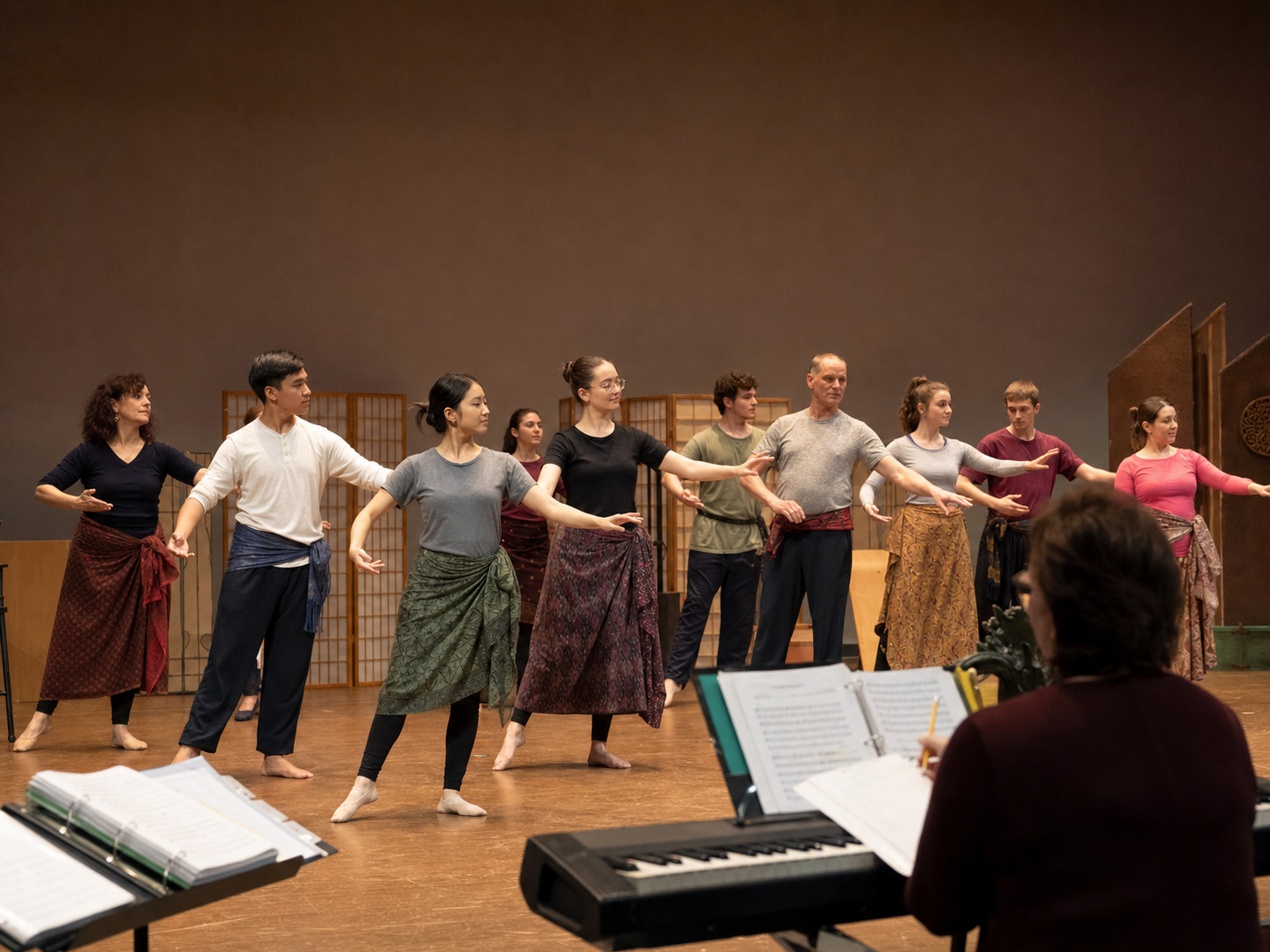
For a school or community theater production, backing tracks work best when they are treated as part of the rehearsal system instead of a last-minute performance file. The cast needs to know which version they are hearing, the music director needs clear notes on keys and cuts, and the stage manager needs cues that make sense in the room.
Bring "The King and I Backing Tracks for School and Community Theater" to life with custom tracks
Get the exact arrangement you need—either customize an existing accompaniment or commission a bespoke build from our team.
Don't see this show in our library yet? We'll build it for you.Broadwaytrax offers (The King and I full album), including guide vocal tracks and accompaniment tracks. Used thoughtfully, that gives a production one consistent reference from first music rehearsals through tech.
Start with the production's song map
Before singers settle into habits, build a simple song map for the show. List each number, the rehearsal version, the performance version, and any places where the production may need a cut, key change, lead-in, or cue adjustment.
For this score, the map is especially useful because the musical work changes from scene to scene:
- lyrical solos that need comfortable breath and range;
- ensemble sections where entrances must be confident;
- dance or staging moments that need consistent tempo;
- underscored or cue-sensitive moments where the track has to begin cleanly;
- reprises where the cast may remember the melody but miss the exact form.
That document does not need to be complicated. It just needs to be shared by the director, music director, choreographer, stage manager, and sound operator.
Use guide vocals before asking for independence
Guide vocal tracks can save a rehearsal process when the cast is still learning the shape of the score. They give singers a clear reference for melody, entrances, phrasing, and cutoffs without requiring the music director to repeat every line in every rehearsal.
They are most useful when teaching:
- first entrances after dialogue;
- melody lines that sit differently from spoken character work;
- ensemble responses and repeated phrases;
- student or community casts who rehearse between scheduled calls;
- understudies who need a stable reference outside the room.
Once the cast understands the material, move toward accompaniment-only tracks. The goal is not to keep the guide vocal in the room forever. It is to help singers become secure enough to listen, act, and enter without leaning on the demo.
Rehearse cues before tech week
A classic score can lose momentum when track cues are treated casually. A clean first measure, a clear button, and a predictable transition after applause are all part of the performance.
During staging rehearsals, mark the cue source for each track. Is the cue visual? Does it come after a line? Does the sound operator need a count, a standby, or a specific gesture from the conductor or stage manager?
For each number, confirm:
- who calls or gives the cue;
- whether the track begins with a count-off, lead-in, or immediate downbeat;
- where singers enter after dialogue;
- whether the track should stop, fade, or carry through a transition;
- which device and file naming system will be used in performance.
That work belongs before tech. Waiting until the full set, lights, costumes, and microphones are in place makes simple music decisions feel bigger than they are.
Check keys while changes are still easy
The catalog album is a strong starting point, but every cast is different. A school production, an adult community theater cast, or a mixed-age ensemble may need a more singer-friendly version of a solo or reprise.
Test the most exposed songs early. If a singer is fighting the key, pushing the final phrase, or losing character because the range is uncomfortable, solve that before choreography and blocking become fixed.
Broadwaytrax can support (custom track work) when a production needs a different key, cut, tempo, lead-in, cue, or performance edit. The best request is specific: name the track, describe the problem, and explain how the moment works on stage.
Keep rights and recording use separate
Backing tracks do not replace the rights needed to stage a musical. A production still needs the proper performance license or grand rights from the rights holder. A theater-use license for a backing track covers use of that sound recording in performance; it does not grant permission to present the show itself.
A practical checklist for schools and theaters:
- secure the show license before building the final music plan;
- decide whether the production will use tracks, live musicians, or a hybrid;
- confirm theater-use permissions for any recording used in performance;
- keep licenses, receipts, cue notes, and track files with the production folder;
- request custom edits early enough for rehearsal and review.
A rehearsal sequence that works
Use the album as a shared reference, then narrow it into the exact performance plan:
- Listen through the score with the production team.
- Build a song-by-song cue and track map.
- Teach music with guide vocals where they help.
- Shift rehearsals to accompaniment tracks once singers are secure.
- Confirm keys, cuts, tempos, and lead-ins before staging hardens.
- Rehearse the final files on the actual playback setup.
- Keep one clearly labeled performance folder for the sound operator.
The point is consistency. Cast members should not wonder which version they are hearing, and the production team should not discover a cue problem after the room is already in tech.
FAQ: using backing tracks for this show
Can a school production rehearse with guide vocal tracks?
Yes. Guide vocals are useful for learning melody, entrances, and phrasing. For performance, most productions shift to accompaniment tracks and confirm the necessary show rights and recording-use permissions.
When should the cast move to accompaniment-only tracks?
Move once the singers know the melodies and entrances well enough to rehearse independently. Waiting too long can make the cast dependent on the reference vocal.
Can a track be adjusted for a specific singer or staging moment?
Yes, when the production needs a different key, cut, tempo, cue, or lead-in, a custom track request can make the file fit the cast and staging more naturally.
Should the sound operator rehearse before tech?
Yes. Track playback is part of the show. The operator should rehearse cues, file names, stops, fades, and transitions before the first full technical run.
Rehearse The King and I with the Broadwaytrax full album, including guide vocal tracks, accompaniment tracks, MP3 downloads, and theater-use licensing options.
View The King and I AlbumThe takeaway
A strong track plan lets a classic score feel prepared instead of fragile. Start with the (Broadwaytrax full album), use guide vocals as a teaching tool, move toward accompaniment tracks, and request (custom edits) when the production needs files shaped around the cast and staging.