Into the Woods Rehearsals Need the Track Plan Early
By Broadwaytrax Content Studio · May 20, 2026
Updated May 20, 2026
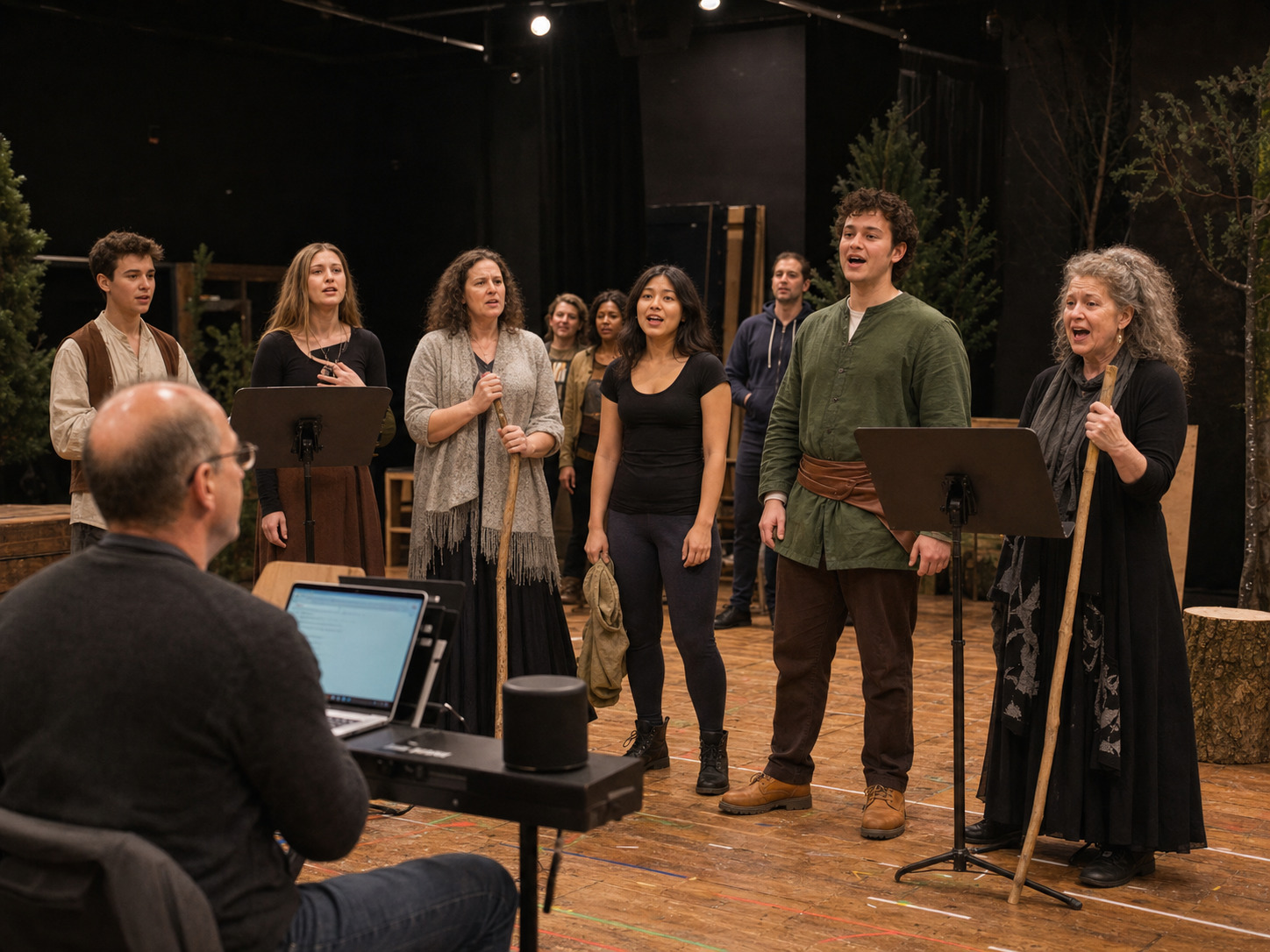
Into the Woods can feel tidy on paper and complicated the moment a cast stands up. The score moves quickly between story, underscoring, patter, overlapping wishes, reprises, and long ensemble builds. If the track plan is not clear before blocking starts, singers learn entrances one way, choreography lands another way, and tech week becomes a scramble.
A good backing track plan gives the production one dependable musical map. It does not replace the music director. It gives the music director, director, choreographer, stage manager, sound operator, and cast the same reference before the woods get crowded.
Bring "Into the Woods Rehearsals Need the Track Plan Early" to life with custom tracks
Get the exact arrangement you need—either customize an existing accompaniment or commission a bespoke build from our team.
Don't see this show in our library yet? We'll build it for you.Broadwaytrax offers the (Into The Woods full album) with accompaniment tracks and guide demonstrations. Use it early, not only when the show is almost staged.
Start with the moments that change shape
Some shows can rehearse song by song for a while before anyone worries about transitions. Into the Woods is different. The storytelling depends on musical handoffs: a line finishes, a rhythm starts, someone crosses, another character enters, and the scene keeps moving.
Mark these moments before the first full run:
- every musical pickup after dialogue,
- every repeated motif that returns in a new context,
- every ensemble entrance that depends on a spoken cue,
- every transition where the stage picture changes under music,
- every cut, vamp, or hold that may need a custom edit.
That list becomes the production's track map. It tells everyone where the track is fixed and where the staging still needs a decision.
Use guide vocals before the room memorizes mistakes
Guide vocal tracks are useful when singers are learning dense entrances, quick internal rhythms, and ensemble relationships. They help the cast hear where the line sits before switching to accompaniment-only rehearsal.
Use guide vocals for:
- early character song learning,
- ensemble entrances that stack quickly,
- students or community performers learning by ear,
- home practice before note work is secure,
- replacement rehearsals when a performer misses music calls.
Then move away from guide vocals intentionally. A cast should not discover in tech that the track will no longer carry the phrase for them. The practical sequence is simple: guide vocal for learning, accompaniment for rehearsal, performance track for runs.
Build cues around staging, not panic
The hardest track problems usually appear when the music is serving a stage action. A performer has to cross before singing. A prop handoff needs two extra beats. A scene change needs more room. A line cue is easy at the table and hard once everyone is moving.
Do not solve those problems with guesses. Run the cue, count the seconds, and write the exact note for the track request. Useful notes sound like this:
- add a four-bar lead-in before the entrance,
- hold the vamp until the Baker reaches center,
- shorten the transition after the scene change,
- add a clearer click or pickup before the ensemble entrance,
- lower the key for a younger singer without changing the cut.
Broadwaytrax custom services can support (keys, cuts, tempos, lead-ins, cues, and full-show production edits) when the stock track is close but the staging needs something specific.
Keep Act II from becoming a separate show
Act II often exposes whether the production really has one track plan. The emotional weight changes, the story tightens, and the ensemble has to stay alert through music that can feel familiar but no longer behaves the same way.
Plan Act II with the same discipline as Act I:
- confirm all reprises and repeated musical ideas,
- rehearse entrances after dialogue instead of only starting at bar one,
- check whether scene shifts need custom timing,
- test the track volume under spoken lines,
- make sure the sound operator has the same file names as the rehearsal team.
A clean Act II is not only a musical issue. It is a communication issue.
Licensing belongs on the checklist
Backing tracks and show rights are separate. A Broadwaytrax theater-use license covers use of the Broadwaytrax sound recording in performance. It does not replace the grand rights or theatrical performance license required to stage the musical.
Before performance, confirm:
- the show rights are secured from the proper licensing source,
- the production is using the correct approved materials,
- the Broadwaytrax recording is licensed for theater use if it will be used in performance,
- any livestream, video, or recording plans are cleared separately when needed.
That keeps the music plan practical and the production paperwork clean.
A rehearsal checklist for directors and music teams
Use this before the first stumble-through:
- Choose the exact album, guide vocal, and accompaniment files.
- Share consistent track names with the cast.
- Identify dialogue-to-music cue points.
- Mark difficult ensemble entrances.
- Decide which moments need guide vocals and when to retire them.
- Test tracks in the actual playback setup.
- Write custom edit requests with bars, seconds, and staging notes.
- Confirm theater-use licensing before performances.
FAQ: Into the Woods backing tracks
Can a school production rehearse with guide vocals?
Yes. Guide vocals are useful while singers are learning entrances, rhythms, and phrasing. Move to accompaniment tracks once the cast can carry the music independently.
When should custom edits be requested?
Request edits as soon as staging creates a real timing issue. Keys, cuts, tempos, lead-ins, vamps, and cue changes are easier to manage before choreography and tech cues are locked.
Do backing tracks include show performance rights?
No. Show rights and sound-recording rights are separate. Schools and theaters still need the appropriate license to stage the musical, plus theater-use permission for the recording when using Broadwaytrax audio in performance.
What is the best way to prepare tech week?
Rehearse Into the Woods with the Broadwaytrax full album, including accompaniment tracks, guide vocal demos, MP3 downloads, and theater-use licensing options.
View Into the Woods AlbumRun every music cue with the same playback files, file names, and cue notes the sound operator will use in performance. Tech week should confirm the plan, not invent it.
Into the Woods works best when the production has one musical map before the room gets busy. Start with the Broadwaytrax full album, teach with guide vocals, move to accompaniment tracks, and request custom edits only where the staging truly needs them.