Charlie Brown Rehearsals Move Faster When Every Number Has a Map
By Broadwaytrax Content Studio · July 20, 2026
Updated July 20, 2026
A small-cast musical can still create a large rehearsal problem when every performer, scene change, dance phrase, and playback cue is using a different version of the music.
You're a Good Man Charlie Brown is built from compact character numbers, quick shifts of focus, and ensemble moments that need to feel spontaneous. That makes the rehearsal map especially important. The cast should know which file teaches the number, which file runs the scene, where the music begins, and who owns the next cue.
Bring "Charlie Brown Rehearsals Move Faster When Every Number Has a Map" to life with custom tracks
Get the exact arrangement you need—either customize an existing accompaniment or commission a bespoke build from our team.
Don't see this show in our library yet? We'll build it for you.The practical answer is not more audio. It is one show map that connects the right rehearsal file to the right stage action.
Start by pairing the learning file with the performance file
The (Broadwaytrax You're a Good Man Charlie Brown full album) contains 28 tracks. The first 14 provide the song material with guide vocals, and the next 14 provide the corresponding accompaniment tracks alone.
That pairing gives a production two different tools:
| File role | Best use |
|---|---|
| Guide-vocal track | Learning melody, rhythm, entrances, arrangement shape, and ensemble relationships |
| Accompaniment-only track | Staging, scene work, choreography, cue practice, run-throughs, tech, and performance preparation |
Do not let the guide track become the permanent rehearsal default. Move each number to the accompaniment-only version as soon as the cast can carry the vocal line. That is where performers learn to hear the introduction, trust the tempo, hold their own entrances, and recover without a recorded singer leading them.
Give all 14 numbers one production row
The album includes the title number, “Schroeder,” “Snoopy,” “My Blanket and Me,” “The Kite,” “The Doctor Is In,” “Beethoven Day,” “The Book Report,” “My New Philosophy,” “The Baseball Game (T-E-A-M),” “Glee Club Rehearsal,” “Little Known Facts,” “Suppertime,” and “Happiness.”
Create one row for every number before the rehearsal calendar becomes crowded.
| Map field | What to record |
|---|---|
| Number and scene | The song title and the scene or transition it belongs to |
| Learning file | Exact guide-vocal filename used by the cast |
| Run file | Exact accompaniment filename used for staging and playback |
| Start cue | Spoken line, visual action, count, or music-director gesture that starts the track |
| First entrance | Who sings or moves first, and after how much introduction |
| Stage action | Major crosses, props, choreography, or focus changes that must meet the music |
| Ending | Button, cutoff, held picture, applause hold, or transition into dialogue |
| Operator | The person responsible for starting, stopping, or recovering the cue |
The map should fit the production you are staging. It is not a substitute for the script, score, or licensed materials. Its job is to make the playback workflow visible to the people who must use it.
Rehearse the transitions, not only the songs
Character numbers often look self-contained on a track list. Onstage, they live next to dialogue, props, entrances, and fast changes of attention.
For each number, run three pieces together:
- the final line or action before the cue;
- the introduction and first musical entrance;
- the ending and first line or movement after the music.
This short transition pass catches problems that a sing-through will miss. The track may begin before the actor reaches the playing area. The operator may be waiting for a line while the music director is giving a visual cue. A prop may cover the first entrance. The ending may leave the cast in a picture that blocks the next scene.
When those edges work, the middle of the number becomes easier to rehearse.
Use musical landmarks for fast ensemble numbers
Numbers such as “The Book Report,” “The Baseball Game (T-E-A-M),” and “Glee Club Rehearsal” can depend on performers knowing where their material sits inside a larger rhythmic pattern. “Start again” is not specific enough when several people have overlapping jobs.
Name restart points the whole room can recognize:
- the beginning of a verse or refrain;
- a clear orchestral pickup;
- the start of a repeated pattern;
- a character's first solo phrase;
- a visible formation or prop change;
- the final eight bars.
Write those landmarks into the map using language the cast and operator already use in rehearsal. A restart point should be audible, visible, or both.
Separate character work from playback survival
Actors should be able to make choices inside the number without worrying that a missed breath or late prop pickup will make the track impossible to follow.
Build the number in layers:
Learn the arrangement
Use the guide-vocal file to confirm melody, rhythm, entrances, and the overall musical shape.
Carry the vocal line
Switch to the accompaniment-only file while the cast is still working at music stands or in a simple room setup.
Add stage action
Introduce blocking, props, and choreography without changing the file version or cue language.
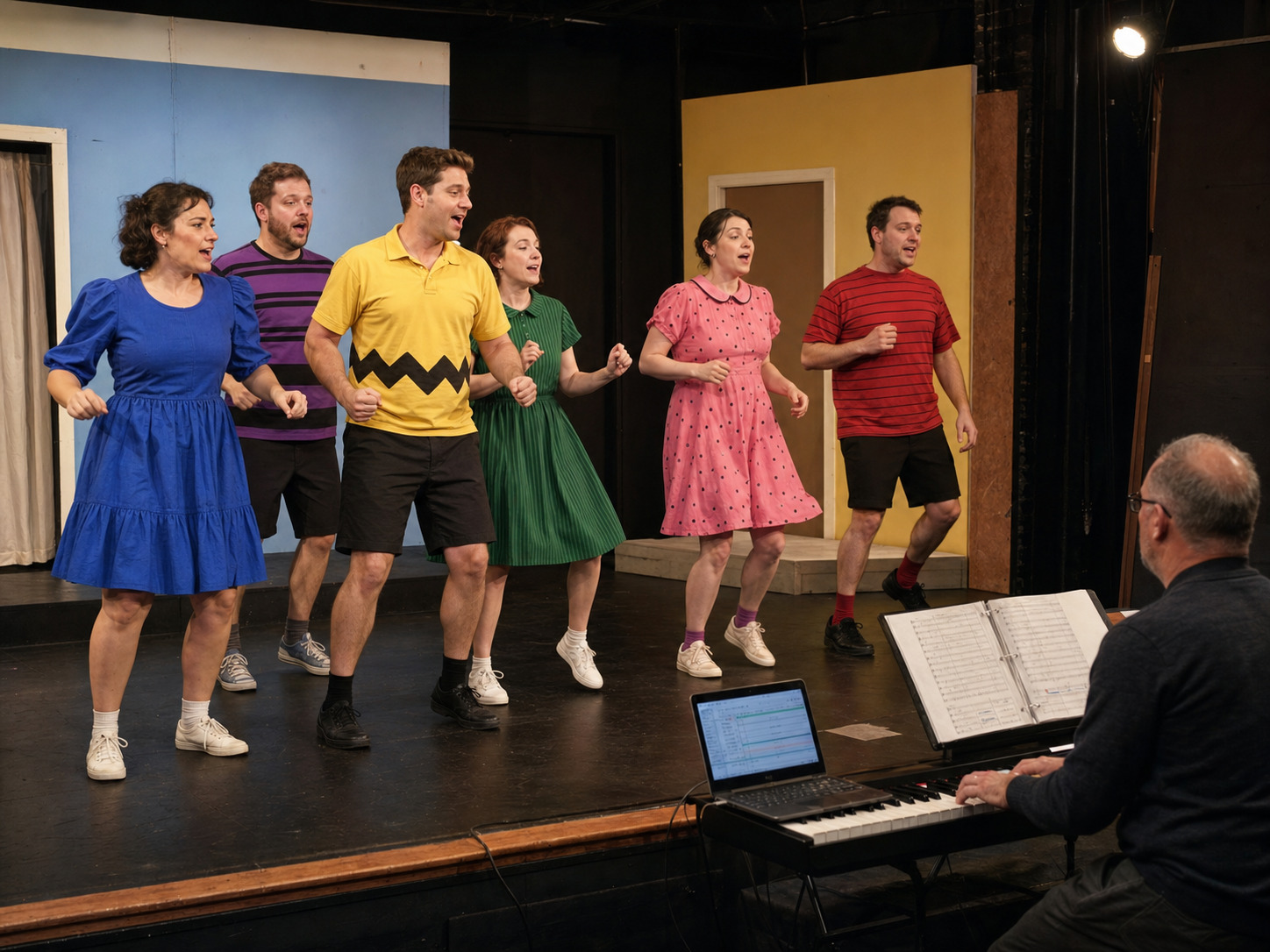
Run the transition
Connect the spoken scene to the track and the track to the next moment.
Test recovery
Stop once at a planned landmark and restart from the agreed point. The goal is not to normalize mistakes. It is to teach the room how to stay calm when one happens.
This sequence lets performers focus on character because the playback structure has become predictable.
Keep filenames useful under pressure
The downloaded album already distinguishes guide and accompaniment material. Your production folder should preserve that distinction and add only the information the operator needs.
A useful filename pattern is:
Q##_SongTitle_FileRole_Version.mp3
For example:
Q04_MyNewPhilosophy_ACCOMP_v2.mp3Q09_GleeClub_GUIDE_rehearsal.mp3
Keep guide files out of the final performance playlist unless the production has made a specific, rights-cleared decision to use one. Once a performance file is approved, copy that exact version to the primary and backup playback systems.
Decide custom needs before tech
A standard album may fit the production exactly. If a number needs a different key, cut, tempo, lead-in, cue, ending, or orchestration adjustment, make the request while the cast still has time to rehearse the result.
(Broadwaytrax custom-track support) can help shape single tracks or a fuller production package around practical staging and singer needs. Describe the issue in production terms: who is entering, where the cut begins, what the stage must accomplish, and what the operator needs to hear.
Do not wait until tech to discover that a musical edit changes choreography, dialogue timing, or an actor's breath plan.
Run a show-map rehearsal before the first full run
Set aside one rehearsal to test the map itself. You do not need to sing every number in full.
- Open the final numbered playlist.
- Call each cue from the preceding line or action.
- Run the introduction and first entrance.
- Jump to one named landmark.
- Run the ending and next transition.
- Confirm the current version on the operator's device.
- Mark any number that still needs a file, cue, or staging decision.
This pass turns a collection of tracks into an operating system for the show.
FAQ: Charlie Brown backing-track rehearsals
How should we use the guide-vocal and accompaniment tracks?
Use guide vocals to learn the melody, rhythm, entrances, and arrangement. Move to the matching accompaniment-only track early enough that the cast rehearses the version it must carry without recorded vocals.
Does the full album include every song twice?
The current album page lists 28 tracks: 14 guide-vocal/background-track versions followed by 14 accompaniment-only versions of the same song list.
What belongs in a rehearsal map?
Record the exact learning and run files, start cue, first entrance, major stage action, ending, operator, and any reliable restart landmarks for each number.
When should we request a custom edit?
Request it as soon as the production confirms that a standard key, cut, tempo, lead-in, cue, ending, or orchestration does not fit the singer or staging. Leave enough calendar room to rehearse the approved result.
Does buying or licensing the recording replace the show rights?
No. Broadwaytrax's theater-use license covers use of its sound recording. The production still needs the appropriate grand rights or theatrical performance license from the publisher. Review the (Broadwaytrax licensing guide) and the requirements of your show licensor before performance.
The Broadwaytrax full album pairs the show's guide-vocal material with accompaniment-only tracks so the cast can learn the musical shape and then rehearse the performance version. Preview the 28-track album and build your production map around the files you will actually use.
Explore the Charlie Brown AlbumThe takeaway
The cast does not need to memorize a folder. Give every number one paired learning file, one run file, one start cue, one ending, and a few landmarks the whole room recognizes. When the map is clear, a small ensemble can move quickly without making the music feel mechanical.