Beauty and the Beast Rehearsals Need a Track Map Before Tech
By Broadwaytrax Content Studio · May 28, 2026
Updated May 28, 2026
The first challenge is not usually finding enough energy. It is keeping the energy organized once the cast starts moving, singing, and reacting to a score full of entrances, reprises, scene shifts, and ensemble traffic.
That is where a track map helps. Instead of treating each file as a separate download, build one rehearsal plan that tells the music director, stage manager, choreographer, sound operator, and cast which version belongs to each moment.
Bring "Beauty and the Beast Rehearsals Need a Track Map Before Tech" to life with custom tracks
Get the exact arrangement you need—either customize an existing accompaniment or commission a bespoke build from our team.
Don't see this show in our library yet? We'll build it for you.Broadwaytrax offers the (Disney Beauty and the Beast full album), including guide vocal and accompaniment tracks. The album can support auditions, early music calls, staging rehearsals, and final runs, but it works best when the production team decides how each track will be used before tech week.
Start with the whole-show list
Before rehearsals get loud, list every musical moment the production expects to rehearse with tracks. Include full numbers, reprises, scene-change music, dance sections, and any short cue that needs to land cleanly after dialogue.
For this score, the list should answer practical questions:
- Which songs need guide vocals while the cast is learning entrances?
- Which numbers will switch to accompaniment-only tracks for staging?
- Which cues need a lead-in, count-off, vamp, or cleaner button?
- Which solo moments need an early key check?
- Which ensemble numbers require the choreographer and sound operator to agree on timing?
The goal is simple: nobody should discover the real track plan for the first time during tech.
Use guide vocals early, then move them out
Guide vocal tracks are useful at the start because they give singers a reliable reference for melody, form, and entrance timing. They are especially helpful when a young cast is learning large ensemble moments or when students are practicing outside scheduled rehearsal.
Use guide vocals when the room is still learning:
- melody and phrase shape;
- character entrances after dialogue;
- harmony placement;
- underscored or overlapping sections;
- rehearsal assignments for absent cast members.
Then set a clear date for moving to accompaniment tracks. If guide vocals stay in the room too long, singers can stop listening to each other. The shift to accompaniment-only tracks helps the cast own the entrances and lets the director hear what still needs rehearsal.
Treat dance numbers as cue work, not just choreography
A large musical number can look like a choreography problem when it is actually a cue problem. If the track begins before the cast is ready, a transition feels rushed. If the ending is unclear, the scene after the song can lose confidence.
For staging rehearsals, write down who starts the track and what that person is waiting for. A stage manager may cue from a line. A choreographer may want a breath before the downbeat. A sound operator may need a visible hand signal.
For each major number, mark:
- the cue line or visual cue;
- the first sung entrance;
- any dance break that needs extra attention;
- the final button, fade, or blackout;
- whether applause, dialogue, or a scene shift follows immediately.
This makes the track part of the staging, not a surprise the cast has to chase.
Check keys before habits settle
The (full album) gives the production a consistent musical base. Still, every cast is different. A featured singer may need a different key, a cleaner lead-in, or a cut that better fits the staging.
Do key checks early, especially for solos that sit high, build emotionally, or happen after movement. It is much easier to request a custom adjustment before the cast has practiced the wrong version for three weeks.
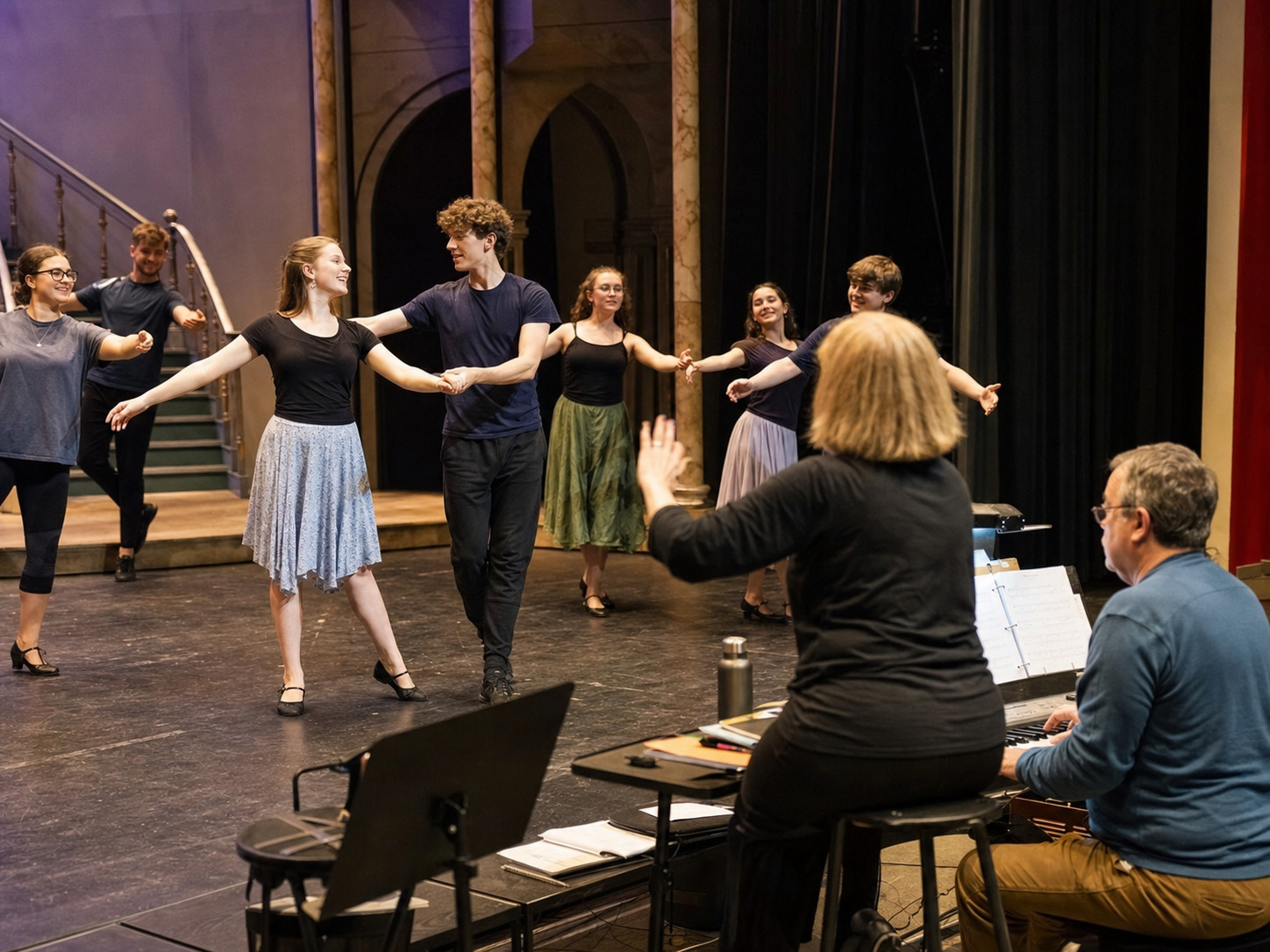
When a track needs to change, send specific notes. Name the song, describe the issue, include the desired key or cut if known, and explain what happens on stage. Broadwaytrax can help with (custom track work) such as keys, cuts, tempos, lead-ins, and cue edits when a catalog track needs to fit a real production.
Keep licensing separate from music prep
A theater-use license for a Broadwaytrax recording covers use of that sound recording. It does not replace the show rights or grand rights required to stage a musical.
For schools and theaters, keep the paperwork clean:
- Secure the performance license from the appropriate rights holder.
- Decide whether the production will use live musicians, tracks, or a hybrid approach.
- Confirm the recording license for any track used in performance.
- Keep receipts, track files, cue notes, and licensing documents together.
This keeps administrators, directors, and production staff aligned before opening night.
A rehearsal sequence that works
A practical order is usually enough:
- Listen through the album with the production team.
- Build a song-by-song track map.
- Teach entrances and melody with guide vocals.
- Move staged numbers to accompaniment tracks.
- Confirm keys, cuts, lead-ins, and endings.
- Rehearse cues with the stage manager and sound operator.
- Run the final track versions on the playback system that will be used in performance.
The cast should reach tech week already knowing how the music starts, where it breathes, and what happens after each number ends.
FAQ: Beauty and the Beast backing tracks
Can schools rehearse with guide vocal tracks?
Yes. Guide vocals are useful for learning melody, entrances, phrasing, and harmony. They should usually be replaced by accompaniment tracks once the cast knows the material.
Should the sound operator attend music rehearsals?
At least for cue-heavy rehearsals, yes. The person pressing play needs to understand the cue line, expected pause, track start, and ending.
Can Broadwaytrax adjust a track for a production?
Custom work may help when a cast needs a new key, cut, tempo, lead-in, or cue edit. Send clear notes before staging and vocal habits are locked in.
Do backing tracks replace show licensing?
No. Backing track licensing and theatrical performance licensing are separate. Confirm the show rights with the rights holder and the recording-use permissions for the track.
Rehearse the full show with Broadwaytrax guide vocal and accompaniment tracks, then request custom keys, cuts, lead-ins, or cue edits for your cast.
View Beauty and the Beast AlbumThe takeaway
A strong production does not wait until tech to organize its files. Start with the (Broadwaytrax full album), use guide vocals while the cast is learning, move to accompaniment tracks for staging, and request (custom edits) when the music needs to match your performers and cues.