Explainer: Accompaniment vs Guide Vocal Tracks
By Broadwaytrax Content Studio · February 27, 2026
Updated March 16, 2026
You hit play. The band comes in. Do you want a voice on top showing the melody, or only instruments under you like a real pit? That choice shapes how you learn, how you focus, and how you walk into the room.
Here's a simple split. An accompaniment track includes instruments only. No lead voice. It should feel like a pit band with a clean intro and steady time. A guide-vocal track has the same band plus a reference singer on the melody. The guide helps you learn notes, words, and cues. It is for practice, not performance.
This explainer builds on our recent class-focused piece, zooming in on audition prep. We will name when to use each track, how to switch at the right time, and how to avoid trouble on self-tapes. If you want teacher-facing ideas, see (Using Backing Tracks to Teach Musical Theatre Performance). What is new here is a day-by-day fade plan and a tight 48-hour finish.
Picture two rehearsals. In the first, you meet the song. The guide voice is a flashlight. It shows pitch lines, rests, and where to stress words. This is great for dense writing, like fast patter, cross rhythms, or spots with cutoffs that return to strict time. In the second, you know the piece. Now you need space to act, breathe, and set tempo like you will with a pianist. Here, the accompaniment-only track is your best friend. It makes you lead.
Why switch at all? Because your brain learns best when help fades out. Heavy cues speed early wins but can create dependence. When you reduce those cues as you improve, your skill holds up under pressure. Singers can use the same idea: start with a guide, then move to accompaniment-only so your ear and breath do the work (Winstein & Schmidt, 1990).
Learn with the guide. Perform with the band.
Let’s map a clean practice arc you can start tonight. First, take a short mapping pass. Do two run-throughs with guide vocals to lock lyrics, rests, and tricky pickups. Then do one run with accompaniment-only. If you stumble, go back to the guide for that spot, then test it again without.
Next, begin the fade. For a few days, flip the ratio: one guide run, then two accompaniment-only runs. Turn off on-screen lyrics if you have used them. Add gestures, eyeline, and acting beats so the music supports the scene. End each day on a no-guide success, even if it is at a slower tempo.
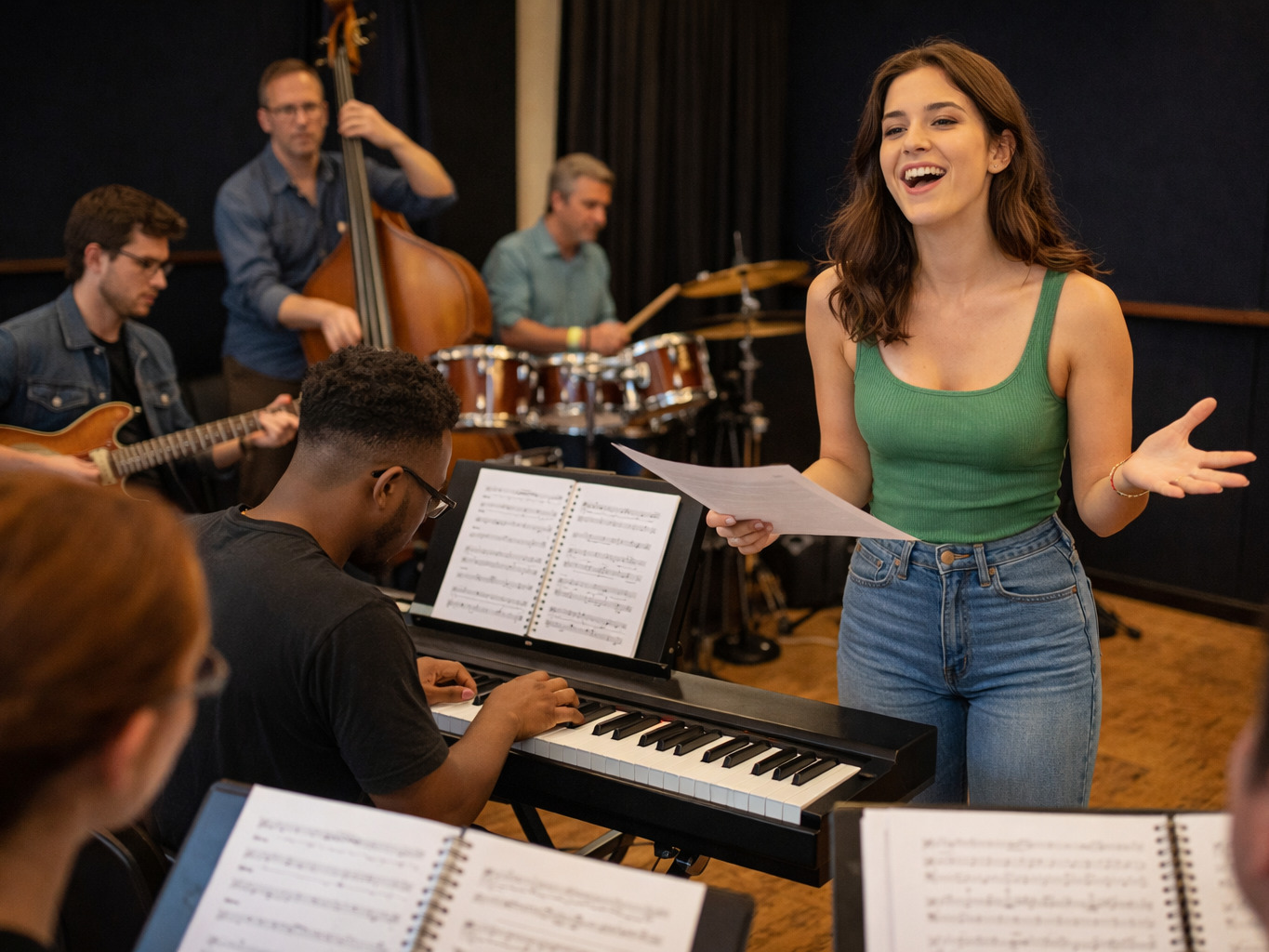
Then finish with a performance phase. All accompaniment-only. If you can, schedule one live-piano session or a coach check-in. Practice calling a tempo out loud, count yourself in, and go. This models the room.
Now let’s talk about real auditions in Winter 2026. Most Equity notices say if an accompanist is provided. For standard EPAs and ECCs, expect a pianist. Bring a clear 16-32 bar cut in your key. Tracks are usually for prescreens and self-tapes. Only use them in the room if the notice invites that plan (Actors’ Equity Association — Auditions). If you have trained with a two-bar click or count-in, be ready to set that tempo with words and gestures for a human player. Mark your cut so the intro gives groove and harmony, not dead air. For more on fixing binder and intro red flags, see (Red Flags in Audition Song Preparation (And How to Fix Them)).
Self-tapes and prescreens have other rules. Many schools and contests require instrumental-only backing. No guide vocals may be heard in the final file. Using a guide mix in your submission can lead to rejection. Always check the directions where you apply. The NATS Student Auditions language is a helpful benchmark and is often echoed by programs: instrumental accompaniment only, no lead voice on the track (NATS — National Student Auditions). The safe workflow is simple. Practice with a guide, then record with the matching accompaniment-only file in the same key and tempo. Your muscle memory stays true.
Key, tempo, and cuts deserve a plan too. Pick your key a week out, then lock it. Changing late can shake your pitch map. If you must adjust, do a few slow reps with a metronome, then repeat at target tempo without the click. Write down the length of your intro, when you breathe, and what lyric sits on the downbeat of your entrance. If you ever feel lost without the guide, speak the rhythm over the accompaniment to rebuild timing, then sing on a simple vowel, and finally add full words. That three-step ladder works fast.
Some patterns gain from a guide-first pass. Rapid patter with off-beat cues needs clean consonants on the beat. Sondheim is a classic case. If you are living in “Another Hundred People” or a similar cut, study the guide to place the pickups, then shift to band-only so your storytelling can breathe. For cut design and patter focus, see (Company Audition Tips). Power ballads that move from free rubato into a strict groove also benefit. Let the guide show you where the time locks in, then practice the handoff with accompaniment-only so you can lead the groove in the room.
Your last 48 hours should be calm and clear. Two days out, do one full run with the guide only to boost confidence. Then do two clean runs with accompaniment-only and stop after a win. The night before, stay on accompaniment-only. Do one visualization run: close your eyes, hear the accompaniment in your head, and speak the text in tempo. This reduces outside cues right when you peak, which supports stable memory under stress (Winstein & Schmidt, 1990). On audition day, warm up, sing one quiet marking run with the accompaniment, and save your best for the room.
Rehearse your Sondheim cuts the smart way: start with guide vocals to lock in patter and rests, then switch to accompaniment-only for your EPAs/ECCs. The Company album includes both options so your practice matches the room.
Find Accompaniment TracksIf trouble pops up, here are a few fixes. If you lag the track without the guide, drill the spoken rhythm in tempo over the accompaniment, then add pitch on long vowels. If intonation dips on long lines, slide between NG and EE to center the pitch, then fit the words back in. For balance on self-tapes, keep your speaker a few feet away and your mic close to you so your voice sits forward of the band. Remember, live Equity rooms mean a pianist unless the notice says otherwise (Actors’ Equity Association — Auditions). Prescreens and contests usually mean accompaniment-only in the final file (NATS — National Student Auditions).
When you choose tracks with care and fade the guide on time, you build both skill and trust. You hear the band. You feel the beat. And you lead the story, note by note.