The Wizard of Oz Needs a Track Map Before Rehearsal Gets Busy
By Broadwaytrax Content Studio · June 18, 2026
Updated June 18, 2026
A familiar show can still become complicated once the room starts moving.
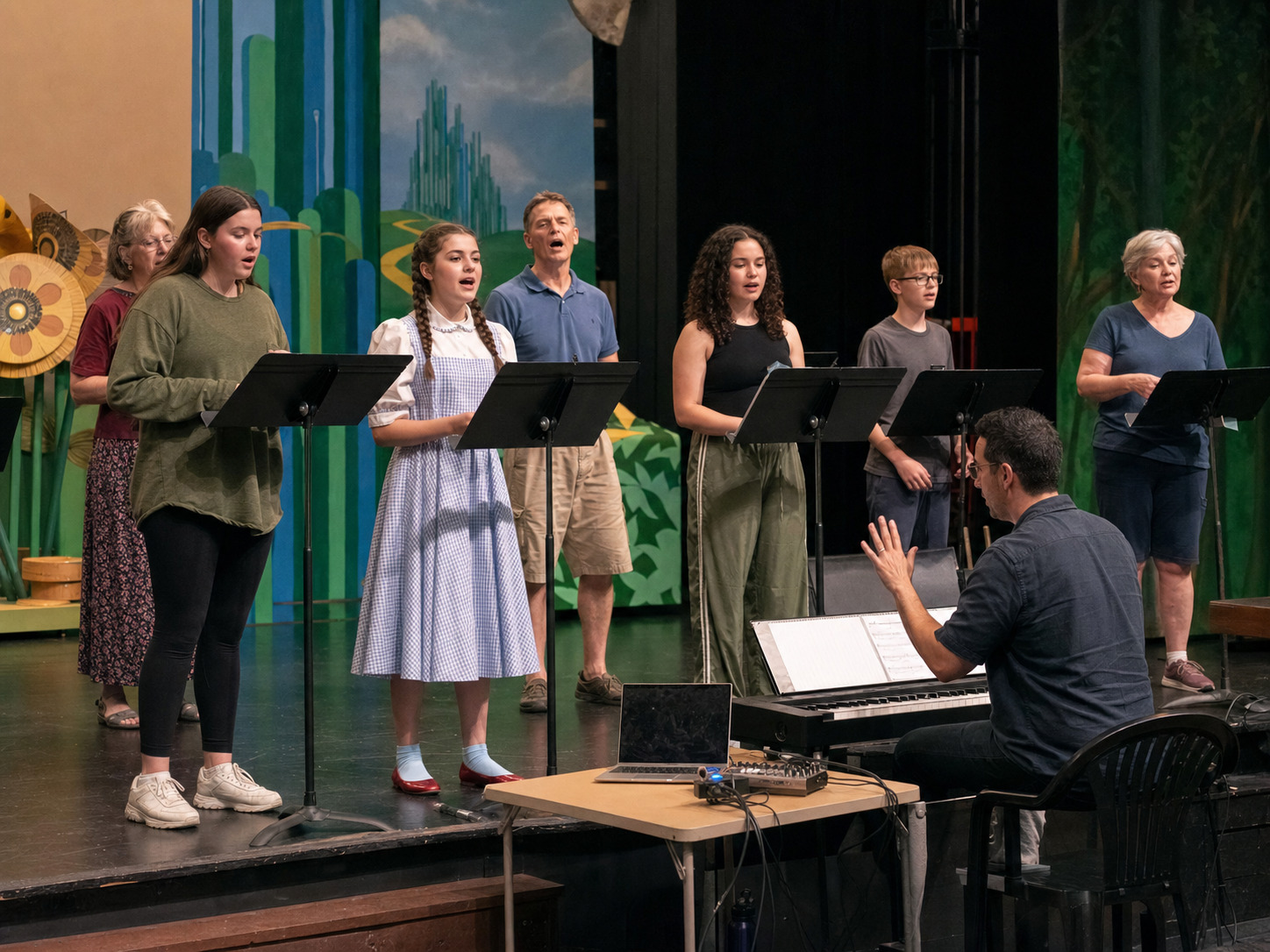
A cast may know the story, the audience may know the songs, and the production team may feel comfortable at the first read-through. Then rehearsal begins, and the track plan has to carry much more than a melody. Entrances, underscoring, dance breaks, scene shifts, student confidence, and booth cues all start depending on the same audio folder.
Bring "The Wizard of Oz Needs a Track Map Before Rehearsal Gets Busy" to life with custom tracks
Get the exact arrangement you need—either customize an existing accompaniment or commission a bespoke build from our team.
Don't see this show in our library yet? We'll build it for you.That is why a school, community theater, or youth production should treat the backing tracks as part of the rehearsal map, not as a last-minute playback decision.
Start with the whole show picture
The Broadwaytrax full album gives a production team a clear starting place because the show can be planned as a sequence instead of a pile of separate song files. That matters for a musical with many short cues, character moments, and transitions.
Before distributing files, decide what each version is for:
- guide vocal files for early learning,
- accompaniment tracks for regular rehearsal,
- final performance files for the booth,
- custom versions if the cast needs a key, cut, tempo, lead-in, or ending adjusted.
Do not let every folder look the same. A student practicing at home, a choreographer drilling movement, and a sound operator calling the show should not have to guess which version is current.
Guide vocals help the cast learn the map
Guide vocal tracks are useful early because many Wizard of Oz moments depend on confident entrances and character clarity. Young performers especially benefit from hearing how a phrase begins, where the breath belongs, and how the line sits against the accompaniment.
Use guide vocals as a teaching step, not as the final destination. Once singers know the melody and timing, move toward accompaniment-only rehearsal so the cast can build independence before performance week.
A practical sequence is simple:
- first listen with the guide vocal,
- rehearse entrances and endings,
- switch to accompaniment once the melody is secure,
- confirm any custom changes before the cast memorizes the old version.
That sequence keeps the room from learning one track and performing another.
Watch the cue-heavy sections first
Some songs feel straightforward until staging adds bodies, props, travel, and dialogue. Ensemble sections, reprises, character entrances, and dance or movement sequences deserve early attention because they often expose track problems before the big production week.
Build a cue map for the numbers that have the most moving parts. Include the song title, file name, who gives the start cue, whether there is a pickup or spoken lead-in, and what happens immediately after the ending.
For a Wizard of Oz-style rehearsal folder, the team should check:
- whether ensemble entrances are clear enough for students,
- whether dance or travel music has enough lead-in,
- whether a repeated section needs to be marked,
- whether a transition needs silence, a fade, or a clean stop,
- whether the file name makes the guide vocal or accompaniment version obvious.
The goal is not to overcomplicate the paperwork. The goal is to keep rehearsal from stopping because nobody knows which cue is next.
Decide custom needs before habits form
A catalog track may be exactly what the production needs. If it is not, solve that early.
Common custom needs include:
- a lower or higher key for a specific singer,
- a cut that matches a director-approved version,
- a tempo adjustment for choreography,
- a longer lead-in for younger performers,
- a cleaner ending for a blackout or scene change,
- a version label that matches the stage manager paperwork.
Custom edits are most useful before the cast has repeated the old version for weeks. If a key or cut is likely to change, make the decision before choreography, memorization, and booth paperwork lock around the wrong track.
Give the sound operator the final folder only
The booth does not need every rehearsal file. It needs the right files.
Create a final performance folder and keep old versions out of it. Each file should match the cue sheet exactly. If the sound operator sees three files with nearly identical names, the risk goes up.
A clean booth packet should include:
- cue number,
- track title,
- final file name,
- start cue,
- stop or fade instruction,
- backup location,
- notes for dialogue, movement, or blackout timing.
For school productions, this is especially important when students, parent volunteers, or rotating staff help with playback.
Keep licensing questions separate from track planning
Backing tracks help the production sound prepared. They do not replace the need to confirm show performance rights, script and score permissions, streaming or recording rules, or any other requirements from the rights holder.
Keep those questions in the production folder beside the track receipts and cue notes. The music team should know which audio files are approved for rehearsal or performance use, and the producer should confirm the show rights through the correct licensing source.
FAQ: Wizard of Oz backing tracks
Should a school cast rehearse with guide vocals or accompaniment tracks?
Use guide vocals when students are learning melodies, entrances, and phrasing. Move to accompaniment tracks once the cast can sing independently and needs to rehearse the final performance feel.
Is the full album better than buying one song at a time?
For a full production, the album gives the team a clearer show-wide plan. Individual tracks can work for auditions, classroom work, or isolated rehearsal needs, but a show folder is easier to manage when the production uses a complete sequence.
When should we request a custom edit?
Request a custom edit when the available track is close but the production needs a different key, cut, tempo, lead-in, ending, cue, or version structure. Do that before the cast learns the wrong map.
What should go in the sound cue sheet?
Include the cue number, file name, version type, start cue, stop or fade note, backup file location, and any staging detail the sound operator needs to anticipate.
The takeaway
Start with the full Broadwaytrax album, then use accompaniment tracks, guide vocals, and custom edits to build a rehearsal folder your cast and sound operator can trust.
View The Wizard of Oz AlbumA well-known show still needs a practical audio plan.
Start with the full album, separate guide vocals from accompaniment tracks, map the cue-heavy sections early, and decide custom needs before rehearsal habits form. The result is a production folder that supports the cast, the music director, and the booth from the first rehearsal through the final performance.