Make “Try to Remember” Feel Remembered, Not Recited
By Broadwaytrax Content Studio · November 12, 2026
Updated November 12, 2026
The short answer: rehearse “Try to Remember” as one person offering specific memories to someone who needs them. The song becomes more affecting when each image arrives for a reason, the words stay conversational, and the accompaniment gives the singer a dependable frame without supplying the performance.
A familiar song can be surprisingly easy to generalize. A performer may aim for “warm,” “nostalgic,” or “beautiful” and end up singing every phrase with the same color. A more useful rehearsal question is: what does the listener need to remember now, and why does the next image help?
Bring "Make “Try to Remember” Feel Remembered, Not Recited" to life with custom tracks
Get the exact arrangement you need—either customize an existing accompaniment or commission a bespoke build from our team.
Don't see this show in our library yet? We'll build it for you.Choose a listener before choosing a mood
Do not begin with atmosphere. Begin with relationship.
Name the person receiving the song. They might be a younger character, a partner, a room full of people, or one imagined listener. Then decide what has just happened that makes remembering necessary.
That choice gives the opening an action. The performer is not decorating the room with nostalgia. They are trying to steady, persuade, reassure, or reconnect with someone.
Speak the text once without music and complete this sentence after each section: “I need you to remember this because…” Keep the answer playable and immediate. If every answer is the same, the performance still needs a clearer progression.
Give each image a different job
The images should not blur into one long memory. Sort them by function.
One image may invite the listener in. Another may make the remembered world more concrete. A later thought may acknowledge that experience changes people. The final return should feel earned by everything the performer has understood along the way.
Mark a simple action for each section:
- invite,
- picture,
- compare,
- admit,
- reassure,
- release.
The exact verbs can change. What matters is that the singer has something new to do whenever the musical thought changes.
Run the song once at a comfortable rehearsal volume. Do not add intensity to prove that a section matters. Let the shift in intention create the contrast first.
Keep the diction conversational
Reflective material often becomes overly careful. Consonants grow heavy, vowels become formal, and the words stop sounding like something one person would say to another.
Speak each phrase at the speed and volume of a real conversation. Notice which words naturally carry the thought. Then sing the phrase without giving every syllable equal weight.
Use three checks:
- Can a listener understand the image without reading along?
- Does the important word arrive naturally rather than being underlined?
- Does the line continue toward the next thought instead of stopping after every phrase?
Clear diction does not require hard diction. The goal is for the text to travel.
Let the accompaniment hold the frame
Broadwaytrax’s current The Fantasticks album lists 15 accompaniment tracks in accompaniment-only format, with no guide vocals. That makes the track a useful test of whether the performer can carry the melody, entrances, phrasing, and dramatic progression independently.
Before singing through, listen once and mark four landmarks:
- the first vocal entrance,
- the first clear change in musical texture,
- the approach to the final return,
- the ending and release.
Give each landmark a dramatic label, not only a measure number. “Invite the listener,” “the picture becomes specific,” and “the reassurance lands” are easier to play than a page of technical reminders.
Then rehearse the transition into each landmark separately. A performance is often stronger after three clean transitions than after three full run-throughs.
Build independence without a guide vocal
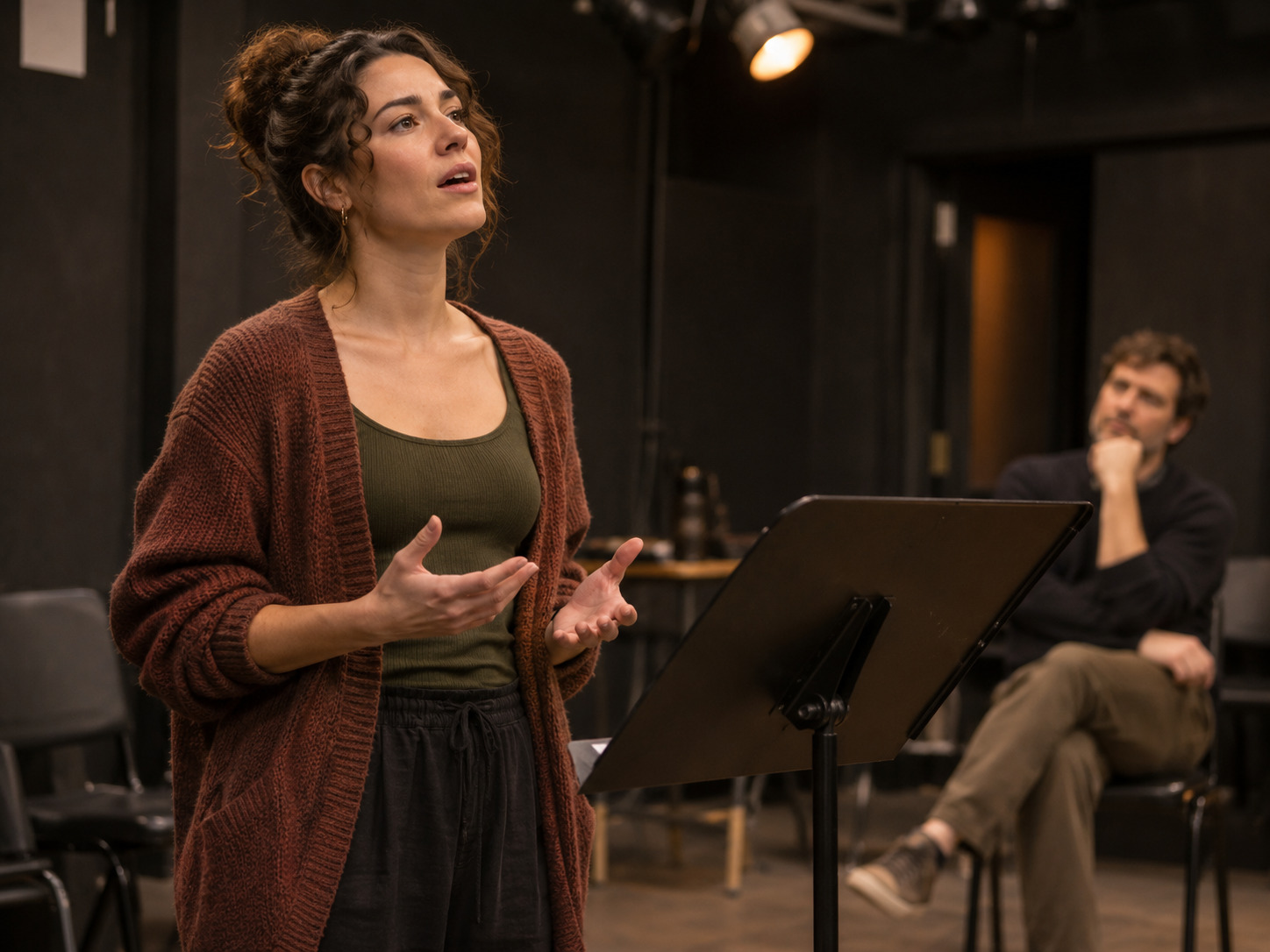
An accompaniment-only track exposes uncertainty quickly. That is useful.
If an entrance is unreliable, do not solve it by repeatedly singing from the beginning. Isolate the lead-in. Listen for the last dependable instrumental cue, breathe in the same place, and practice only the entrance until it feels inevitable.
A practical four-pass sequence is:
- listen and mark the instrumental landmarks,
- speak the text over the track without singing,
- sing at rehearsal volume while prioritizing entrances and words,
- record a complete pass without stopping.
On playback, note only one musical adjustment and one storytelling adjustment. Too many corrections at once usually make the next pass less free.
Avoid performing “nostalgia” from the first note
If the performer begins emotionally complete, the song has nowhere to go.
Allow the first section to be simple. Let the memories become more vivid because the listener needs them, not because the singer has decided the piece must sound moving. Save the fullest vocal or emotional choice for the point where the thought genuinely expands.
Try one run with no planned gestures. Keep the hands relaxed and the focus specific. Add movement only when a new realization changes the performer’s relationship to the listener.
Stillness is not the goal. Unnecessary decoration is what the rehearsal is removing.
Test the ending from across the room
Record the final section from several feet away. Listen without watching the video first.
Ask:
- Can you hear the thought changing before the sound grows?
- Does the final return feel like an answer?
- Is the last phrase released, or merely held?
- Does the accompaniment ending feel anticipated rather than surprising?
If the ending feels pasted on, rehearse the sentence immediately before it. The final phrase usually becomes clearer when the thought leading into it becomes more specific.
FAQ: rehearsing “Try to Remember”
Does Broadwaytrax’s The Fantasticks album include guide vocals?
The current album page describes the collection as accompaniment-only and says no guide vocals are provided. Build entrances and phrasing from the score, the rehearsal process, and the instrumental landmarks rather than following a demonstration singer.
Can I use the album for auditions or rehearsal?
The current album page says the collection is designed for auditions, rehearsals, recitals, and classroom use. Confirm the requirements of the exact audition or event before choosing a cut or playback format.
What if the standard version does not fit the singer or staging?
Broadwaytrax’s current album page links to custom production support for keys, cuts, tempos, lead-ins, cues, and full-show needs. Describe the musical problem and intended use precisely so the request can be scoped around the singer and production.
Does purchasing the recording include permission to stage the musical?
No. The current Broadwaytrax album page separates use of its sound recording from the grand rights required for theatrical performance. Confirm both the recording license and the show rights for the planned use.
Ready to turn the song’s images into a complete performance? Rehearse with Broadwaytrax’s accompaniment album for The Fantasticks.
Rehearse with The Fantasticks AlbumThe takeaway
“Try to Remember” works when remembering is an action, not a mood. Choose a listener, give each image a job, keep the language conversational, and let the accompaniment provide dependable landmarks. The performance can stay simple because the thought keeps moving.