The Pirates of Penzance – Comic Timing and Music
By Broadwaytrax Content Studio · April 3, 2026
Updated April 3, 2026
A room of teens stands shoulder to shoulder. They say a line in rhythm, then sing it. On the downbeat, the punch lands, and the room bursts into laughter. That is the magic of The Pirates of Penzance. In this show, the joke lives in the words, the meter, and the way the music supports the text.
Why teach Pirates this season? In 2026, fast text is everywhere. Auditions, summer shows, and even concert programs favor clear, quick speaking. Since Pirates is public domain, you can change keys, cuts, and casting for your students. This piece has a strong history too. The 1981 Broadway revival won three Tony Awards, showing why this score connects with audiences today (Tony Awards).
Here’s the key idea: anchor the joke to the meter. Gilbert’s patter lines use internal rhyme and alliteration to build tension. Sullivan’s music gives that tension a strict pulse. In songs like the Major-General’s Song and “When the foeman bares his steel,” the humor often hits at a cadence, the “landing spot” of the phrase. Have students circle cadence words. Say the setup on the upbeat, then drop the punch on the downbeat. This turns rhythm into comedy and keeps everyone engaged (Victoria and Albert Museum), (The Gilbert & Sullivan Archive).
Lesson Plan A five-day lesson plan can build this skill quickly.
- Days 1-2: Start with the text. Mark stresses on “I am the very model of a modern Major-General.” Show how the strong and weak beats align with those stresses. Scan the internal rhymes. Add “no-breath” brackets over linked rhymes so students don’t cut jokes in half. Speak the verse with a strict tempo, then chant it on one pitch before adding melody. This helps keep the comic meter intact as layers increase (The Gilbert & Sullivan Archive).
- Days 3-4: Climb a tempo ladder. Start at 80% tempo with quarter-note clicks. Move to 90% with clicks on the beat. Finish at 100% with no click, only tracking. Use this simple rule: place consonants on the click and vowels on the beat. Ask for crisp sounds like t, d, p, b, k, g just before the beat, so the vowel lands on time. That boosts clarity and keeps the tempo steady (Victoria and Albert Museum).
- Day 5: Pass the comedy like a relay. In “When the foeman bares his steel,” have Pirates and Policemen trade lines. Use a visible cue for hand-offs. After a punchline, freeze for one or two counts for the audience to laugh. Create a one-page “click-to-comedy map” that shows where to hold and where to drive. Use harmony as your guide: hold at a clear resolution, move through sequences that do not resolve yet (The Gilbert & Sullivan Archive).
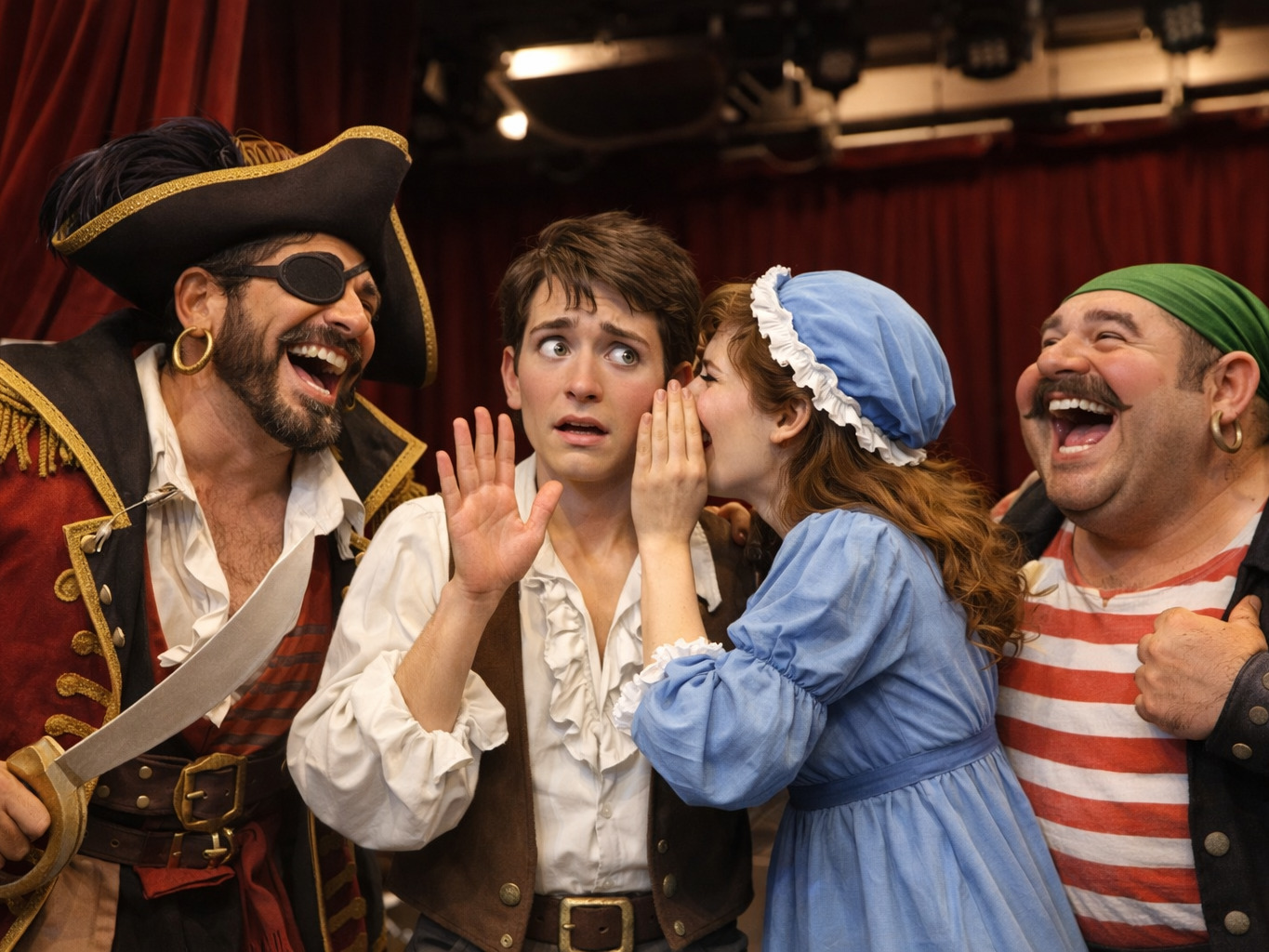
Drills Short diction drills from the Major-General text using a metronome will help. For example, “information, vegetation, or aster-oid,” speaking the consonants on the click. Run timing games for Policemen vs. Pirates: one side says the setup, the other lands the punch. Use cue-word relays—each group enters when it hears a chosen word. For track work, start with a guide-vocal track to place text, then switch to clean accompaniment once the rhythm is set. Build a low-volume, click-supported reference mix for private practice. For memory and pacing, pair this plan with tips from our focused guide at (Memorization Strategies).
Assessment Assessments can be quick. Check timing accuracy to a click across 16 bars (aim for a tight groove). Listen for clarity at target tempo (at least 80% of words should be understood). Watch ensemble hand-offs (no more than one beat of gap or overlap). Confirm that punchlines land at cadences, allowing space for laughter.
Repertoire and Casting Your cast can adapt with your group. The Major-General suits a baritone but could be split among two or three voices to help with speed. Mabel’s coloratura can be excerpted for a high soprano or transposed for a mezzo. Frederic works for a lyric tenor. For ensembles, “When the foeman…” and the Policemen’s Chorus offer clear call-and-response for all skill levels. Since Pirates is from 1879 and in the public domain, you can adjust keys, text distribution, and cuts to fit your students. Just check any modern orchestrations or editions, as they may still be copyrighted (The Gilbert & Sullivan Archive).
Common Pitfalls Some issues are easy to fix. If students rush, return to the 80-90-100% ladder and have them speak, then chant, then sing. For swallowed consonants, use the consonant-on-the-click rule and mirror practice to show jaw and tongue movements. For breath breaks, re-mark no-breath brackets and plan staggered breaths for chorus lines. If tempos drift in big choruses, assign a silent internal counter in each section leader and mark clear cutoff signals tied to harmonic rhythm.
Production-lite Options If a full production isn’t possible, build a lighter plan. A concert version with scripts can teach core timing. Semi-staged scenes with simple props allow space for freeze-frames and hand-offs. Pair the music work with an English Language Arts tie-in: have students write a new topical stanza matching Sullivan’s structure for a class “Savoy Slam.” This helps with rhyme and delivery (Victoria and Albert Museum).
Need classroom-ready Pirates tracks? We’ll build clean, conductor-clicked cuts for “Major-General,” “When the foeman bares his steel,” or the Policemen’s Chorus—your keys, your tempi to lock comic timing.
Start Your ProjectWhy Teach This? What’s new compared to general workshop advice? Instead of broad planning, we look measure by measure to show how the score creates humor. If you are building a full workshop around this idea, layer these steps into your schedule using our framework at (How to Prepare a Musical Theatre Workshop). The result? A room that can handle quick text with care.
Pirates is a comic-timing lab you can reuse all year. It fits Spring 2026 concerts, prep for auditions, and summer programs. Start with text, lock the pulse, pass the joke, and give the audience time to laugh. When the punch lands on the downbeat, the room will react. The laugh is your proof.