The Impossible Dream Needs More Than a Big Finish
By Broadwaytrax Content Studio · October 2, 2026
Updated October 5, 2026
The short answer: rehearse “The Impossible Dream” as one continuous argument, not as a quiet opening followed by a big finish. Decide what the singer is trying to change, map the accompaniment’s major turns, and save the fullest sound for the point the thought has actually earned it.
Broadwaytrax offers a fully orchestrated (“The Impossible Dream (The Quest)” accompaniment track) from Man of La Mancha. The track leaves the vocal line open, so the performer has to carry the text, timing, and dramatic build without a reference singer.
Bring "The Impossible Dream Needs More Than a Big Finish" to life with custom tracks
Get the exact arrangement you need—either customize an existing accompaniment or commission a bespoke build from our team.
Don't see this show in our library yet? We'll build it for you.Begin with the action, not the volume
This number can become generic when the rehearsal instruction is simply “start small and get bigger.” A useful build needs a reason.
Before singing, complete one sentence in plain language:
I need the listener to ______ by the end of this song.
The answer might involve seeing a possibility, understanding a choice, or accepting the seriousness of a commitment. Keep it specific to the scene or event. Then speak the selected text once without music. Mark where the argument changes direction, where the singer becomes more certain, and where the final idea lands.
Those turns give the accompaniment something to support. They also keep the performer from spending the strongest vocal color too early.
Listen to the complete track before choosing a cut
A familiar title can tempt a performer to decide on an audition cut from memory. Start with the actual recording instead.
Listen once with the score or approved music open and mark:
- the length and character of the introduction;
- the first dependable entrance cue;
- each orchestral change that alters the energy;
- sustained passages where breath must be planned;
- a practical restart point;
- the approach to the final statement;
- and the exact ending.
If the track is for an audition, check the audition instructions before editing anything. Confirm the permitted length, file format, start method, and whether the panel expects a full song or a cut. A useful excerpt should still contain a complete thought and a recognizable ending.
Do not remove the setup just to reach the largest phrase faster. If the listener cannot hear what the singer is building toward, the climax becomes a demonstration instead of a dramatic arrival.
Choose the key for the entire arc
The most comfortable opening is not automatically the best key. Test the quiet beginning, the phrases that sit in the upper part of the voice, and the final section in one continuous run.
Use this comparison:
- Sing the first sustained phrase in the proposed key.
- Continue through a middle section where the orchestration begins to widen.
- Sing the complete final passage without stopping.
- Speak immediately afterward and notice whether the voice still feels free.
- Repeat only in another realistic key if the current version prevents clear text or steady breath.
The goal is not to remove every challenge. It is to find a key in which the performer can make musical and acting choices from beginning to end.
The Broadwaytrax product page provides a customization route for key, tempo, and cut requests. Name the exact need after testing the full selection. “Lower the track” is less useful than a request that identifies the proposed transposition, the section that is currently strained, and the approved cut.
Map the build in three layers
A convincing performance usually grows through more than loudness. Mark three layers separately.
Thought
Write a short verb beside each section: invite, remember, challenge, promise, insist, or release. Use words that describe what the singer is doing to the listener.
Sound
Decide where the voice becomes warmer, firmer, brighter, or more spacious. A dynamic change is strongest when it follows a change in thought.
Space
Plan where the performer looks, stands, or moves. A single deliberate step or focus change can register more clearly than constant motion. Make sure staging does not pull the singer away from the speaker, microphone, or musical cue needed for the next entrance.
Run each layer alone before combining them. First speak the thought. Then sing while keeping the physical plan simple. Finally add the complete staging and playback setup.
Rehearse the orchestra’s handoffs
A fixed accompaniment will not wait for an extra pause or follow an unplanned breath. The singer still has room for expression, but that freedom has to live inside the recording’s structure.
Choose three orchestral landmarks:
- the cue that releases the first entrance;
- the change that begins the final build;
- and the sound that tells the singer how the ending will land.
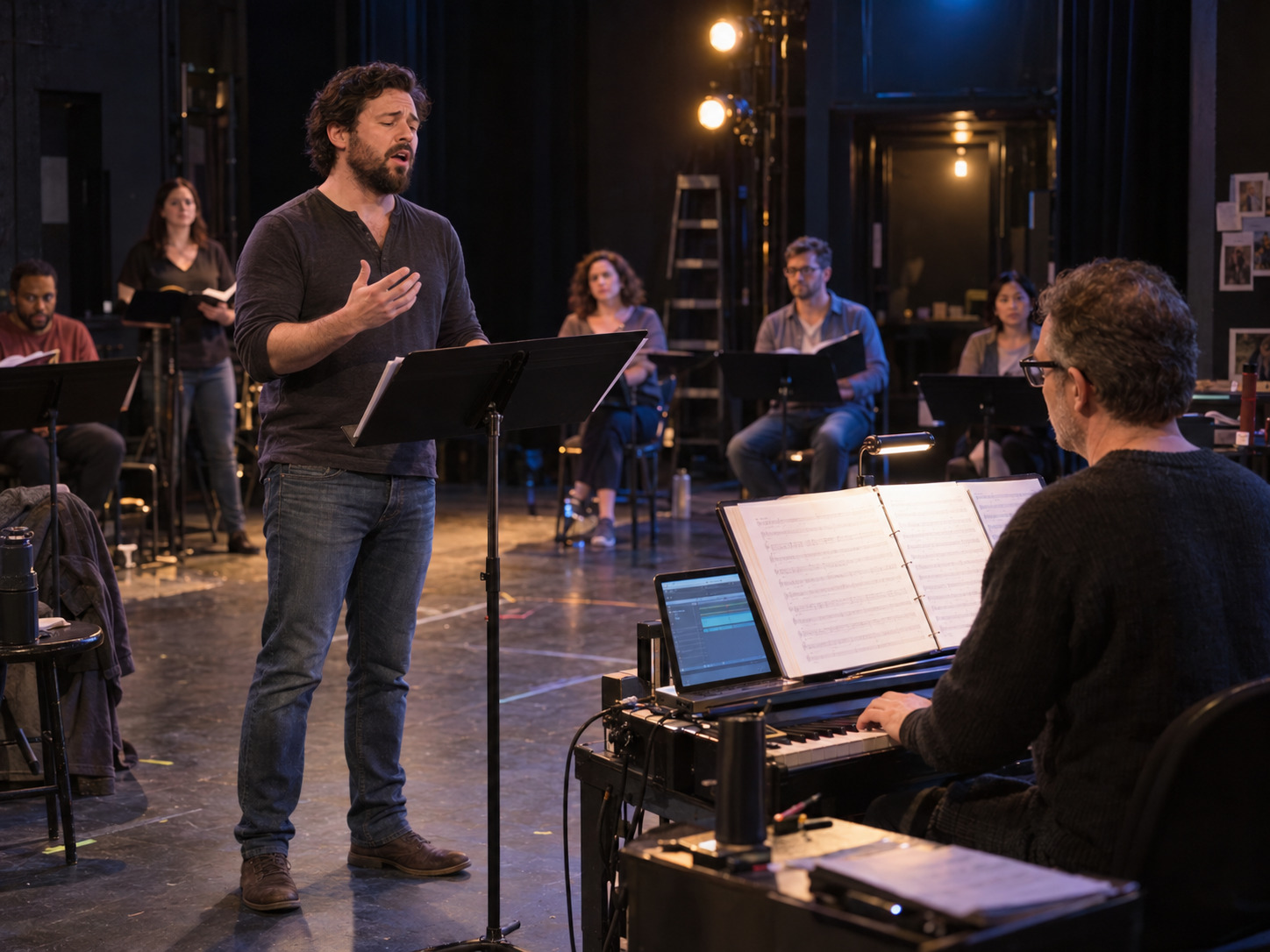
Practice entering from each landmark. Then begin earlier and continue beyond it so the cue remains part of a complete phrase.
If a breath consistently pushes the singer behind the track, test the breath plan before changing the tempo. If the confirmed performance choice still cannot fit the recording, document the exact passage and desired result for a custom request.
Build an audition cut around one transformation
When a shorter cut is permitted, choose one clear transformation rather than collecting only the most impressive notes.
A practical cut should include:
- enough introduction for the performer and room to settle;
- a first phrase that establishes the point of view;
- one meaningful turn in the argument;
- a section that shows the singer’s sustained line and storytelling;
- and an ending the operator and panel can recognize.
Test the cut from silence. The performer should know whether playback starts before the slate, after a visible cue, or from a prepared operator. Rehearse the first entrance and final release more often than another full run.
For a staged production, keep the cut aligned with the licensed materials and approved score. A theater-use license for the recording remains separate from permission to present or alter the musical. Broadwaytrax’s (guide to theater use and grand rights) explains the distinction.
A 20-minute rehearsal plan
Minutes 1–4: listen and mark
Follow the complete track. Mark the introduction, orchestral turns, restart point, final build, and ending.
Minutes 5–8: speak the argument
Speak the text in order. Name what changes in the listener at each turn.
Minutes 9–13: test the whole key
Sing from the opening through the strongest final passage. Check breath, text, and freedom across the complete arc.
Minutes 14–17: add physical choices
Place only the focus changes and movement that clarify the argument. Keep every musical cue audible.
Minutes 18–20: prove the edges
Run the start from silence and the ending into the next audition or stage moment.
Final checklist
- The exact accompaniment file is named in the rehearsal notes.
- The singer can describe the song’s action in one sentence.
- Every increase in sound follows a change in thought.
- The chosen key works through the complete final passage.
- The introduction, major orchestral turns, and ending are marked.
- Any audition cut preserves one complete transformation.
- The operator knows the playback cue and ending.
- Movement does not hide breath, microphone position, or musical landmarks.
- Any requested key, tempo, or cut change names a tested, specific need.
- Performance and recording permissions have been checked separately.
FAQ: “The Impossible Dream” backing tracks
Is this track accompaniment only?
Yes. The Broadwaytrax product page identifies it as a fully orchestrated accompaniment track with no lead vocal.
Should the singer begin quietly?
A restrained opening can be effective, but the reason matters more than the decibel level. Begin with a clear point of view and let sound grow when the argument changes.
How do I choose a key?
Test the opening, middle build, and complete final passage in one run. Choose the key that supports clear words, reliable breath, and acting choices across the whole arc.
Can the track be customized for an audition?
The product page provides options for key, tempo, and cut requests. Confirm the audition rules, mark the exact edit, and preserve a complete thought and ending.
What should the playback operator know?
Rehearse the complete arc with fully orchestrated accompaniment, or request the key, tempo, and cut that fits your performance.
Hear the AccompanimentGive the operator one approved filename, the exact start cue, a safe restart point, the ending, and what happens immediately afterward.
The useful final test is not whether the last phrase is the loudest. It is whether the listener can hear the singer make one idea more necessary with every musical turn.