Summer Theatre Camp Backing Tracks: A Rehearsal Plan That Works
By Broadwaytrax Content Studio · May 2, 2026
Updated May 2, 2026
Summer theatre camp moves fast. A cast might go from read-through to a parent performance in one or two weeks, and the music director may be sharing rehearsal time with choreography, staging, costumes, and pickups. Good backing tracks can make that schedule feel organized instead of rushed.
The goal is not just to press play. The goal is to give young performers a consistent musical map so they can learn entrances, counts, breaths, transitions, and confidence before tech.
Why camp productions need a different track plan
A summer camp show is not the same as a full semester school musical. Students are learning quickly, roles may be double-cast, and rehearsals often happen in short blocks. That makes consistency especially valuable.
For most camps, the best rehearsal track setup includes:
- A full-show folder organized in running order
- Rehearsal cuts that match the camp script and performance length
- Keys that fit young voices comfortably
- Clear lead-ins before difficult entrances
- Dance-break versions for choreography rehearsal
- Guide vocal tracks for at-home practice when appropriate
- Performance tracks that match the final cut list exactly
If the track list changes every day, singers stop trusting the music. If the tracks are clean and predictable, the room moves faster.
Build the track map before blocking starts
Before staging the first big number, decide how each song will function in rehearsal and performance. Mark the start point, end point, cut, vamp, button, and any cue that needs a spoken line, blackout, scene shift, or applause moment.
This is also the right time to separate rehearsal needs from performance needs. A choreographer may need an eight-count pickup repeated five times. A singer may need a slower practice pass. The final show may need neither. Keeping these versions labeled prevents the wrong file from making it into tech.
A simple naming system helps:
01 Opening - rehearsal with countoff01 Opening - dance break loop01 Opening - performance07 Finale - guide vocal07 Finale - performance
Use keys and cuts that protect young singers
Camp casts often include students at very different stages of vocal development. A track in the original Broadway key may be exciting, but it may not be practical for a twelve-year-old who is singing outdoors, in a gym, or after a full day of camp.
When a solo sits too high or too low, adjust the key early. When a song is too long for the final showcase, make the cut before the cast memorizes the full version. Custom keys and clean cuts are not shortcuts. They are part of making the performance usable for the singers in the room.
Broadwaytrax can also help with more specific production needs, including tempo changes, rubato, lead-ins, cues, and orchestration adjustments through (custom track services).
Match tracks to the rehearsal calendar
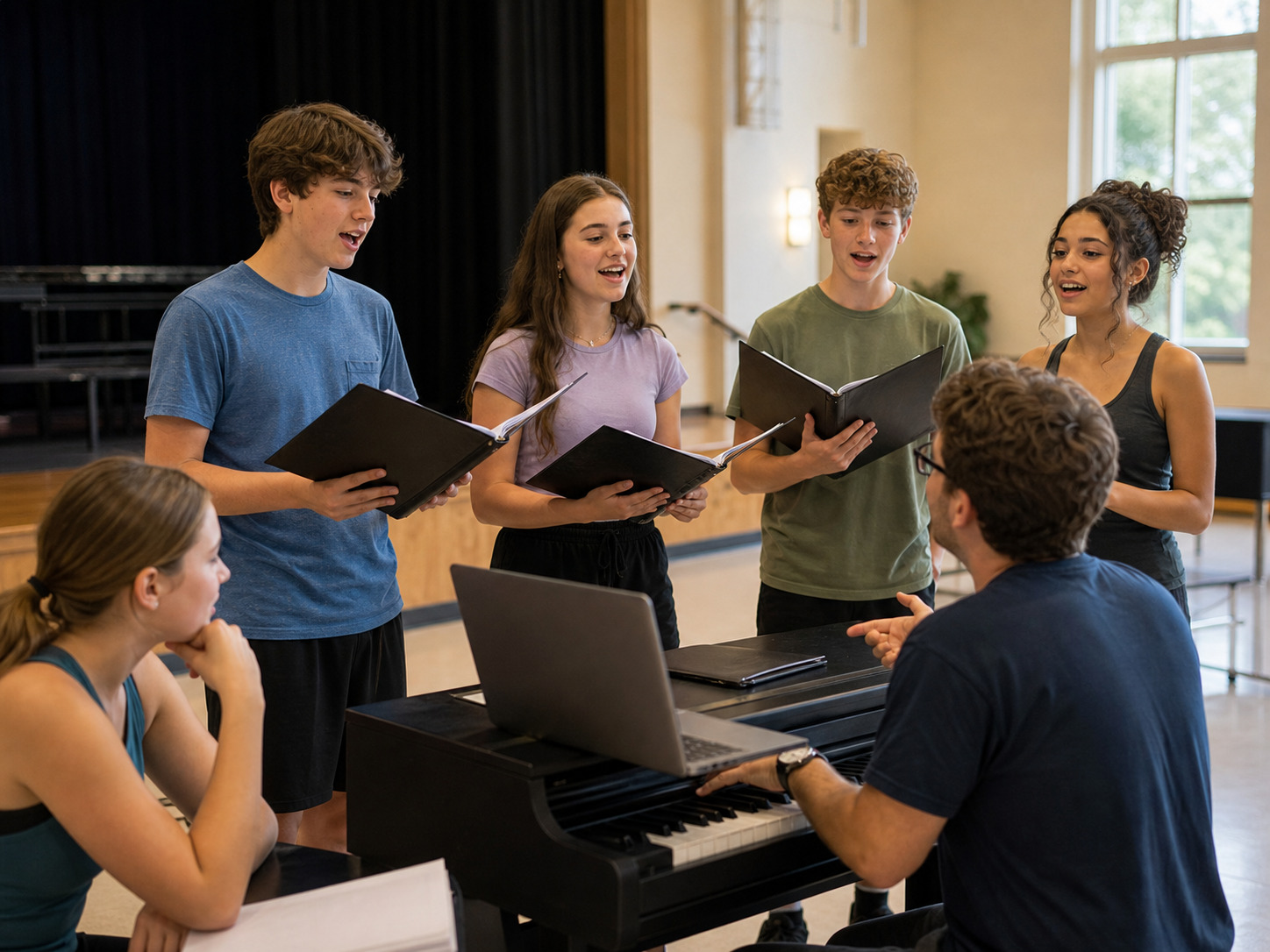
A useful camp plan usually has three phases.
Week 1: learn the music
Use guide vocal tracks, slower practice versions, and clear countoffs. Give students the same files for home practice so they are not rehearsing with random online versions that do not match your cut.
Week 2: lock the show
Move toward performance tracks. Keep any dance loops or teaching versions in a separate folder so the final playlist stays clean.
Tech and performance: simplify everything
By tech, the playback operator should see only the show order. No duplicates, no maybes, no old keys, no rough exports. The less decision-making required during the show, the better.
Quick checklist for camp directors
Before the first run-through, confirm:
- Every song title matches the script or score order
- All keys are final
- Cuts match the staged version
- Entrances have enough lead-in
- Scene-change music is labeled separately
- Guide vocal files are not in the performance playlist
- The playback device has the files downloaded locally
- A backup device or drive is ready
FAQ
Can a camp use backing tracks for a shortened musical?
Often, yes, but the track edits need to match the licensed version and the production plan. Always confirm the licensing and materials for the show, then build the tracks around the approved cut.
Are guide vocal tracks useful for kids?
They can be very useful in rehearsal and at home, especially when students are learning entrances and harmony. For performance, use instrumental tracks unless your production intentionally needs guide vocals.
Need cuts, keys, cues, or a full-show package for a camp production? Broadwaytrax can build rehearsal-ready tracks around your singers and schedule.
Start a Custom Track ProjectWhen should we request custom edits?
Request them as soon as the director knows the final keys, cuts, and pacing. Early edits give the cast time to rehearse the version they will actually perform.