Spring Awakening Has 38 Tracks. Your Cast Still Needs One Clear Rehearsal Map
By Broadwaytrax Content Studio · July 13, 2026
A full album gives the cast consistent music. It does not automatically give the rehearsal room a shared process.
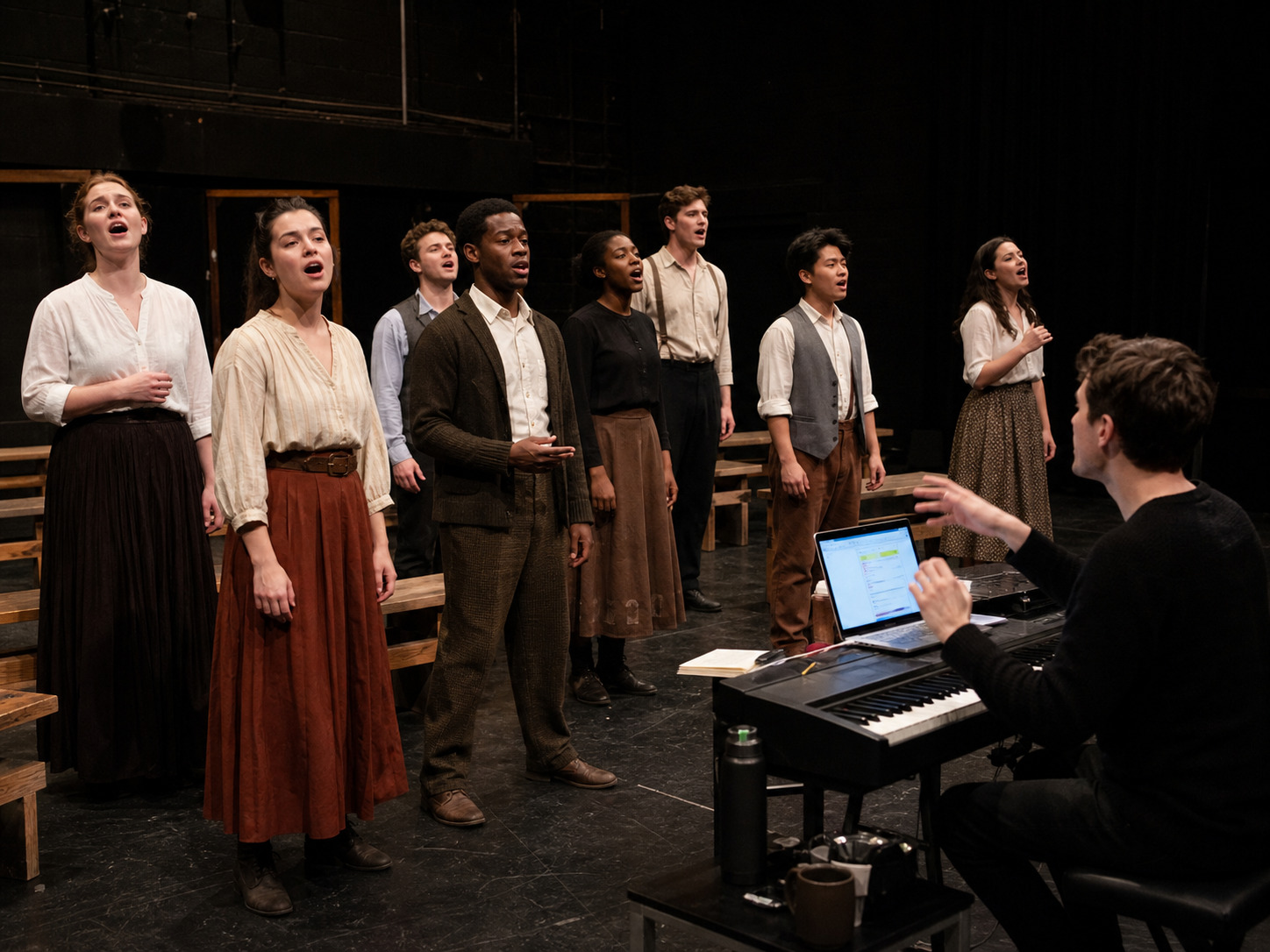
That distinction matters with a rock score built from tight entrances, layered voices, exposed solos, and ensemble numbers that can feel effortless only after every singer knows exactly where to listen. The useful plan is not simply “play the track.” It is a map that tells the cast which version to use, what the first cue sounds like, where voices stack, and when the room should move from guide vocals to accompaniment-only playback.
Bring "Spring Awakening Has 38 Tracks. Your Cast Still Needs One Clear Rehearsal Map" to life with custom tracks
Get the exact arrangement you need—either customize an existing accompaniment or commission a bespoke build from our team.
Don't see this show in our library yet? We'll build it for you.Know what is inside the album before rehearsal starts
The Broadwaytrax (Spring Awakening full album) contains 38 tracks. Tracks 1–19 are guide vocal versions, and tracks 20–38 are accompaniment-only versions. The album is recorded in the original show key and show tempo.
That structure makes it possible to give performers a clear learning path:
| Rehearsal need | Best starting file | What the cast should learn |
|---|---|---|
| First music read | Guide vocal | Melody, rhythm, pronunciation, and first entrance |
| Section rehearsal | Guide vocal, then accompaniment | Individual line against the full arrangement |
| Ensemble layering | Accompaniment | How voices enter without the recorded guide carrying them |
| Staging rehearsal | Accompaniment | Breath, movement, traffic, and cue timing |
| Tech and performance | Approved accompaniment | Playback level, operator cue, and final version |
Do not send the full folder without instructions and expect everyone to choose correctly. Label the two sets clearly in the rehearsal drive, and tell the cast when each version stops being the default.
Give every number a first-listen assignment
A rehearsal map should make the first ten seconds of each number predictable.
For every song, write down:
- who calls the start;
- whether the first cue is instrumental or vocal;
- which performer owns the first entrance;
- where ensemble voices begin to layer;
- whether the number ends with a button, tail, or transition;
- which rehearsal version is approved that week.
This keeps the music director from answering the same file question in every rehearsal. It also gives the playback operator a useful cue sheet before tech begins.
Use guide vocals as a teaching tool, not a permanent crutch
Guide vocal tracks can help a performer learn the shape of a line, but the cast eventually has to hear the accompaniment as its own musical environment.
Use a simple three-pass method:
- Listen to the guide vocal while following the score or approved lyric material.
- Sing with the guide vocal and mark breaths, pickups, and difficult intervals.
- Move to the matching accompaniment track and confirm that the entrance still feels secure.
If the cast can only enter when the recorded singer leads them, the number is not ready for staging. Make that discovery in a music rehearsal, not during a scene change in tech.
Map the ensemble layers before adding movement
The biggest rehearsal risk is often not a solo. It is the moment when several parts arrive close together and nobody is sure which sound should lead.
Build the layer in a fixed order:
- rhythm and first entrance;
- principal line;
- first supporting voice;
- remaining ensemble parts;
- movement and staging;
- microphones and final playback balance.
Ask performers to name the sound they listen for before their entrance. It may be a drum pickup, chord change, keyboard figure, breath from another singer, or lyric cue. “Listen harder” is not a cue. A specific musical event is.
For especially dense moments, keep a one-line note beside the track name: “enter after the two-beat fill,” “wait for the chord change,” or “ensemble breath belongs to the music director.”
Confirm the original key and tempo fit the production
The catalog album is in the original show key and show tempo. That is a dependable baseline, but the production still has to confirm that the selected cast, cuts, choreography, and staging can use that baseline comfortably.
Run the most demanding phrases early. Check the highest and lowest notes with the actual singer. Test whether movement changes breath support. Confirm that a transition gives the stage enough time to reset.
If a standard track is close but the production needs a different key, cut, tempo, lead-in, cue, or ending, review the (Broadwaytrax custom-track options) before the cast builds habits around the wrong version.
Keep sensitive material inside an intentional rehearsal process
The album page carries a parental advisory for explicit lyrics, and the show includes mature subject matter. A school, youth program, or community theater should make its own age-appropriate casting, rehearsal, safeguarding, and communication decisions with the producing organization and the show’s rights holder.
From a music-operations standpoint, keep the file plan controlled:
- share tracks only with the people who need them;
- use approved script and score materials;
- tell cast members which version is current;
- do not create unofficial lyric sheets from memory;
- keep rehearsal expectations clear for sensitive scenes and songs.
This article is production-planning guidance, not legal advice. The theater license offered on Broadwaytrax covers use of the Broadwaytrax sound recording. It does not replace the grand rights or other permissions required from the publisher or rights holder.
Build one folder the operator can trust
By tech, the active playback folder should be boring in the best possible way.
Keep only the approved accompaniment file for each cue in performance order. Put guide vocal tracks in a separate rehearsal folder. Add the song number, title, version date, and key when relevant. Store a backup copy offline on a second tested device.
Use a table like this:
| Cue | File | Version | Start owner | End shape |
|---|---|---|---|---|
| 01 | Song title – accompaniment | Approved July 13 | Music director | Button |
| 02 | Song title – accompaniment | Approved July 15 | Stage manager | Short tail |
| 03 | Song title – accompaniment | Approved July 18 | Music director | Transition |
The cast should rehearse from the same version the operator will use. A last-minute file swap can change an entrance, ending, or tempo relationship the room thought it knew.
FAQ: Spring Awakening rehearsal tracks
Does the album include guide vocals and accompaniment tracks?
Yes. The full album includes 19 guide vocal tracks followed by 19 accompaniment-only tracks, for 38 tracks total.
Are the tracks in the original show key and tempo?
The album page identifies the collection as a re-recording in the original show key and show tempo.
When should the cast stop using guide vocals?
Move each number to accompaniment-only playback as soon as the melody, rhythm, and entrances are secure enough to rehearse without the recorded singer leading the cast.
Can the production change a key, cut, tempo, or cue?
Broadwaytrax offers custom work for keys, cuts, tempo changes, cues, lead-ins, endings, and other production needs. Confirm any changes are also permitted by the show’s rights holder.
Does buying a theater-use license include grand rights?
No. The Broadwaytrax theater license covers use of the Broadwaytrax sound recording. Grand rights and other production permissions come from the publisher or rights holder.
Explore the complete Spring Awakening album with 19 guide vocal tracks and 19 accompaniment tracks in the original show key and tempo, then build one approved rehearsal-to-performance map for your cast.
Explore the Spring Awakening AlbumThe takeaway
The album solves the file problem. The rehearsal map solves the room problem. Separate guide vocals from accompaniment tracks, give every entrance a specific cue, move the cast off the guide version intentionally, test the original key and tempo with the actual production, and let one approved playback folder carry the show into tech.