The Sound of Music Works Better When Every Entrance Has a Cue
By Broadwaytrax Content Studio · July 1, 2026
Updated July 1, 2026
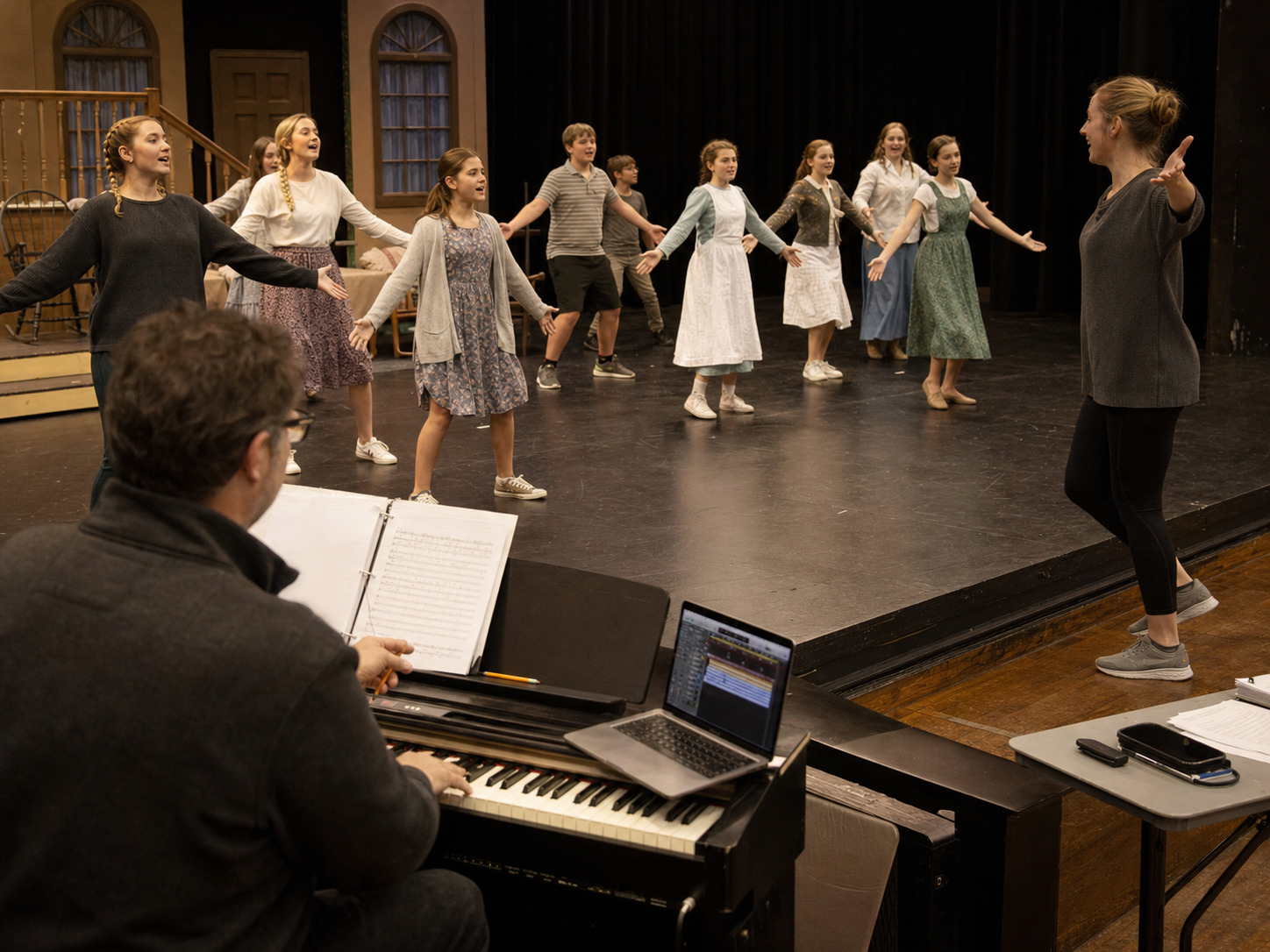
A familiar musical can feel deceptively easy until the first rehearsal with children, chorus, principals, scene changes, and playback all in the room.
The practical work is not only learning the songs. It is getting every entrance, pickup, cutoff, and transition to feel calm enough that the story can breathe. A good backing-track plan gives the cast a dependable musical shape before tech week adds microphones, costumes, sets, and audience pressure.
Bring "The Sound of Music Works Better When Every Entrance Has a Cue" to life with custom tracks
Get the exact arrangement you need—either customize an existing accompaniment or commission a bespoke build from our team.
Don't see this show in our library yet? We'll build it for you.Start with the album as the shared reference
For a full production, the (Broadwaytrax Sound of Music full album) is the cleanest starting point. It gives the music director, director, choreographer, cast, and playback operator the same musical source instead of a mix of rehearsal recordings, piano-only habits, and last-minute file swaps.
Use the album early for:
- principal learning sessions;
- youth ensemble rehearsals;
- chorus entrances;
- choreography tempo checks;
- at-home practice;
- first playback tests in the rehearsal room.
The goal is version control. Everyone should know which file is being learned, which file is being staged, and which file is intended for performance.
Mark the entrances that can drift
This score includes several different kinds of cues. Some are broad ensemble starts. Others are quiet personal entrances. Some need children to enter together. Others need the sound operator to leave room for dialogue or movement.
Before rehearsals harden, make a simple entrance map:
| Moment | What to confirm |
|---|---|
| First vocal entrance | Who gives the pitch or cue, and how much intro the singer hears |
| Children and chorus | Whether the group enters by count, gesture, or lyric pickup |
| Dance or movement sections | Whether the tempo supports the staging |
| Dialogue into music | Which line, gesture, or blackout starts playback |
| Ending buttons | Whether the track stops, holds, or carries into the next moment |
This map does not need to be complicated. It needs to be clear enough that the person at playback is never guessing.
Use guide vocals for confidence, then separate rehearsal from performance
Guide vocals can be useful when a cast is still learning melody, entrances, phrasing, and ensemble shape. They can be especially helpful for younger performers who need repeated listening away from the rehearsal room.
But guide vocals and accompaniment tracks should not stay mixed together forever.
A practical sequence:
- Teach with guide vocals where available.
- Rehearse the same section with accompaniment only.
- Note where singers still need a pickup or longer lead-in.
- Decide whether the standard file works for the staging.
- Move final performance files into a clean playback folder.
That last step matters. A tech table with old guide-vocal files, rehearsal cuts, and final files in the same folder is a preventable problem.
Plan around the children without slowing the whole show
When a show includes young performers, the track plan has to support confidence without making the production feel heavy.
Look for the places where a child or group needs practical help:
- a clearer intro;
- a steadier tempo;
- a pickup before a line;
- a rehearsal edit that repeats a difficult section;
- a cue that gives the stage manager a cleaner call.
Not every moment needs a custom file. Many productions can use the standard album well. The useful question is where the room repeatedly struggles for a musical reason, not where one rehearsal was messy.
Keep show rights and track rights organized
Backing tracks solve accompaniment and playback needs. They do not replace the show performance license or grand-rights permission required to stage the musical.
Keep these pieces separate:
- the performance license for the show;
- Broadwaytrax purchase and theater-use records for the tracks;
- rehearsal notes;
- custom-track requests;
- the final playback folder;
- the sound-operator cue sheet.
That organization protects the production from confusion and makes it easier for a school, board, venue, or parent team to understand how the music is being handled.
When custom support helps
Custom work is most useful when the production has already identified a specific need. Vague requests create vague fixes. Rehearsal notes create useful fixes.
Common custom needs include:
- key changes for a principal;
- a shorter or longer intro;
- a clean cut for staging;
- a tempo adjustment for choreography;
- a button or hold before dialogue;
- a lead-in that gives a child or ensemble time to breathe.
If a standard track works, keep it. If a cue problem keeps returning, document the moment and request a version built around the production.
FAQ: The Sound of Music backing tracks
Should a school use a full album or individual tracks?
If the school is staging the full production, start with the album. Individual tracks are useful for auditions, classroom work, or isolated numbers, but a production needs a shared version map across the score.
Are guide vocals useful for children?
Yes. Guide vocals can help young performers learn melody, entrances, and phrase length. Move gradually toward accompaniment-only rehearsal so the final performance file is familiar before tech.
When should we ask for a custom edit?
Ask when the production has a defined need: key, cut, tempo, intro, cue, button, or lead-in. Tie the request to a rehearsal moment so the edit solves the real problem.
What should the playback operator receive?
Give the operator final files, song order, cue sheet, start/stop notes, and any custom-version labels. Do not leave old rehearsal versions in the live playback folder.
The takeaway
Rehearse The Sound of Music with the Broadwaytrax full album, then use custom support when your production needs keys, cuts, lead-ins, tempo adjustments, or cleaner cues for the cast.
View The Sound of Music AlbumThe score works best when the music feels settled before the stage gets busy.
Use the full album as the shared reference, separate learning files from performance files, mark the entrances that can drift, and request (Broadwaytrax custom support) only where the production needs a real key, cut, tempo, lead-in, or cue solution.