Planning Seussical Rehearsals With Tracks Young Casts Can Follow
By Broadwaytrax Content Studio · May 9, 2026
Updated May 13, 2026
Seussical looks playful from the audience, but it asks a lot from the rehearsal room. The score moves quickly between storybook character work, ensemble rhythm, school-friendly staging, and songs that need clean entrances from young or mixed-experience casts.
That is where dependable backing tracks help. A clear track gives the cast a steady musical map while the director and music director solve choreography, storytelling, and pacing.
Bring "Planning Seussical Rehearsals With Tracks Young Casts Can Follow" to life with custom tracks
Get the exact arrangement you need—either customize an existing accompaniment or commission a bespoke build from our team.
Don't see this show in our library yet? We'll build it for you.Why Seussical needs a strong rehearsal plan
Seussical is popular with schools and community theaters because it gives many performers something meaningful to do. The same strength can also make rehearsal complicated. There are group numbers, character-driven solos, fast transitions, and ensemble moments where singers need to know exactly when to enter.
A good backing-track plan helps with:
- teaching entrances before the cast is fully off-book,
- keeping choreography tied to consistent tempos,
- helping younger singers hear their starting pitches,
- giving teachers and directors repeatable rehearsal tools,
- preparing sound cues before tech week,
- and keeping the show moving when rehearsal time is limited.
Use guide vocals early, then move toward performance tracks
Guide vocal tracks are especially useful in the first half of the rehearsal process. They let students hear melody, phrasing, cutoffs, and the general shape of a number without waiting for every sectional to be taught live.
Once the cast understands the music, start transitioning toward instrumental performance tracks. That change should happen before tech week. Singers need time to carry the line themselves, and the sound team needs time to learn how each track starts, builds, and ends.
Match the track plan to the cast you actually have
School and community productions rarely match a cast album exactly. One singer may need a lower key. A dance break may need more time. A scene change may require a longer vamp. A classroom production may need a cleaner ending so the next cue lands confidently.
Before ordering or customizing tracks, list the places where your production may need support:
- solo keys that sit too high or too low,
- cuts for younger performers,
- extended intros for staging,
- vamps for choreography or scene changes,
- guide vocals for at-home practice,
- and performance tracks for the final run.
Those notes keep the music aligned with the production instead of forcing the production to chase the tracks.
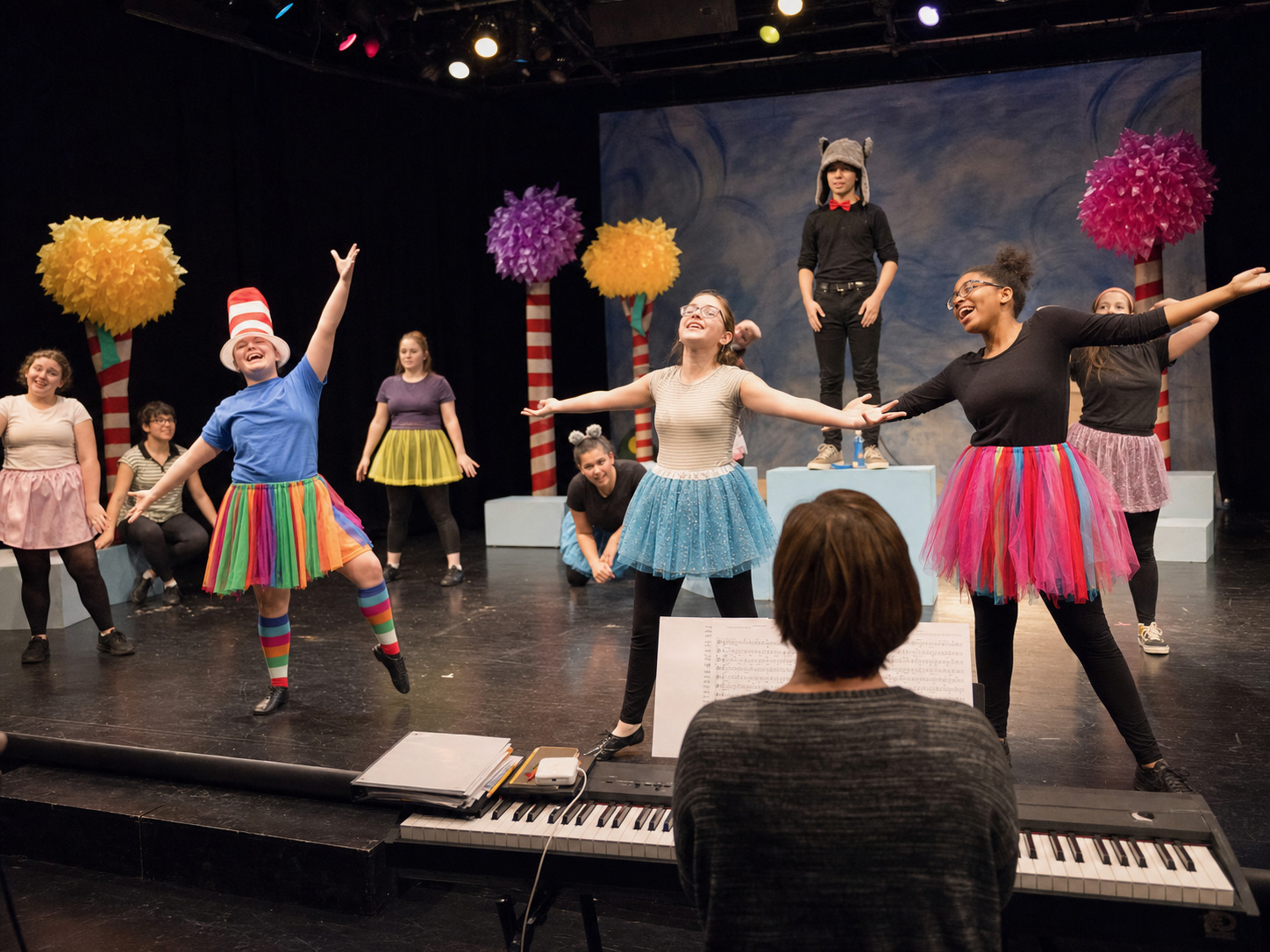
A practical Seussical rehearsal sequence
Start with the full-show album and guide vocals where available. Give singers a consistent reference so they can practice outside rehearsal without guessing at tempo or form.
Next, build a cue sheet for every number. Mark starts, stops, vamps, pickups, and any places where the director expects the track to support movement. This does not need to be complicated. A shared rehearsal document is enough if the music director, stage manager, and sound operator all use it.
Then rehearse transitions. Many productions practice songs separately for weeks and only discover late that the problem is the space between songs. Backing tracks work best when the cast knows how each number enters the scene, not just how it sounds once everyone is singing.
Common custom requests for Seussical
The most common production-specific requests are not flashy. They are practical:
- lower keys for student voices,
- shorter dance sections,
- clearer buttons at the end of ensemble numbers,
- extra counts for entrances,
- clean rehearsal versions with guide vocals,
- and performance versions without vocals.
Those details make a show feel calmer in tech because the track is supporting the staging instead of fighting it.
Licensing and performance use
Backing tracks solve the recording side of the production. They do not replace permission to perform the musical. Schools and theaters should confirm performance rights with the appropriate licensing house and separately confirm that the tracks they use are cleared for the intended rehearsal or performance setting.
Keep show rights, track receipts, custom notes, and cue sheets in the same production folder. That makes it easier for the director, producer, music director, and sound operator to answer questions quickly.
The takeaway
Rehearse Seussical with a full-show album built for cast practice, classroom work, and performance planning.
View Seussical AlbumSeussical works best when the music feels joyful, secure, and easy for the cast to follow. The right backing tracks can give a school or community theater production the consistency it needs while still leaving room for character, staging, and student confidence.
Start with the Broadwaytrax Seussical album, then identify any keys, cuts, guide vocals, or cue adjustments your production needs before tech week.