Seussical Needs a Cue Plan Before the Room Gets Loud
By Broadwaytrax Content Studio · June 30, 2026
Updated June 30, 2026
Seussical can sound simple from the audience because the world is bright, the characters are clear, and the music moves with a playful kind of confidence. In rehearsal, that same energy can get loud fast.
There are young performers, character voices, ensemble entrances, fast transitions, and songs that depend on everyone hearing the same cue. A good backing-track plan gives the room a shared musical floor before staging, choreography, and tech add pressure.
Bring "Seussical Needs a Cue Plan Before the Room Gets Loud" to life with custom tracks
Get the exact arrangement you need—either customize an existing accompaniment or commission a bespoke build from our team.
Don't see this show in our library yet? We'll build it for you.Why this show needs more than a playlist
Seussical is often a strong fit for schools, youth programs, and community theaters because it gives many performers something to do. That is also why the rehearsal room needs structure.
The practical challenges usually include:
- ensemble entrances that need consistent pickups;
- character moments that can rush when the cast gets excited;
- transitions that need clear starts and endings;
- young singers who need guide-vocal practice before accompaniment-only work;
- choreography that depends on stable tempo;
- sound operators who need a version map before tech week.
A playlist can hold the files. It cannot tell the cast what happens next. That part needs a cue plan.
Start with the full-show album
The (Broadwaytrax Seussical album) is the cleanest starting point when the production is still learning the score. It gives the music director, cast, choreographer, and playback operator a common reference instead of separate rehearsal habits.
Use the album early for:
- first listen-throughs;
- cast-at-home practice;
- blocking rehearsals;
- dance tempo checks;
- guide-vocal learning where available;
- early sound-system testing.
If your team is still comparing show options or building the season plan, the (full albums category) is also a useful way to see how Broadwaytrax organizes complete-show accompaniment resources.
Build the cue sheet before staging hardens
The best cue sheet is simple enough for a substitute stage manager to understand.
For each number, track:
| Cue | What to note |
|---|---|
| Start | Who calls the track, and what line or movement comes before it |
| Intro | Whether the singer needs a pitch, count, or longer lead-in |
| Tempo | Whether choreography, diction, or young singers need a steadier feel |
| Cut | Any school, licensing, or staging cut that affects the file |
| End | Button, fade, hold, or transition into dialogue |
| Version | Album, guide vocal, rehearsal edit, or performance final |
This is not busywork. It prevents the team from discovering during tech that three people are using three different versions of the same moment.
Use guide vocals for learning, then move toward performance files
Guide vocal tracks are useful when singers are learning entrances, melody shape, and phrase length. They are especially helpful for younger casts that need to practice away from the rehearsal room.
But the final performance plan should identify which files are for learning and which files are for playback.
A practical sequence:
- Listen with guide vocals where available.
- Rehearse sections with accompaniment tracks.
- Mark any key, cut, tempo, or cue issues.
- Confirm the performance version.
- Remove old rehearsal versions from the live playback folder.
The playback operator should never have to guess which file is current.
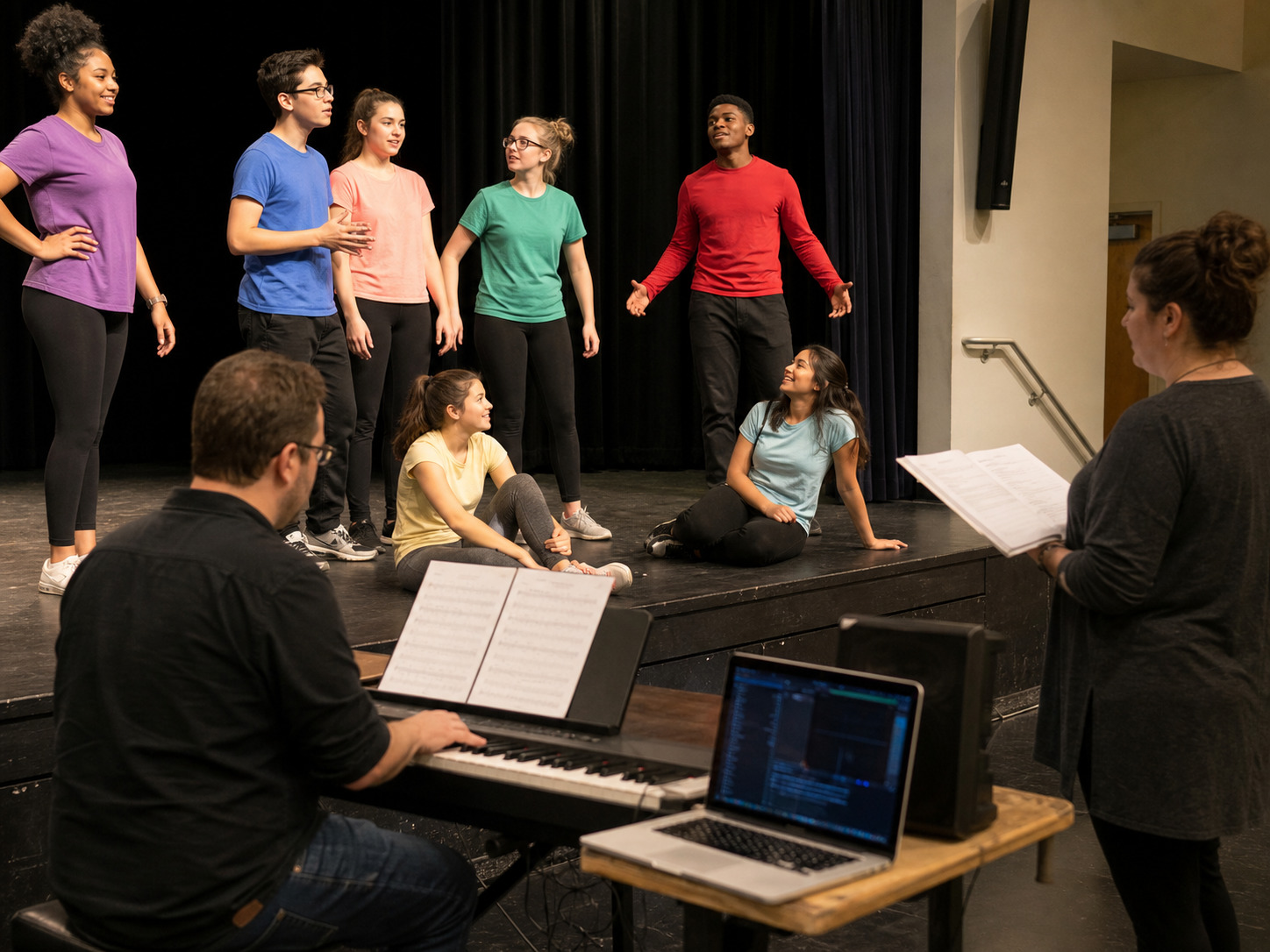
Watch the transitions
Many Seussical rehearsal problems happen between songs, not inside them. A cast may know the number but still lose the story if a transition begins late, cuts off too quickly, or leaves too much silence.
Look for moments where a custom cue could help:
- a short vamp into movement;
- a slightly longer intro for a young soloist;
- a cleaner button before dialogue;
- a cut that follows the staged version;
- a tempo adjustment for choreography;
- a rehearsal version that separates a difficult section.
If the standard track is right, keep it. If the room repeatedly needs a different musical shape, write that down before the request becomes urgent.
Keep licensing and track work separate
Backing tracks help with accompaniment and rehearsal. They do not replace the need to confirm show performance rights with the proper licensing source.
For a school or community production, keep the paperwork clear:
- show performance license;
- track purchase or download receipts;
- custom-track notes and approvals;
- final playback folder;
- cue sheet for the stage manager and sound operator.
That separation makes the production easier to manage and easier to explain if a parent, administrator, board member, or venue asks how the music is being handled.
FAQ: Seussical backing tracks and rehearsal planning
Should a school start with individual songs or a full album?
If the school is staging the full show, start with the album plan. Individual songs can be useful for auditions, classroom work, or isolated rehearsal needs, but a production needs version control across the whole score.
When should we request a custom edit?
Request a custom edit when the production has a specific need: key, cut, tempo, lead-in, button, vamp, or cue timing. Vague requests are harder to solve than rehearsal notes tied to a real moment.
Are guide vocals useful for a young cast?
Yes. Guide vocals can help students learn entrances, melody, and pacing. Move gradually toward accompaniment-only rehearsal once the cast knows the music.
What should the sound operator receive before tech?
Give the sound operator the final playback folder, a cue sheet, song order, file names, and notes on starts, stops, fades, and any custom versions.
The takeaway
If your Seussical rehearsal needs a different key, cut, tempo, intro, cue, or performance-ready version, Broadwaytrax can help turn the standard album plan into a production-specific track setup.
Start a Custom Track ProjectSeussical works best when the room can stay joyful without losing the cue.
Start with the album, build the cue sheet early, use guide vocals for learning, and identify the few places where the production truly needs a custom track. If your staging exposes a real key, cut, tempo, or cue need, (start a Broadwaytrax custom track project) before tech week turns it into a scramble.