Start the Purchase Order Before Your Musical Needs the Tracks
By Broadwaytrax Content Studio · September 10, 2026
Updated September 10, 2026
The short answer: if your school requires a purchase order for musical-theater backing tracks, begin the purchasing process as soon as the production knows the likely scope, billing contact, and first rehearsal deadline. Do not wait until the cast needs the finished files.
A music director can decide that a song needs a lower key in one rehearsal. A school purchasing office may need a vendor setup, quote, purchase-order number, invoice route, or internal signature before that change can be ordered. Those are different clocks.
The goal is not to rush the business office. It is to give the school, production team, and track producer one clear path from approved musical need to usable rehearsal files.
Separate the three approvals before anyone orders
Schools often use the word “license” for several different things. Keep these decisions separate:
- Permission to perform the musical. The school obtains the show license or grand rights from the publisher or rights holder.
- Permission to use a particular recording. The track provider explains how its recording may be used. Broadwaytrax theater-use terms apply to the Broadwaytrax recording; they do not replace the show license.
- Approval to spend school funds. The school’s purchasing process determines who may approve a quote, issue a purchase order, receive an invoice, and release payment.
One approval does not automatically create the others. A licensed school production still needs an approved way to buy its recordings. A purchase order still does not grant permission to perform the show.
For a fuller rights overview, use the Broadwaytrax guide to (backing tracks, theater use, and grand rights), then confirm show-specific questions with the appropriate licensing source.
Ask the purchasing office what it needs first
Before requesting a formal quote, ask the person who handles school purchasing a few plain questions:
- Does the school require a purchase order before work begins?
- Does a new vendor need to complete a registration form?
- Who should receive the quote and invoice?
- Does the school need a purchase-order number printed on the invoice?
- Who can approve the musical scope and who can approve the payment?
- Are there internal deadlines, board dates, or dollar thresholds that affect timing?
- Does the school require tax, insurance, banking, or vendor documentation?
Do not guess at these answers or copy another school’s process. A district, charter school, private school, university, camp, and community program may all handle the same purchase differently.
Once the route is clear, give Broadwaytrax the correct billing contact rather than making the music director carry every procurement question between departments.
Bring a scope the business office can understand
“Backing tracks for the spring musical” may be clear inside the rehearsal room and still be too vague for a quote.
Describe the order in ordinary terms:
- production or show name;
- school or organization;
- whether the request covers one song, selected numbers, or a full show;
- whether the files are catalog tracks, customizations, or a new custom production;
- known keys, cuts, tempos, vamps, cues, lead-ins, endings, or orchestration needs;
- guide-vocal or rehearsal versions needed;
- first date the cast needs usable files;
- performance dates;
- one musical approver;
- one purchasing or billing contact.
This does not mean every artistic choice must be frozen before the first conversation. It means the quote needs a boundary. A school can say, “We expect a full-show package, with three likely key changes and one shortened dance break,” then identify which details remain under musical review.
Choose the ordering path that matches the production
Broadwaytrax currently supports several kinds of work through its (custom-track service):
- a catalog track when the existing key, form, and arrangement already fit;
- a single-track customization for a key, tempo, or cut adjustment;
- a full-show package for coordinated songs, cues, transitions, and revisions;
- a custom production for original arrangements, medleys, or broader builds.
The useful question is not which option sounds most complete. It is which scope matches the approved production problem.
A single change should not become a full-show project by accident. A full show with shared key, cue, and transition needs should not be split into unrelated emergency orders merely because purchasing started late.
Broadwaytrax’s current custom-service page says schools and organizations can use a purchase order by contacting the team so invoicing can be set up with the billing department. It also explains that customizations and single-track orders are billed up front, while full-show and larger projects use a deposit and final-payment structure. Confirm the current quote and payment schedule for the exact project before the school issues its purchase order.
Build the timeline backward from first use
Opening night is not the first meaningful deadline.
Work backward from the first rehearsal that depends on the final musical choice:
| Milestone | What should be ready |
|---|---|
| First music rehearsal | Catalog references, guide vocals, and likely keys |
| Staging or choreography rehearsal | Approved cuts, tempos, repeats, and dance needs |
| First full run | Usable show-order files and cue notes |
| Tech | Approved performance versions, backups, and operator handoff |
| Opening | No unresolved purchasing or file-version question |
Then add the school’s procurement lead time before production begins. If vendor setup takes a week, the quote cannot arrive the day the cast needs a new key.
Rush service may be available, but speed does not remove the need for a clear scope, purchasing authority, musical approval, or a rehearsal that proves the result.
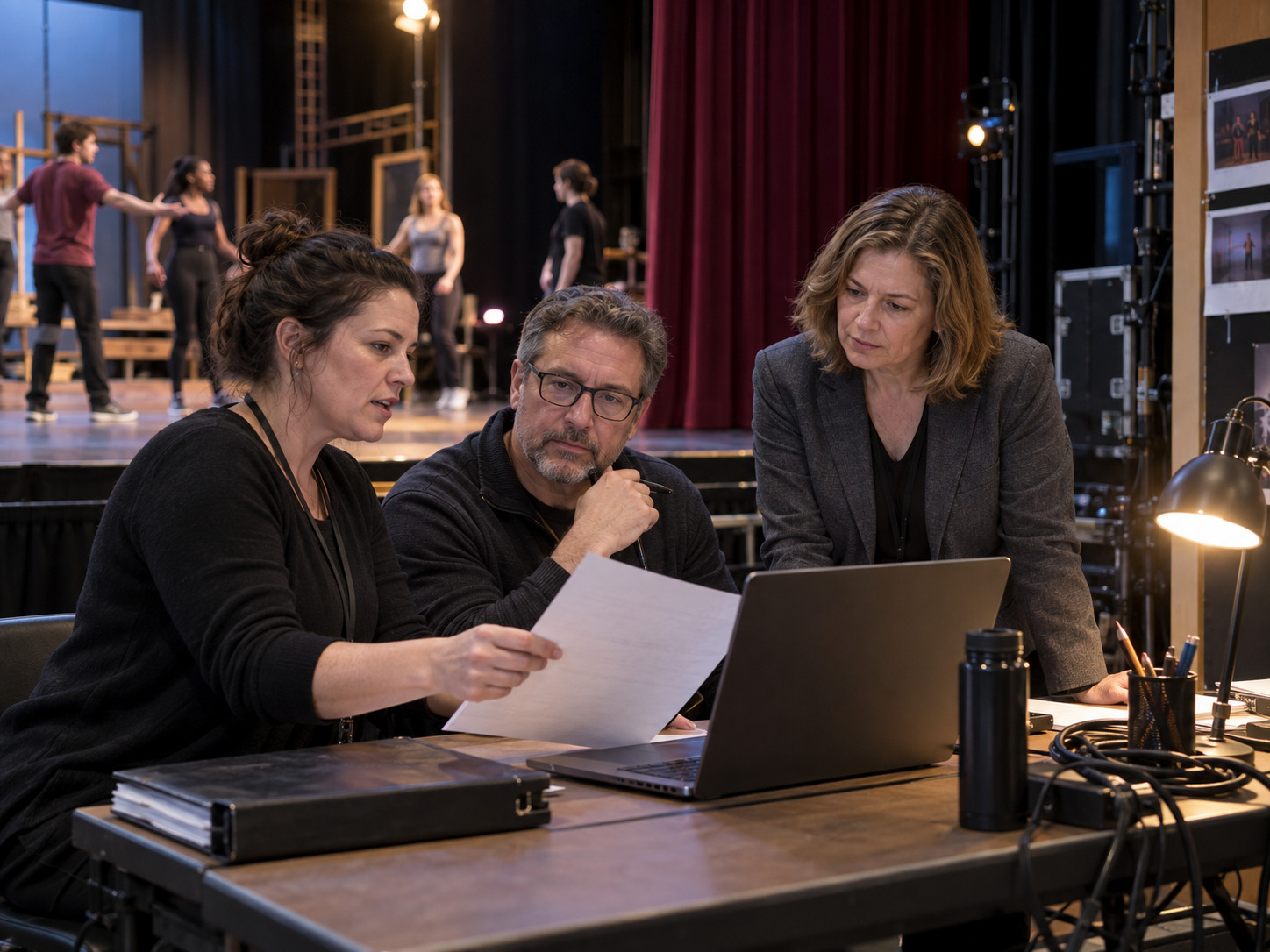
Give one person authority to consolidate music notes
A purchasing office needs one approved price. A track producer needs one buildable brief. Neither can work efficiently when the director, choreographer, music director, and administrator submit competing versions of the request.
Choose one production contact to consolidate musical notes. That person should:
- collect input from the relevant rehearsal leaders;
- separate confirmed changes from ideas still being tested;
- match every request to a song, cue, or musical landmark;
- approve the quote scope before it reaches purchasing;
- review proofs and revisions against the approved request;
- tell the business office when the contractual delivery milestone has been met.
The purchasing contact does not have to decide the key. The music director does not have to interpret an invoice. Give each person the decision they are equipped to make.
Keep the purchase order and rehearsal record aligned
After the purchase order is issued, preserve the documents that explain what the school actually bought:
- approved quote;
- purchase-order number;
- invoice contact and billing instructions;
- show and track scope;
- agreed production milestones;
- approved musical brief;
- revision notes;
- delivery receipt;
- final file list and download location;
- show-rights and recording-use records kept in their proper places.
Do not place private billing information inside the cast’s rehearsal folder. The stage manager and sound operator need the final file names, cue notes, and backup location—not the school’s financial documents.
At the same time, do not let the business record become so separate that the purchasing office cannot tell whether the approved work was delivered.
A purchase-order readiness checklist
Before sending the request, confirm:
- The production has identified the correct show and track scope.
- Show rights and recording-use questions are being handled separately.
- The school has named its purchasing and billing contacts.
- Vendor-setup requirements are known.
- The quote will include the information the school needs.
- One production contact can approve musical details.
- The first rehearsal-use date is earlier than the performance date.
- Known keys, cuts, tempos, cues, and version needs are documented.
- The school understands the quoted deposit or payment schedule.
- Delivery files and business records will be stored in appropriate locations.
If three of those items are still unknown, the next step is a short conversation—not an urgent order with a blank scope.
FAQ: school purchase orders and backing tracks
Can a school pay Broadwaytrax with a purchase order?
Yes. The current Broadwaytrax custom-service page says the team can set up invoicing with an organization’s billing department. Contact Broadwaytrax early so the quote and school process can be aligned before the production deadline.
Does the purchase order cover the show license?
Only if the school’s own purchase documentation explicitly includes a separate rights-holder transaction. Buying Broadwaytrax recordings does not replace permission to perform the musical. Treat show rights and track use as separate approvals.
When should a school request a quote?
Request it when the production can describe the likely scope and the first rehearsal milestone. Do not wait for tech week merely because some artistic details are still developing.
What if the final keys and cuts are not decided yet?
State what is known, identify the open choices, and give each one a decision date. A preliminary scope can still help the school understand the likely purchasing path, but the production should not authorize an undefined build.
Should the music director or business office contact Broadwaytrax?
Both may be involved, but give each one a clear role. The music director owns the musical brief. The purchasing or billing contact owns vendor, purchase-order, and invoice requirements. One shared thread can keep the handoff visible.
The takeaway
A purchase order should make a school production more accountable, not make the music arrive late.
If your school needs a purchase order or invoice, bring Broadwaytrax the likely track scope, first rehearsal deadline, musical approver, and billing contact. The team can help align the quote with your organization’s purchasing process.
Plan a School Track OrderSeparate performance rights, recording use, and school spending approval. Ask the business office what it needs. Define the track scope in language a buyer can understand. Work backward from first rehearsal use. Then let one musical approver and one purchasing contact carry the order through quote, production, delivery, and final recordkeeping.
That preparation gives the cast what it actually needs: the right files in time to rehearse them.