The Pirates of Penzance Backing Tracks for Rehearsal and Performance
By Broadwaytrax Content Studio · May 7, 2026
Updated May 7, 2026
The Pirates of Penzance can feel deceptively simple until the room starts rehearsing it.
The songs are tuneful, the comedy is fast, and the audience usually knows at least one patter number before the curtain rises. But for schools, community theatres, universities, opera workshops, and youth companies, the practical challenge is keeping the whole score consistent: recitative, ensembles, choruses, finales, patter, entrances, and transitions.
Bring "The Pirates of Penzance Backing Tracks for Rehearsal and Performance" to life with custom tracks
Get the exact arrangement you need—either customize an existing accompaniment or commission a bespoke build from our team.
Don't see this show in our library yet? We'll build it for you.A full-show backing track plan gives the cast one dependable musical foundation from first rehearsal through closing night. The goal is not to replace musical direction. The goal is to give the music director, director, choreographer, sound team, and performers a shared version of the show that supports real staging.
Why Pirates needs a full-show plan
The score moves between comic dialogue, patter, lyrical soprano moments, male chorus work, police chorus comedy, and big act finales. If a production builds the show from scattered rehearsal files, old piano recordings, or mismatched tracks, the cast can spend too much energy adjusting to the accompaniment instead of playing the scene.
A coordinated full-show album helps with:
- consistent tempos from rehearsal to performance,
- clear entrances for singers and chorus groups,
- reliable act-finale structure,
- repeatable cueing for choreography and blocking,
- a cleaner sound for productions without a full pit,
- and easier handoff between the music director and the sound operator.
The (Broadwaytrax Pirates of Penzance full-show album) is built for that kind of production use, with accompaniment tracks covering Act I and Act II musical numbers, recitatives, trios, ensembles, and finales.
Rehearsal priorities for a school or community production
Start with the moments that can create the most confusion later. Pirates is funny because the musical timing is precise. A late entrance, rushed patter section, or unclear choral cutoff can blur the joke.
Patter and comic text
"I Am the Very Model of a Modern Major-General" is the obvious example, but the whole show depends on rhythmic speech and sung language landing together. Rehearse patter slowly first, then bring it up to track tempo only when consonants, breath points, and character choices are stable.
If a performer needs more space for diction, make that decision early. A small tempo adjustment or planned pickup is easier to solve before blocking and choreography are locked.
Chorus entrances
Pirates has several moments where groups need to enter with confidence, not drift in by ear. The daughters, pirates, police, and ensemble sections all benefit from clear count-ins, marked starts, and repeated track references.
Give chorus members the exact track names they will rehearse with at home. If the music director changes a cut or cue, update everyone at once so the cast is not practicing from different versions.
Act finales
The finales are where a full-show accompaniment plan matters most. These sections are longer, more layered, and less forgiving than a standalone audition cut. Work the transitions in order: dialogue cue, musical entrance, blocking move, lyric pickup, button, and scene shift.
Do not wait until tech week to find out whether a scene change needs four extra bars or whether a group crosses on top of a vocal pickup.
Where custom edits help
A standard full-show album solves the biggest consistency problem. Custom edits solve production-specific problems.
Common Pirates requests include:
- lowering or raising a key for a school-age performer,
- adding a cleaner lead-in before a difficult entrance,
- adjusting a patter tempo for diction,
- extending a vamp for choreography,
- shortening a scene transition,
- creating a rehearsal guide vocal for a performer who learns by ear,
- or matching a cut approved for the production.
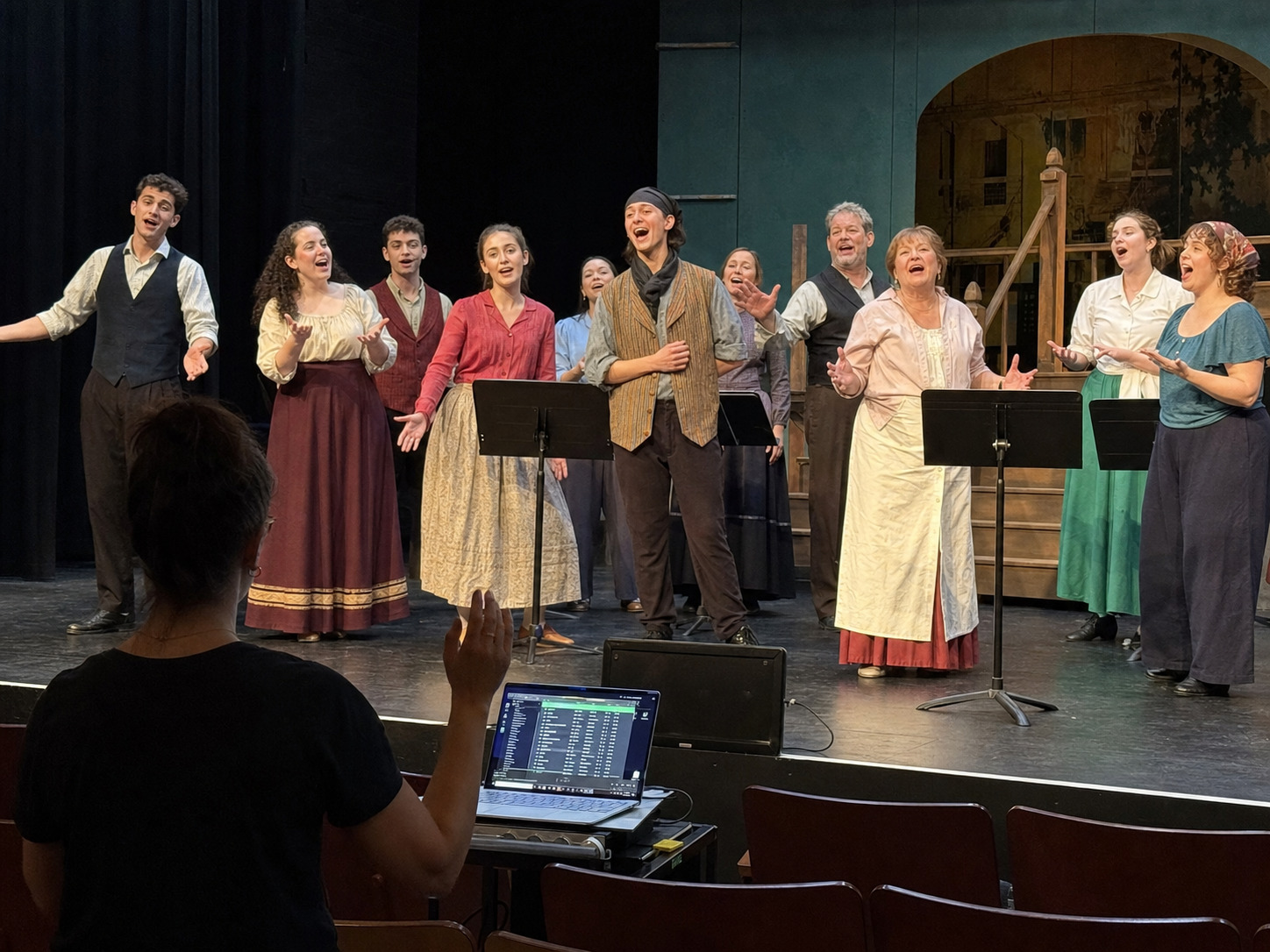
Broadwaytrax custom services can handle (keys, cuts, tempo changes, cueing, and full-show production support) when the stock track is close but your staging needs something more specific.
Licensing notes before performance
For a public production, the show rights and the track rights are separate planning items.
The show license or grand rights permission covers your right to perform The Pirates of Penzance in your venue, on your dates, with your audience. The theater-use license for a Broadwaytrax recording covers use of the sound recording in performance. One does not replace the other.
Before rehearsal begins, confirm:
- whether your organization has the rights needed to stage the show,
- whether the backing tracks are licensed for theater use,
- whether streaming, video, archival recording, or social clips need separate permission,
- and whether any planned changes to cuts, lyrics, dialogue, orchestration, or structure are allowed by the rights holder.
Keep track receipts, licensing paperwork, cue notes, and final MP3/ZIP files in one production folder so the producer, music director, and sound team can all find the same materials.
A practical Pirates backing track checklist
Use this before the first music rehearsal:
- Choose whether the production needs the full album, individual tracks, custom edits, or a full-show custom package.
- Confirm the track version the cast will rehearse with.
- Mark song starts, dialogue cues, cutoffs, vamps, and buttons in the rehearsal script.
- Give the sound operator a clean track list in show order.
- Test every track through the actual speaker system before spacing rehearsal.
- Decide which numbers need guide vocals during early rehearsal and which need performance tracks only.
- Identify key, tempo, and cut issues before choreography is finalized.
- Keep a backup copy on a second device for rehearsals and performances.
The earlier you make those decisions, the more room the cast has to focus on character, language, and comedy.
FAQ: Pirates of Penzance backing tracks
Can backing tracks work for a full Pirates production?
Yes. A full-show accompaniment album can support rehearsals and performances when the production needs consistent orchestral sound without hiring a full pit. The key is using a coordinated track set, not a collection of unrelated practice files.
Do we still need a music director?
Yes. A music director is still important for teaching style, diction, phrasing, breath, cutoffs, ensemble balance, and rehearsal discipline. The tracks provide the musical foundation; the music director shapes how the cast performs with it.
Can the tracks be changed for our cast?
Often, yes. Key changes, cuts, tempo adjustments, lead-ins, and cue edits can usually be scoped as custom work. Confirm early so performers rehearse the version they will actually use.
Is a theater-use license the same as show rights?
No. Theater-use licensing covers the Broadwaytrax recording. Show rights or grand rights cover permission to present the stage work. For performances, plan for both.
The takeaway
Get the complete Pirates of Penzance accompaniment album for rehearsals, auditions, and full stage productions, with theater-use licensing available.
View the Pirates Full-Show AlbumPirates works best when the music feels effortless enough for the comedy to breathe. That takes more than a good track. It takes a clear rehearsal plan, a consistent show order, smart cueing, the right keys, and licensing sorted before opening night pressure begins.
Start with the (complete Pirates of Penzance accompaniment album), then use (Broadwaytrax custom tracks) when your production needs keys, cuts, tempos, or cues built around your cast.