Once Upon a Mattress Works Best With Cues That Stay Playful
By Broadwaytrax Content Studio · June 25, 2026
Updated June 25, 2026
A fairy-tale comedy can fall apart when the tracks feel too stiff.
The score needs clean entrances, fast character turns, dance support, and enough room for a cast to make the jokes land. That matters for schools and community theaters because the room is usually balancing young performers, limited tech time, costume traffic, and a sound operator who may be learning the show alongside everyone else.
Bring "Once Upon a Mattress Works Best With Cues That Stay Playful" to life with custom tracks
Get the exact arrangement you need—either customize an existing accompaniment or commission a bespoke build from our team.
Don't see this show in our library yet? We'll build it for you.The safest plan is to treat the tracks as part of the staging process from the first rehearsal, not as files that get dropped into tech week.
Start with the comic timing
This show depends on timing. A track can be musically correct and still feel wrong if a laugh, entrance, prop handoff, or blackout needs half a breath more space.
Before the first run-through, mark the moments where the music has to serve the scene:
- character entrances,
- royal announcements,
- dance breaks,
- underscored transitions,
- buttons after jokes,
- scene shifts,
- moments where the cast needs to hold for reaction.
If a cue is supposed to feel spontaneous, everyone still needs to know where it starts.
Use guide vocals early, then move toward performance files
The Broadwaytrax full album includes guide vocal tracks and accompaniment-only tracks, which gives the rehearsal process a clean progression.
Guide vocals are most useful while the cast is learning melody, entrances, harmony, and form. They help students hear where the line sits before they are fully confident. As soon as the cast knows the material, start moving important rehearsals toward accompaniment-only versions so performers learn to carry the energy themselves.
That transition should be scheduled. If the cast stays on guide vocals too long, the first accompaniment-only run can feel like a surprise.
Give Winnifred room without losing tempo
Big comic songs need freedom, but the production still needs a pulse.
If a performer needs more room for a reaction or breath, write down the exact musical problem. A useful note sounds like:
- add two beats before the next entrance,
- extend the vamp by eight counts,
- hold the button before the blackout,
- add a clearer lead-in after dialogue,
- adjust the tempo only for the dance break.
Specific cue notes make custom edits possible. Vague notes like "make it more flexible" are harder to turn into a usable file.
Build a track map for the whole team
A track map is the document that keeps rehearsal from becoming a guessing game.
Include:
- the running order,
- file name,
- guide vocal or accompaniment-only status,
- key,
- cut or edit note,
- start cue,
- stop, fade, or button instruction,
- who gives the go,
- any prop, costume, or set traffic that affects the cue.
The music director, choreographer, stage manager, and sound operator should all work from the same map. If a cue changes, update the map before sharing a new file.
Label rehearsal versions plainly
Comedy rehearsals move quickly, and old versions create real confusion.
Use file names that are boring and clear:
- Opening - Guide Vocal - Learning
- Shy - Accompaniment - Approved Key
- Dance Break - Extended Vamp - Tech
- Finale - Performance Version
Once a version is retired, move it out of the live playback folder. Do not leave three similar files where a student operator has to guess which one is current.
Think about keys before confidence becomes a problem
School and community productions often need key decisions because the cast is built around available performers, not around the original recording.
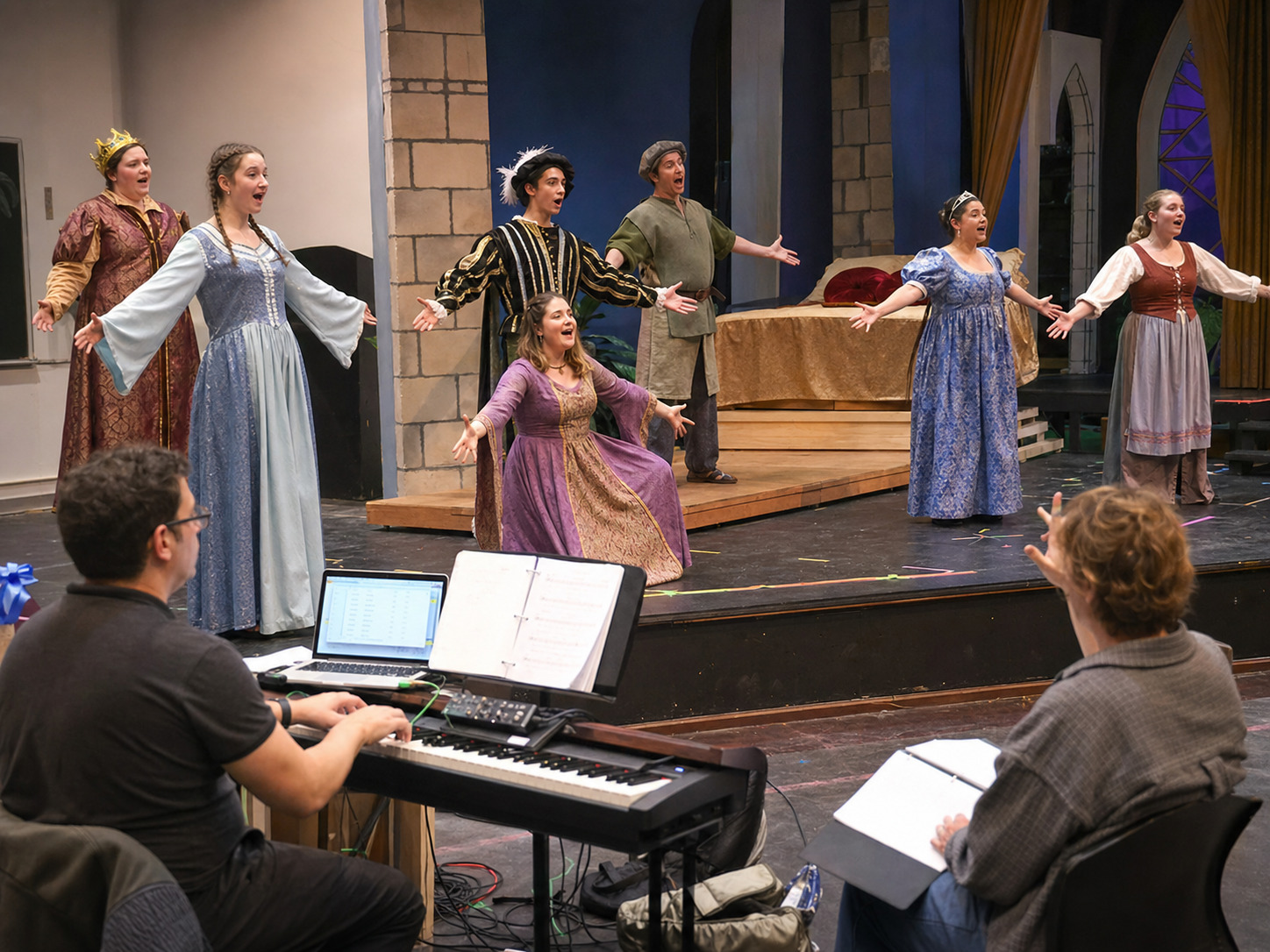
If a song is sitting too high, too low, or too exposed for a performer, solve that early. The longer a singer rehearses a version that does not fit, the more the production has to unwind later.
When requesting a key change, include the current track, the desired key if known, the role or singer affected, and whether the file is for rehearsal, performance, or both.
Keep dance and scene-change needs in the same plan
Tracks are not only vocal support. They also hold choreography and stage traffic together.
If a dance phrase needs more counts, note the count structure. If a scene change needs a vamp, write where the music should begin and how it should end. If a prop handoff or costume change is consistently late, decide whether the blocking needs to tighten or the track needs a custom production edit.
That conversation is much easier before tech week.
Licensing still needs its own checklist
The Broadwaytrax album page separates the recording side from the show-rights side. A theater-use license for the Broadwaytrax sound recording does not replace the performance rights, grand rights, script, score, logo, streaming, or other permissions that may come from the publisher or licensing house.
Keep those questions separate:
- Can the organization perform the show?
- Can the production use this recording in performance?
- Do the tracks match the singers, cues, cuts, and staging?
All three matter.
Rehearsal checklist before tech
Before the first tech run, confirm:
- guide vocal tracks and accompaniment tracks are in separate folders,
- current performance files are clearly labeled,
- old drafts are removed from the playback folder,
- key changes are approved,
- cut and cue notes match the current staging,
- vamps and dance breaks have exact counts,
- the sound operator has the track map,
- show rights and recording-use questions have been checked with the right source.
That checklist keeps the music from becoming one more tech-week variable.
FAQ: Once Upon a Mattress backing tracks
Should rehearsals start with guide vocals?
Guide vocals can help the cast learn entrances, melody, harmony, and form. Move toward accompaniment-only tracks once singers know the material so they build performance independence before tech.
When are custom edits worth it?
Custom edits are worth considering when a key, cut, tempo, vamp, lead-in, button, dance break, or scene-change cue does not match the production's real staging.
What should the stage manager track?
The stage manager should have the approved file names, cue triggers, start and stop notes, version dates, and any prop, set, or costume traffic tied to the cue.
Does a theater-use license replace show rights?
No. A theater-use license covers the Broadwaytrax sound recording. Performance rights and grand rights for the musical itself must be handled with the appropriate rights holder or licensing source.
The takeaway
The funniest version of the show is usually the most organized one backstage.
Build your Once Upon a Mattress rehearsal plan around the full Broadwaytrax album, then request keys, cuts, tempos, cue edits, lead-ins, or production support when your staging needs a version shaped around the room.
View the Full AlbumUse guide vocals while the cast is learning, move to accompaniment-only tracks on purpose, map every cue in plain language, and make custom decisions before timing problems become habits.
Need a practical starting point? (Browse the full Once Upon a Mattress album) for guide vocal and accompaniment tracks, then plan custom support around your production's keys, cuts, tempos, and cue needs.