An Understudy Put-In Should Test Every Track Handoff
By Broadwaytrax Content Studio · August 7, 2026
Updated August 7, 2026
An understudy put-in is not a memory contest and it is not a full technical rehearsal.
It is the production's chance to prove that another performer can step into the established show without losing the musical handoffs: the first note, the spoken-to-sung transition, the dance pickup, the vamp exit, the cutoff, and the scene that follows.
Backing tracks make those handoffs repeatable, but only when the understudy, stage manager, music director, and playback operator are working from the same approved files and cue language.
What is an understudy put-in rehearsal?
An understudy put-in is a focused rehearsal in which an understudy or swing performs the role inside the existing production. The goal is to test how that performer enters the current blocking, choreography, music, cues, props, costumes, and transitions.
It is different from an early understudy rehearsal. Early sessions may teach lines, melody, harmony, traffic, and role tracks in pieces. A put-in connects those pieces to the version the company is actually performing.
The safest question is not, “Can the understudy sing the song?” It is, “Can the whole show hand the understudy into and out of the song?”
Build one role packet before the room assembles
Do not make the understudy reconstruct the production from a score, a rehearsal video, three old MP3s, and notes from several people.
Prepare one current packet with:
- the approved script and score materials;
- the exact guide-vocal and accompaniment filenames used by this production;
- the current key, cut, tempo, and ending for every number in the role;
- a role-specific scene and song list;
- entrances, exits, quick changes, prop handoffs, and major traffic notes;
- spoken lines or actions that trigger music;
- restart points for difficult sections;
- who calls each playback cue;
- and the date each file or note was approved.
If the production uses a custom key, cut, vamp, lead-in, or transition, identify that version clearly. “Use the shorter one” is not a reliable instruction when several exports exist.
Archive old files outside the active folder. The primary and backup playback systems should contain the same approved version with the same name and duration.
Separate learning tracks from performance tracks
Guide vocals are useful while the understudy is learning melody, entrances, phrasing, and ensemble placement. They should not quietly become the only version the performer knows.
Use a deliberate progression:
- Listen with the guide vocal and mark the musical form.
- Sing with it while checking words, pitches, and entrances.
- Repeat the first entrance and hardest handoff without the teaching voice.
- Rehearse the full number with the accompaniment-only track.
- Run the transition before the track and the scene after it.
(Broadwaytrax guide vocal tracks) can give a performer a clear sung reference during preparation. Pair the guide version with its matching accompaniment track so the form, tempo, and landmarks do not change when the teaching voice disappears.
Map the handoffs around every number
The track itself is only the middle of the event.
For each musical cue, write the complete handoff:
| Moment | Question to answer |
|---|---|
| Before playback | What line, action, visual cue, or called GO starts the track? |
| First entrance | What does the understudy hear before the first sung or danced beat? |
| Inside the number | Which musical landmarks connect to blocking, partners, props, or choreography? |
| Flexible timing | Is there a vamp, hold, repeat, or optional cut, and who calls the exit? |
| Ending | Does the track button, ring, fade, stop dry, or continue under action? |
| After playback | What line, cue, exit, change, or scene begins immediately afterward? |
This map is especially important when a performer enters from backstage, sings after dialogue, moves during an instrumental section, or finishes a number directly into a scene change.
Test the cue from the real preceding line or action. Starting the file from silence proves very little about the handoff the audience will see.
Choose the people the put-in actually needs
A useful put-in does not always require the full company, but it needs the people who make the role function.
That may include:
- scene and dance partners;
- an ensemble group that creates traffic or harmony;
- the stage manager or assistant stage manager;
- the music director or vocal captain;
- the dance captain or fight captain when applicable;
- wardrobe, props, or deck crew for critical handoffs;
- and the person who will operate the production playback.
Use qualified production leadership for fight, intimacy, dance, lift, aerial, automation, or other safety-sensitive work. A backing track can repeat timing; it cannot replace required supervision, spacing, or safety calls.
If a needed partner is absent, name what remains untested. Do not turn a partial mark-through into proof that the live sequence is ready.
Run the edges before the full song
Long numbers can consume the entire rehearsal while hiding the most fragile seconds.
Test the edges first:
- Begin one spoken cue before the track.
- Start playback from the actual operator position.
- Perform the first entrance and opening phrase.
- Jump to a named internal restart point.
- Test any vamp, repeat, dance break, or cue-dependent transition.
- Run the ending without stopping.
- Continue through the next line, exit, or change.
Once those handoffs work, run the complete number. This order makes the rehearsal diagnostic. If the full run fails, the team already knows which parts have been isolated and tested.
Give the operator a put-in cue sheet
The operator should not learn a second, unofficial version of the show for the understudy.
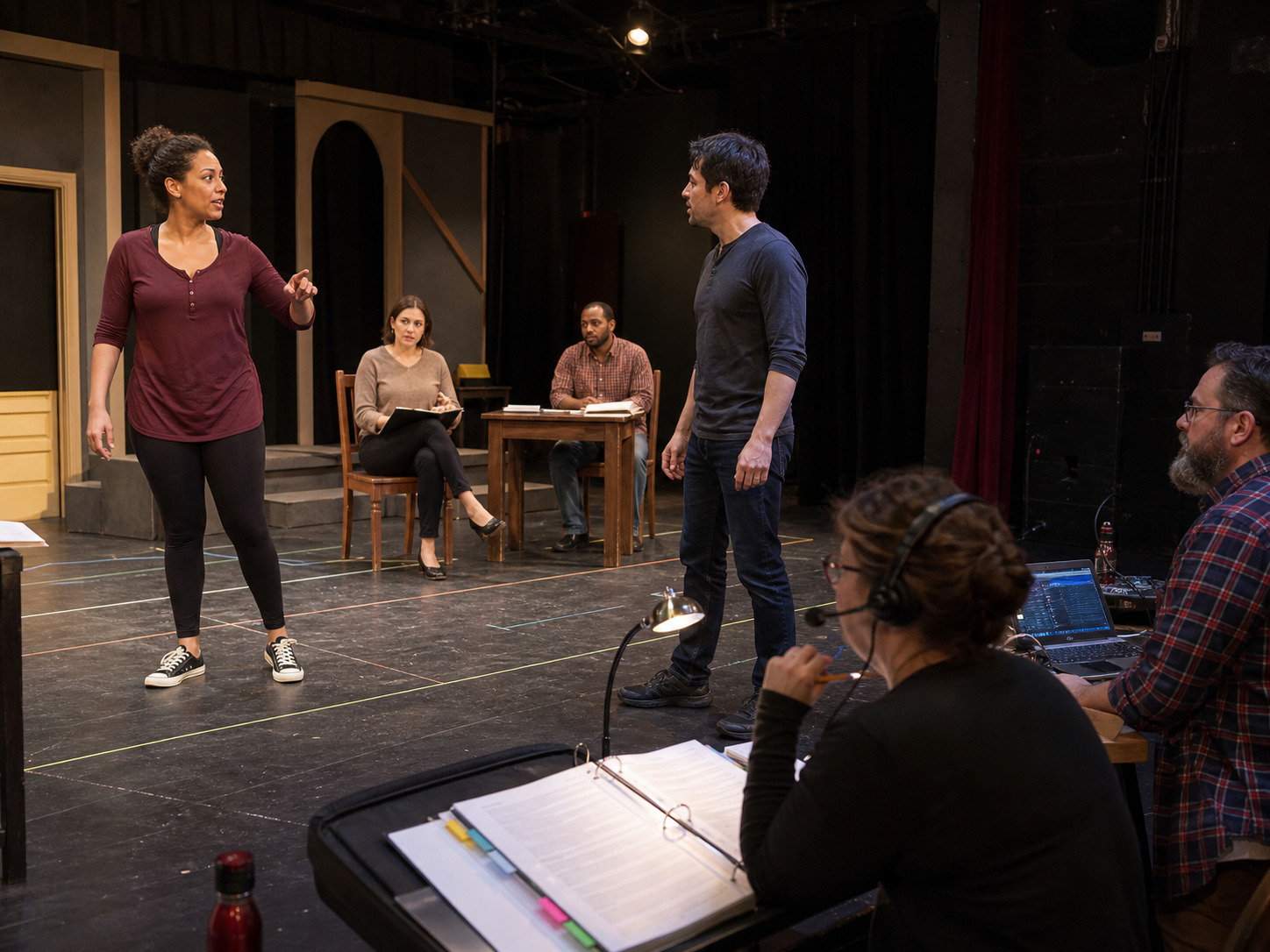
Use the production cue sheet and add only the information needed to identify role-specific risks:
- cue number;
- approved filename;
- visible or audible trigger;
- first entrance;
- level or monitor note already established for the show;
- vamp or hold behavior;
- planned restart point;
- ending behavior;
- and next cue.
Keep cue names consistent. If the stage manager calls GO S12, the operator notes should not call the same event “understudy song start.” The person in the role changes; the show's control language should stay stable.
For flexible music, rehearse who may call the exit and what the operator does after hearing it. “Finish the current eight bars, then continue” is different from “leave the loop immediately on GO.”
Test the understudy's actual key, cut, and track path
Do not assume the principal's exact file is automatically the right file for every cover situation.
The production may have approved a role-specific key, a different spoken lead-in, a safe cut, or another permitted adjustment. Confirm the exact performance plan before the put-in. If a custom version is needed, resolve it early enough for the performer and operator to rehearse the same export.
Any proposed change to protected show material should be confirmed with the publisher, licensing house, or rights holder. Track production and permission to alter a musical are separate questions. Broadwaytrax's guide to (backing tracks, theater use, and grand rights) explains that distinction in practical terms.
Use a three-pass put-in structure
Pass 1: landmarks and spacing
Mark the role through the current traffic with the production files. Stop for unclear entrances, unsafe spacing, missing props, or cue disagreements. Keep vocal effort and choreography at the level production leadership considers appropriate for the session.
Pass 2: cue-to-cue role path
Run the role's critical musical and technical handoffs in show order. Include transitions, quick changes, offstage listening, dance pickups, and any place where the performer cannot see the operator or stage manager.
Pass 3: continuous run
Run the largest practical section without coaching. Observe whether the understudy can recover after a missed word, late movement, extra audience-response hold, or imperfect entrance without the production losing its cue structure.
The final pass should feel like the existing show with a different performer, not a special version built around the rehearsal.
Record what is ready and what still needs proof
End with a short readiness record.
| Status | Meaning |
|---|---|
| Ready | Tested in the current production with the approved track and required partners |
| Ready with note | Functional, with one named condition the team must monitor |
| Needs another pass | Learned but not yet tested continuously or with the required handoff |
| Not tested | Required person, equipment, costume, prop, spacing, or cue was unavailable |
Attach each note to a scene, song, cue, or file. “Needs confidence” is vague. “Needs another pass from the scene-five dialogue cue through the vamp exit and costume handoff” gives the next rehearsal a job.
Understudy put-in checklist
- Confirm the approved role packet and current file list.
- Pair guide-vocal learning files with matching accompaniment tracks.
- Mark the trigger, first entrance, flexible timing, ending, and next event for every song.
- Include the partners and production leads required for real handoffs.
- Test safety-sensitive material only with qualified supervision.
- Run each musical edge before running full numbers.
- Use the production cue sheet and cue language.
- Test the actual key, cut, tempo, vamp, and ending intended for the understudy.
- Check primary and backup playback copies.
- Record ready, conditional, untested, and follow-up items by exact cue.
FAQ: understudy put-in rehearsals and backing tracks
What is the purpose of a put-in rehearsal?
It places an understudy or swing into the established production and tests whether the role works with the current blocking, music, cues, partners, props, costumes, and transitions.
Should the full cast attend?
Not always. Include the scene partners, ensemble members, captains, stage-management team, operator, and other production staff needed to test the role's actual handoffs. Record anything that could not be tested.
Should an understudy practice only with guide vocals?
No. Guide vocals can support learning, but the performer should move to the matching accompaniment-only track before the put-in and rehearse the exact version used in performance.
What track details should be on the cue sheet?
List the cue number, approved filename, trigger, first entrance, vamp or hold behavior, restart point, ending, and next event.
Can the understudy use a different key or cut?
Only after the production confirms the performance need, prepares and rehearses the correct track, and verifies that any proposed change is permitted by the show's rights holder.
The takeaway
Give understudies a clear sung reference while they learn, then move to the matching accompaniment track before the put-in tests the production handoffs.
Browse Guide Vocal TracksA good put-in does more than prove that an understudy knows the role.
It proves that the production can hand that performer into the music, through the staging, and out the other side with the same clear cues the show already uses. Build one current packet, separate learning tracks from performance tracks, test the edges, run the actual operator path, and record exactly what still needs proof.