A Revue Track Plan Keeps the Concert Moving
By Broadwaytrax Content Studio · June 19, 2026
Updated June 19, 2026
A revue, cabaret, showcase, or fundraiser concert can look simple on paper. The set list is shorter than a full musical, the staging may be light, and the performers may already know their songs.
Then the music starts to connect.
One singer needs a lower key. Another needs a clean 90-second cut. The group number needs a longer intro. The host needs time to speak between numbers. The sound operator needs the exact file order. Suddenly the backing tracks are not just accompaniment. They are the spine of the event.
For musical theater concerts, the best track plan starts before the first run-through.
Treat the set list like a show folder
A revue does not always need the same paperwork as a fully staged musical, but it still needs a reliable audio map.
Start with a single set-list document that includes:
- song title,
- performer or group,
- track source,
- key,
- cut length,
- start cue,
- ending note,
- transition after the number,
- file name for the final version.
That list becomes the shared reference for the director, music director, performers, accompanist, and sound operator. It also keeps the room from making decisions from memory after five versions of the same song have been exchanged.
If the concert has an opening medley, host patter, awards, a school showcase order, or a fundraising appeal, put those moments in the same map. The track folder should follow the actual event, not just the music.
Choose keys for the performers, not the original cast
Cabaret and revue work often borrows songs from many shows. That is useful because each performer can get a strong moment. It also means the original key may not be the best key for the singer in front of you.
Test the highest phrase, the lowest phrase, and the final sustained moment before the cut becomes official. If the performer is working with a school, community theater, voice studio, or benefit-concert deadline, solve key problems early. A confident key usually matters more than matching a famous recording.
This is where a custom key change can help. The goal is not to make every song easier. The goal is to make each performance sit where the singer can tell the story clearly.
Make cuts that sound intentional
A concert cut should not feel like someone stopped the track with scissors.
Audiences can feel awkward edits, especially when a cut removes the setup, skips the musical lift, or leaves the singer stranded on an ending that does not resolve. Good cuts keep the song's shape intact while respecting the event length.
Before approving a cut, ask:
- Does the first measure give the singer enough time to enter?
- Does the cut preserve the lyric setup?
- Does the transition into the final section feel musical?
- Does the ending sound finished?
- Is the cut short enough for the program slot?
For a showcase, this matters because many songs appear back to back. A clean 90-second cut can feel stronger than a full song that slows the whole night.
Plan transitions as carefully as songs
Most track trouble happens between numbers.
The song ends, applause starts, the next performer walks on, the host speaks, a microphone moves, or a music stand gets reset. If nobody knows what the track should do next, the room waits.
Build transition notes into the cue sheet:
- fade under applause,
- clean stop before host patter,
- next track starts after a spoken line,
- performer enters during intro,
- group begins onstage,
- hold for mic change,
- skip track if the program order changes.
These notes are especially helpful for benefit concerts, school showcases, and cabarets where a volunteer or student may be running playback.
Keep rehearsal files separate from show files
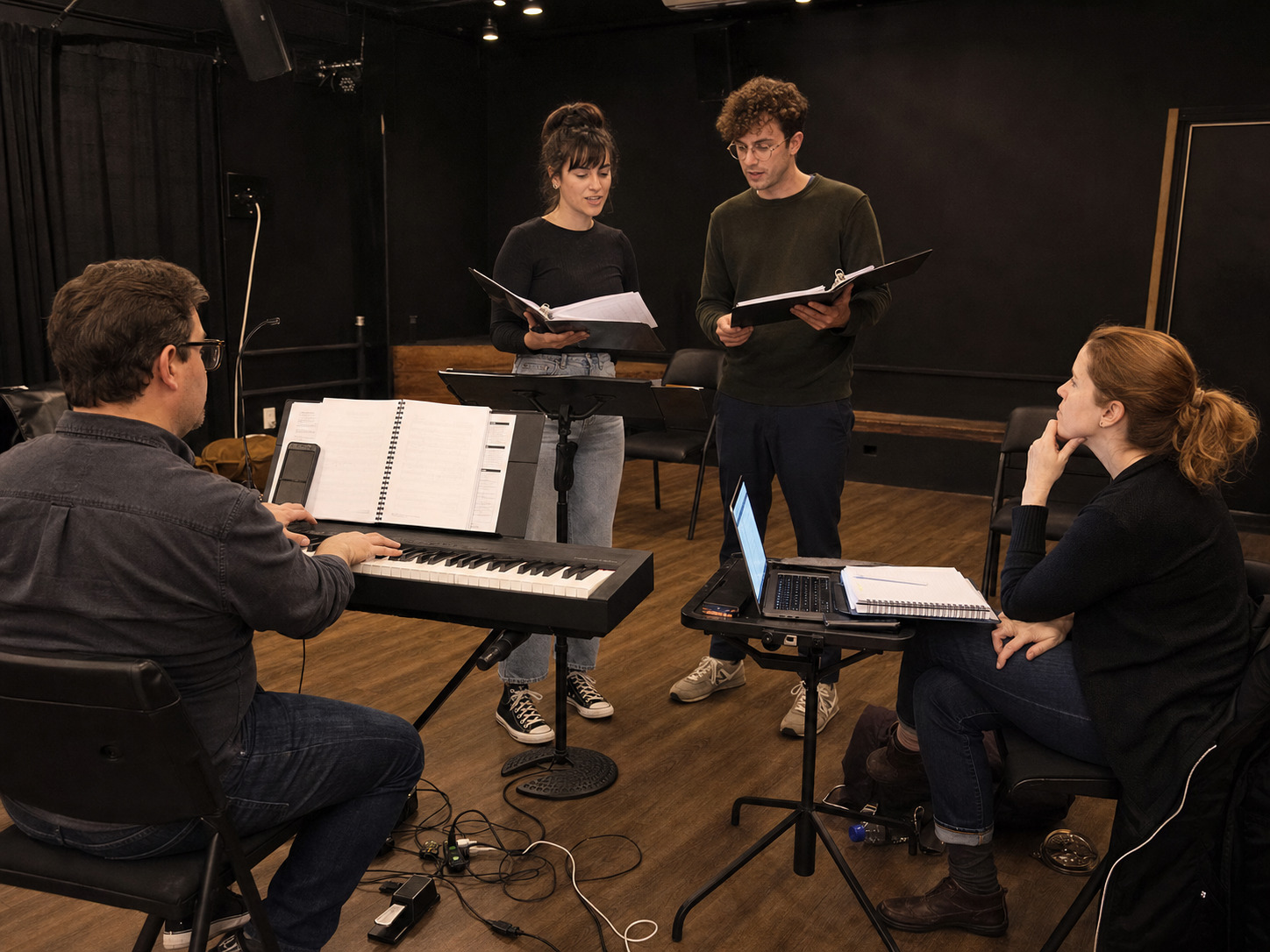
Early in the process, performers may need guide vocals, piano reference files, rough cuts, or temporary keys. Those files are useful, but they should not live in the final performance folder.
Use clear folder names:
- learning files,
- rehearsal drafts,
- approved cuts,
- final show files,
- backup files.
When a version changes, rename it clearly. Do not rely on "final" if there might be a newer final tomorrow. Use the song title, performer, key, cut length, and date when needed.
The sound operator should receive only the files they need for the event, in the exact order they will be played.
Decide when custom production support is worth it
Some concerts can use catalog accompaniment tracks exactly as they are. Others need a little work before the set feels professional.
Custom support is useful when:
- the singer needs a different key,
- the cut has to match a time limit,
- the tempo needs to breathe differently,
- a dance or entrance needs a longer lead-in,
- two sections need to connect more cleanly,
- the ending needs a button, fade, or blackout cue,
- the whole event needs a consistent file structure.
Make those requests while the set list is still flexible. Once performers have rehearsed a rough version for weeks, every audio change becomes harder to absorb.
A practical preflight for revue backing tracks
Before the first full run, check the track folder against the program:
- Every song has one approved rehearsal version.
- Every performer knows which version to practice.
- Every custom key or cut has been confirmed.
- The running order matches the current program.
- The sound operator has cue notes for starts, stops, fades, and transitions.
- The final folder contains no old drafts.
- Backup files are stored somewhere the team can reach.
- Licensing and performance permissions are handled separately from track prep.
That last point matters. Backing tracks can support the event, but they do not replace the need to confirm song, show, venue, streaming, recording, or performance-rights requirements for the specific use.
FAQ: musical theater revue backing tracks
Can a revue use songs from different shows?
Often, yes, but the production team still needs to confirm the rights and permissions for the specific event. Track planning and rights clearance should happen side by side, not as the same task.
Should each singer get a custom key?
Not always. Use the catalog key when it fits. Request a custom key when the singer's strongest storytelling range does not match the available version.
What makes a good cabaret cut?
A good cut gives the singer a clear entrance, preserves the lyric setup, moves efficiently to the strongest section, and lands on an ending that sounds intentional.
Do we need guide vocals for a concert?
Guide vocals can help early learning, especially for younger performers or ensemble numbers. Move to accompaniment-only rehearsal once singers know the melody and timing.
The takeaway
Build a cleaner revue, cabaret, showcase, or concert set with Broadwaytrax custom support for keys, cuts, tempos, lead-ins, transitions, and performance-ready files.
Plan Custom Track SupportA musical theater concert works best when the audio folder follows the event.
Map the set list, choose keys for the actual performers, make cuts that sound musical, write transition cues, and keep rehearsal drafts away from final show files. The audience may never see that work, but they will feel the difference when the night keeps moving.