A Dance Call Needs a Track That Starts on the Count
By Broadwaytrax Content Studio · August 3, 2026
Updated August 3, 2026
The best dance-call backing track does one job immediately: it gives the room a clean, countable start. Dancers should be able to hear the pulse, learn the combination, reset, and perform it again without waiting through an introduction that does not serve the audition.
That sounds simple. In practice, a dance call can fall apart when the track begins before everyone is ready, the useful section arrives too late, the cut ends without warning, or the audition team is working from several versions of the same song.
A good musical-theater dance-call plan connects the choreography, the audio cut, the playback operator, and the room. The track should support the combination you are actually teaching—not force the choreographer to rebuild the combination around a convenient MP3.
What a dance-call backing track needs
For most dance calls, the useful track is not merely an instrumental version of a show tune. It is a prepared audition tool with a defined musical job.
Before anyone enters the room, confirm these six things:
- One recognizable file. Use a filename that identifies the show, combination, tempo or level, and version.
- A countable lead-in. Give the choreographer and dancers enough pulse to establish the tempo before the first required step.
- A clean first move. The combination should begin at an exact musical landmark, not somewhere inside an ambiguous pickup.
- Enough music to show the skill. The cut should cover the full combination plus a little safe space for the ending.
- A clear finish. Use a musical button, held ending, or rehearsed stop rather than an accidental fade or abrupt file cutoff.
- A tested reset. The operator should be able to return to the start quickly and reliably for the next group.
If any one of those is missing, the room spends time managing audio instead of watching dancers.
Start with the combination, not the song title
A choreographer may love a particular number, but the best dance-call cut depends on what the combination needs to reveal.
Ask:
- Is the combination testing character and storytelling, ensemble precision, athletic movement, partnering, or style?
- Does it need a steady rhythmic bed or a phrase with clear changes in texture?
- Where do dancers need to hear an accent, break, hold, or transition?
- How long will the teaching section take, and how many performance groups must move through the room?
- Will everyone perform the same combination, or will the call progress to a second level?
The musical selection should make those answers easier to see. A rhythmically clear phrase can help the room assess timing and retention. A character-driven phrase can reveal whether a performer listens to the score and makes specific choices. A more complex phrase may be useful later, after the first combination has established a common baseline.
Build a lead-in dancers can trust
The lead-in is part of the audition experience. It does not need to be long, but it does need to be consistent.
A practical lead-in should:
- establish the exact tempo;
- make the meter easy to hear;
- give the choreographer a stable verbal cue;
- allow the first line of dancers to breathe and focus;
- land on the same first movement every time.
Avoid relying on a quiet orchestral entrance that disappears in a busy room. Avoid asking the operator to scrub manually to an imprecise point. Avoid changing the verbal count between teaching and performance.
During the room test, have the choreographer stand where the dancers will stand. If the pulse is not obvious from that position, change the lead-in, the playback level, or the speaker placement before the call begins.
Separate teaching audio from performance audio when it helps
One file can work for a simple call, but two clearly labeled files can make a more demanding room run better.
The teaching file may include extra lead-in time, a shorter loop, or repeated phrases so the choreographer can demonstrate and drill the combination. The performance file should deliver the exact final cut with the intended start and ending.
If you use two files, name them so nobody can confuse them:
| File role | What it should contain | Example label |
|---|---|---|
| Teaching | Clear pulse, repeatable phrase, extra reset space | SHOW_DanceCall_TEACH_v1 |
| Performance | Final lead-in, complete combination, clean ending | SHOW_DanceCall_PERFORM_v1 |
Do not create several nearly identical exports named “final,” “new final,” and “final 2.” Version control is not glamorous, but it prevents the wrong cut from becoming part of the audition.
Give the playback operator a one-page cue map
The operator should not have to interpret the choreographer’s memory in real time. A compact cue map can include:
- exact file name;
- file role;
- spoken cue from the choreographer;
- lead-in description;
- first movement landmark;
- planned end or stop point;
- volume reference;
- reset instruction;
- backup device or file location.
For a multi-level call, add the order of the combinations and the rule for advancing. If the room will alternate between teaching and performance versions, write that sequence down.
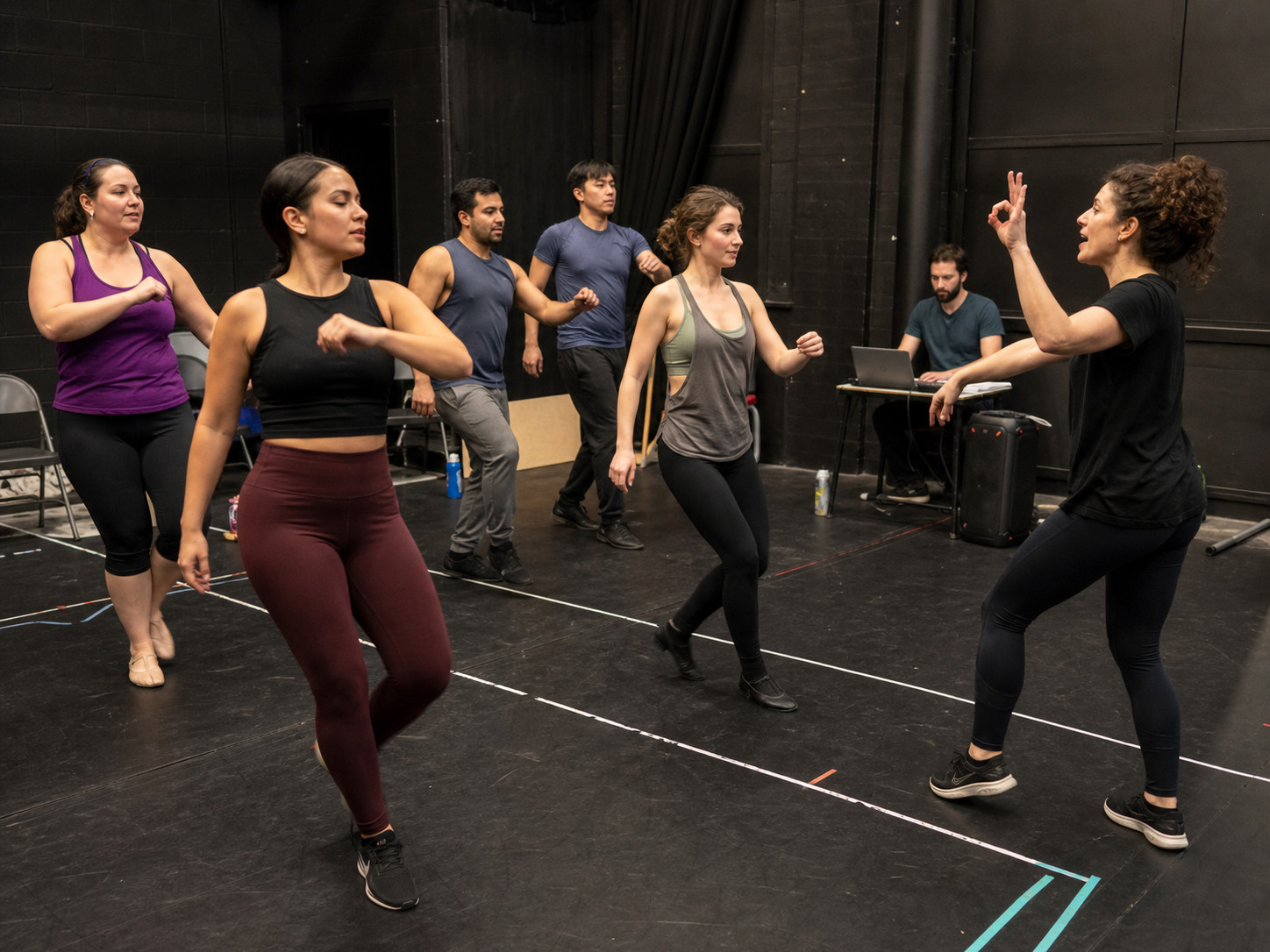
The same principle applies to (callback backing-track packets): the file, cue, and room need to agree before the first performer begins.
Test the track in the actual room
Headphones can reveal an edit, but they cannot tell you how the track will work across a studio, auditorium, classroom, or rehearsal hall.
Run the complete dance-call sequence in the room:
- Place the speaker and operator where they will actually work.
- Play the lead-in while the choreographer gives the real verbal count.
- Perform or mark the complete combination.
- Check whether the ending supports a finished pose or final phrase.
- Reset the file exactly as the operator will during the call.
- Repeat the process for the next group.
Listen for a pulse that remains clear without becoming painfully loud. Check that the choreographer does not need to shout over the orchestration. Make sure bass-heavy sections do not blur the counts and that quiet sections do not disappear when people move, breathe, and cross the floor.
When a custom cut is worth making
A custom edit can help when the best choreography phrase is buried inside a longer number, the available track has an unhelpful entrance, or the ending does not give the dancers a fair chance to finish.
Useful dance-call requests can include:
- a countable lead-in;
- a clean cut into the selected phrase;
- a repeated section for teaching;
- a tempo adjustment that still feels musical;
- a button or held ending;
- a shorter cut for the first group and a longer cut for finalists;
- matched teaching and performance exports.
When requesting an edit, send the exact source, timestamps, count structure, desired start, desired ending, and intended room use. “Make it shorter” is not enough information to build a dependable audition file.
Broadwaytrax offers (custom keys, cuts, tempo changes, cues, and lead-ins) for productions and audition rooms that need the track to follow a specific plan.
A five-minute dance-call audio check
Before the room opens, ask the choreographer, audition lead, and operator to confirm:
- The selected file opens and plays on the primary device.
- The backup file is available without a network connection.
- The lead-in and first move line up.
- The choreographer’s verbal cue is written down.
- The performance cut reaches the full ending.
- The volume works from the center and back of the room.
- The operator can reset without searching the waveform.
- Teaching and performance versions cannot be confused.
Five minutes here can save repeated interruptions across every group.
FAQ: musical-theater dance-call tracks
How long should a dance-call track be?
Long enough to cover the complete combination, its lead-in, and a clean ending. There is no useful universal length because the choreography, level, group size, and audition schedule determine the right cut.
Should a dance call use a vocal or accompaniment track?
Use the version that makes the pulse, phrasing, and required style easiest to hear without distracting from the dancers. An accompaniment track often keeps the focus on movement, while a vocal reference may help during teaching when lyrics or character beats define the phrase. Label each version clearly.
Can the same track be used for teaching and performance?
Yes, when the combination is simple and the reset is easy. For a complex phrase, separate teaching and performance files can reduce scrubbing, false starts, and version mistakes.
What should be included in a custom dance-call edit request?
Include the exact source track, timestamps, intended combination length, countable lead-in, tempo need, repeat plan, ending, file roles, and audition date. Describe the practical room problem the edit needs to solve.
The room should remember the dancers, not the playback problem
Turn the exact combination into a dependable audition file with the lead-in, cut, tempo, repeat, cue, and ending your choreographer and playback operator need.
Plan a Dance-Call TrackA musical-theater dance call moves quickly when the track is built around the combination, the cue is obvious, the operator can reset, and the ending gives every group the same fair finish.
Choose the phrase carefully. Prepare the file deliberately. Test it in the room. Then let the audition team watch the work that matters.