Choosing Musical Theater Tracks That Hold Up From Audition to Tech Week
By Broadwaytrax Content Studio · May 4, 2026
Updated May 13, 2026
Musical theater backing tracks are most useful when they solve a real production problem. A singer needs a dependable audition cut. A school cast needs rehearsal tracks before the choreography is finished. A community theatre needs performance tracks that stay steady through scene changes, vamps, cues, and quick pickups.
The best track is not just a file that plays the right song. It is a rehearsal tool, an audition safety net, and sometimes the musical backbone of the production. That means the search for "musical theater backing tracks" should start with the way the track will actually be used.
Start with the job the track has to do
A track for a 32-bar audition does not have the same job as a track for opening night. Audition tracks need clean intros, clear tempo, and a dependable ending. Rehearsal tracks need repeatability, guide vocals when useful, and versions the cast can practice with at home. Production tracks need stronger cue planning, theater-use clarity, and enough flexibility to support staging.
Before downloading or requesting a custom track, answer three questions:
- Who will use this track: soloist, class, cast, choir, or production team?
- Where will it be used: private practice, audition room, rehearsal, classroom, or public performance?
- What has to change: key, cut, tempo, vamp, ending, cue, orchestration, or delivery format?
Those answers keep the process practical. They also prevent the most common problem: a track that sounds good by itself but does not fit the singer, the room, or the show.
Audition backing tracks need clarity first
For auditions, the track should help the performer enter confidently and finish cleanly. A strong audition track usually has:
- A short, obvious introduction.
- A tempo that matches the storytelling.
- A key that lets the singer act the lyric instead of fighting the range.
- A clean button, cutoff, or fade.
- No distracting arrangement choices that pull attention away from the performer.
If the audition cut is from a longer number, do not assume the album version will behave like a pianist. A custom cut can remove long dance breaks, skip repeated sections, tighten the ending, or create a musical pickup that makes the first entrance feel natural.
For singers building an audition book, Broadwaytrax accompaniment tracks are a strong starting point because the catalog covers a wide range of musical theater styles. When a standard track is almost right but not quite right, a custom key or cut can make it audition-ready.
Rehearsal tracks should make the room calmer
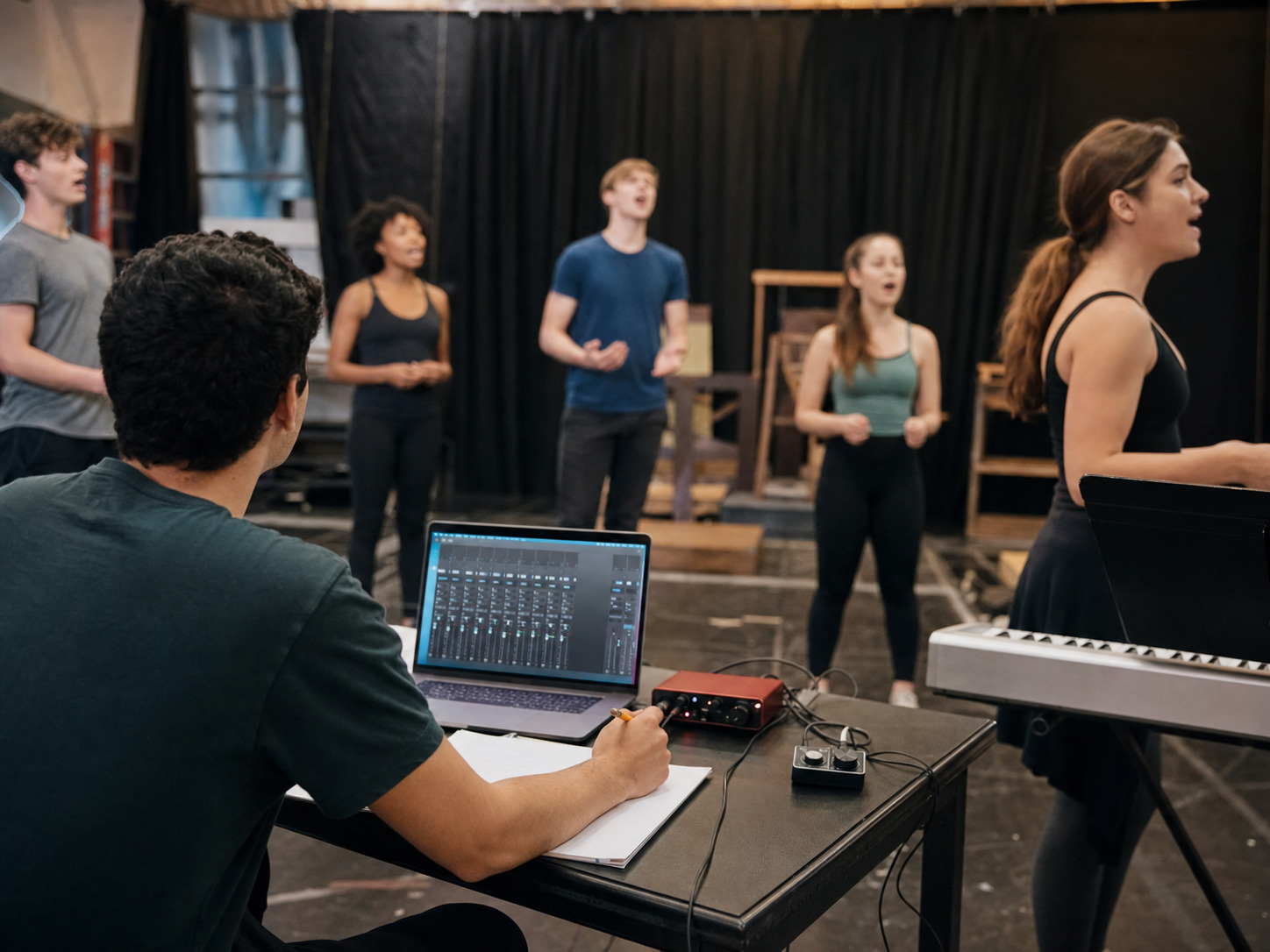
In rehearsal, consistency matters. A cast can learn faster when the accompaniment is the same on Monday, Wednesday, and Saturday. That is especially useful for schools, camps, youth programs, and community theatres where the music director may not be in every room at once.
Useful rehearsal-track versions often include:
- Guide vocal demos for early learning.
- Performance tracks without guide vocals.
- Slower practice versions for choreography-heavy sections.
- Clean rehearsal cuts for scenes that are still being staged.
- Track notes for starts, stops, vamps, and pickups.
This is where backing tracks can save real time. The choreographer can rehearse with dependable tempo. The director can run transitions without waiting for a pianist. The cast can practice at home using the same musical map they will hear in rehearsal.
Production tracks need cue planning
Performance use raises the stakes. The track has to support the production, not trap it. Before tech week, confirm how the music interacts with blocking, dialogue, applause, choreography, scene changes, and sound cues.
Common production adjustments include:
- Extending a vamp for choreography.
- Shortening a dance break.
- Adding a lead-in before a difficult entrance.
- Adjusting tempo for younger singers.
- Changing a key for a student actor or guest performer.
- Creating a cleaner transition into underscoring or dialogue.
- Matching the ending to the staging rather than the original recording.
If the production is using tracks for public performance, also confirm the rights picture. A theater-use license for a sound recording is different from the grand rights or performance license for the musical itself. Handle both before opening night.
How to choose between catalog tracks and custom tracks
Catalog tracks are best when the song, key, tempo, and structure already fit the use case. They are fast, affordable, and useful for auditions, lessons, classroom work, and straightforward rehearsal needs.
Custom tracks are better when the production has real-world constraints:
- The singer needs a different key.
- The director has approved a cut.
- The choreography needs more time.
- A scene change needs underscoring.
- A cue needs to be clearer for a young cast.
- A full-show package needs consistent sound across numbers.
The decision is not about being fancy. It is about reducing friction. If a small edit prevents a week of rehearsal confusion, it is usually worth making.
A quick checklist before you download
Use this checklist before choosing musical theater backing tracks:
- Confirm the exact song title and show.
- Check whether you need accompaniment, guide vocal, or both.
- Choose the key for the singer, not just the original cast recording.
- Decide whether the track is for practice, audition, rehearsal, or performance.
- Mark any cuts, vamps, repeats, or endings before requesting edits.
- Test the track through the speakers you will actually use.
- Keep final files in a shared production folder with cue notes.
- Confirm any theater-use or show-performance licensing questions early.
Good tracks make rehearsals feel organized. Great tracks let the production team stop worrying about playback and focus on performance.
FAQ: musical theater backing tracks
What is a musical theater backing track?
A musical theater backing track is a recorded accompaniment file used by singers, actors, teachers, schools, theatres, and production teams for auditions, rehearsal, practice, or performance.
Can I use the same track for auditions and performances?
Sometimes, but not always. An audition track may be a short cut in a singer-friendly key. A performance track may need theater-use licensing, cue planning, vamps, cuts, and production-specific edits.
What if the track is in the wrong key?
Request a transposition or custom key. The right key helps the singer tell the story and protects the rehearsal process from range problems.
Do backing tracks replace show licensing?
No. A track license covers use of the recording. Permission to perform a copyrighted musical is handled separately through the appropriate rights holder or licensing house.
Browse Broadwaytrax accompaniment tracks for auditions, rehearsals, and productions, or customize keys, cuts, tempos, and cue points for your show.
Browse Accompaniment TracksCan Broadwaytrax build full-show backing tracks?
Yes. Broadwaytrax can support single-song edits, custom keys and cuts, and full-show packages with production-specific notes for tempos, cues, lead-ins, and revisions.