When the Tempo Is Wrong, the Whole Scene Feels Wrong
By Broadwaytrax Content Studio · July 2, 2026
Updated July 2, 2026
A backing track can be beautifully produced and still miss the room if the tempo does not match the scene. The singer may need more space before a high note. A dance break may need a cleaner pickup. A school ensemble may need a steadier opening while everyone learns the traffic pattern. In tech, even a few beats per minute can decide whether the moment feels confident or rushed.
Tempo is not only a musical preference. In theater, it is a staging tool. It affects entrances, choreography, breath, scene changes, dialogue pickups, applause, and the point where the next cue begins. When the track is too rigid for the production in front of you, the answer is not always to rehearse harder. Sometimes the track needs to be shaped around the production.
Start by naming the actual problem
Before asking for a tempo change, write down what is happening in rehearsal. A useful note is specific enough that someone outside the room could understand the issue.
- The intro is too fast for the actor to cross from stage left to the microphone.
- The verse feels rushed after spoken dialogue.
- The dance break drags once the full ensemble joins.
- The final button lands before the blackout cue is ready.
- The singer needs a breath before the last phrase.
- The scene change needs four more counts before the next downbeat.
That kind of note is more useful than saying the track is "too fast" or "too slow." It ties the tempo request to a production need.
Decide whether the whole track needs to move
Not every tempo issue requires changing the entire song. A full-track tempo change can be helpful when the arrangement consistently sits outside the singer's or ensemble's comfort zone. It can also help younger casts, community theater ensembles, and dance-heavy numbers where clarity matters more than speed.
Other times, only one section needs attention. The intro may need more space while the verse is fine. A dance break may need a little lift without changing the ballad tempo. A final chorus may need more room without slowing the earlier material.
If the song changes character from section to section, mark the sections separately. That protects the musical shape and makes the custom request easier to execute.
Use rehearsal marks, lyrics, or time stamps
The best tempo-change requests are easy to locate. If you have rehearsal letters, measure numbers, or a score map, use them. If not, use lyric cues and time stamps from the current track.
For example:
- "Keep the opening tempo through the first verse."
- "At the lyric cue 'we begin again,' ease slightly for the next eight bars."
- "From 1:42 to 2:10, bring the tempo up enough to support the choreography."
- "Add two extra counts before the final button."
This does not need to read like a studio chart. It needs to be clear enough that the edit serves the rehearsal instead of creating another round of guesses.
Watch for places where tempo and cues overlap
Tempo changes often reveal cue problems. A director may think the song is too fast when the real issue is that the track starts too soon after dialogue. A choreographer may think the dance break is too slow when the cast actually needs a clearer lead-in. A stage manager may need a vamp or button more than a new tempo.
Before changing speed, ask:
- Does the actor know when to enter?
- Does the track need a count-off, pickup, or lead-in?
- Does a scene change need a vamp instead of a slower tempo?
- Does the ending need a button, hold, or blackout cue?
- Will the revised tempo affect choreography already set?
The goal is not to make the track different. The goal is to make the production more usable.
Keep singers in the conversation
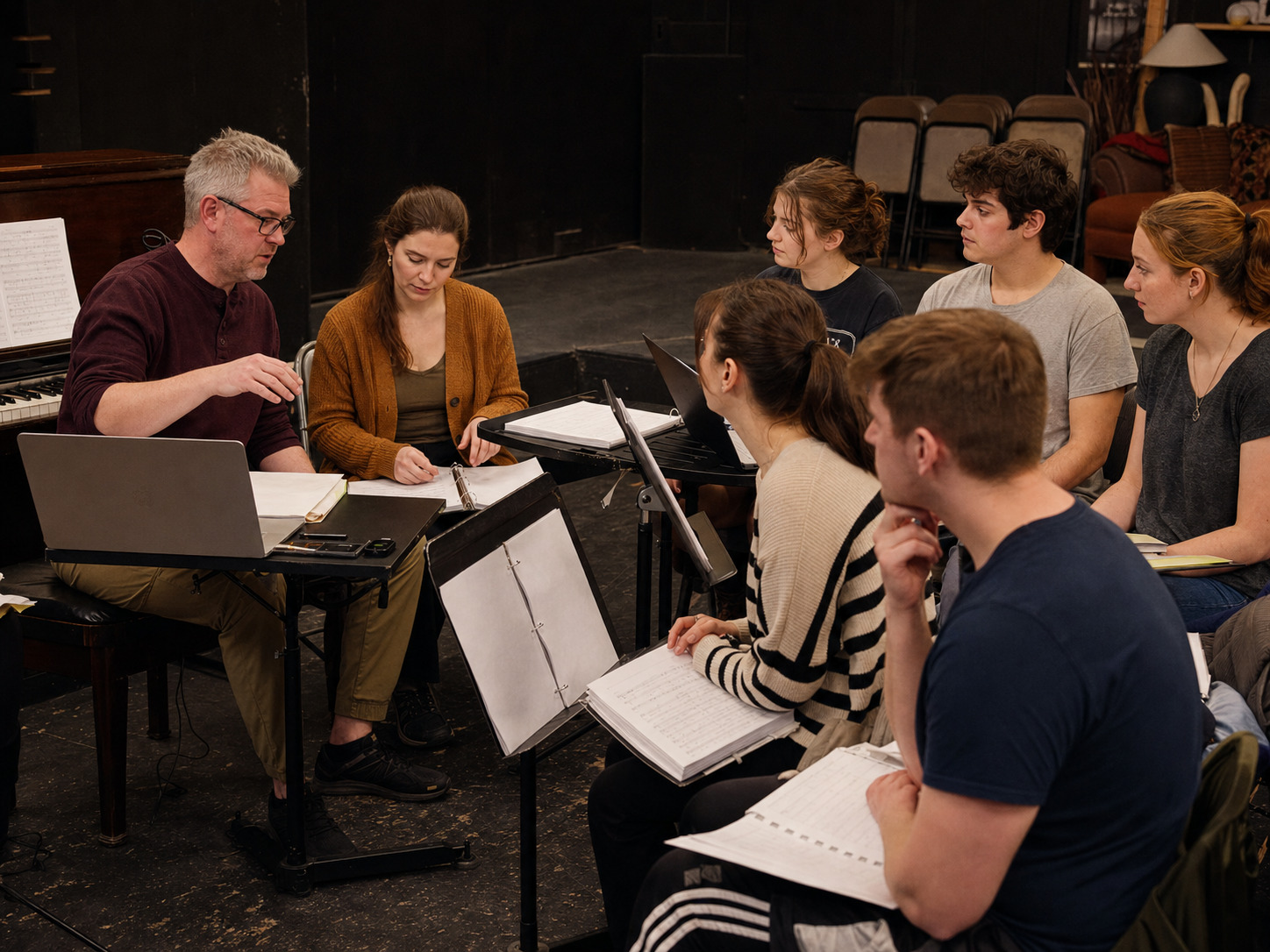
A tempo that works for choreography can still make a vocal line feel breathless. A tempo that gives the singer space can make an ensemble number lose energy. Bring the singer, music director, choreographer, and playback operator into the same decision before requesting a final edit.
If the cast is still learning the number, consider whether the tempo problem is temporary. Early rehearsals often feel slow because the room is still counting. Tech week often feels fast because spacing, costumes, props, and nerves arrive at the same time. A good custom request separates learning discomfort from a real performance need.
Build a clean request before ordering the edit
Use this short checklist before sending a tempo-change request:
- Name the track and version currently in use.
- Say whether the full track or a section needs adjustment.
- Include lyric cues, rehearsal marks, or time stamps.
- Explain the staging or vocal reason for the change.
- Note any related cuts, lead-ins, vamps, holds, or buttons.
- Confirm who will approve the revised version.
- Save the old and new versions with clear file names.
That last point matters. Once a production has more than one track version, file naming becomes part of rehearsal management. Do not let the cast, choreographer, and sound operator work from different versions without realizing it.
A tempo edit should make the room calmer
The right edit usually does not announce itself. The actor makes the cross. The chorus breathes together. The dance break has the right lift. The stage manager can call the cue without panic. The audience never knows the track was customized, because the moment simply works.
That is the practical value of custom backing tracks. They are not just cleaner audio files. They are production tools that help a real room move, sing, breathe, and land the next cue on purpose.
FAQ: tempo changes for musical theater backing tracks
Can a backing track be slowed down or sped up without changing the key?
Often, yes. A custom edit can adjust tempo while preserving the key, but the best approach depends on the source track, the amount of change, and whether only one section or the full song needs adjustment.
Should we change tempo before choreography is finished?
Usually, make a temporary rehearsal decision first, then request the final edit once the staging has settled. If the current tempo is blocking rehearsal completely, an early custom version can still be useful.
Is a tempo change the same as a cut?
No. A tempo change adjusts speed or pacing. A cut removes or shortens material. Many productions need both, especially when a scene has dialogue, choreography, or a transition built around the music.
What should we send when requesting a custom tempo edit?
Send the exact track, the desired section, time stamps or lyric cues, the reason for the change, and any related lead-ins, vamps, cuts, or ending notes. Clear rehearsal notes make the edit more accurate.
Need a track that fits the scene instead of forcing the scene to chase the track? Broadwaytrax can help with tempo changes, cuts, lead-ins, cues, and production-ready custom edits.
Start a Custom Track ProjectThe takeaway
If the track is fighting the staging, listen to what the room is telling you. A precise tempo-change request can turn a stressful rehearsal problem into a track version the cast, director, and sound operator can trust.