Man of La Mancha and the Discipline Behind Dreaming Big
By Broadwaytrax Content Studio · December 8, 2025
Updated May 13, 2026
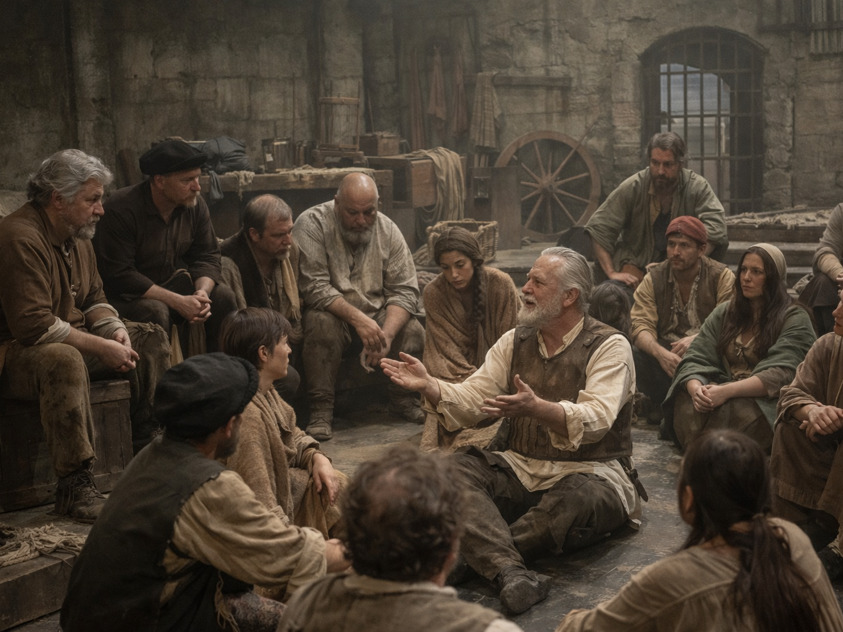
A man walks into a prison with a trunk and a story. He is a tax collector, a poet, and an actor. The other prisoners want to tear him down. Instead, he asks them to join his play. Soon, the cell turns into a stage. Dusty armor appears, and a windmill waits in the mind. This is the start of Man of La Mancha, a musical that invites us to dream when the world says, "Do not."
This theme feels fresh this season. While recent spotlights have looked at modern issues, this show zooms in on hope. It asks a big question: What happens when people choose to see the best in each other, even in hard places?
Bring "Man of La Mancha and the Discipline Behind Dreaming Big" to life with custom tracks
Get the exact arrangement you need—either customize an existing accompaniment or commission a bespoke build from our team.
Don't see this show in our library yet? We'll build it for you.Synopsis Set in a 16th-century Spanish prison, writer Miguel de Cervantes faces judgment from fellow inmates. To defend himself, he proposes a trial by theater. He stages his version of Don Quixote, letting the story judge him. The prisoners become the cast, with Cervantes playing Alonso Quijano, an aging man who believes he is a knight named Don Quixote. His kind servant, Sancho, follows him. Aldonza, a tough woman at the inn, becomes Quixote's focus. He calls her "Dulcinea," a lady of grace. As the story unfolds, the cell and the stage merge. The group shifts from bitter jokes to quiet care. By the end, telling the story changes everything.
Creative Team and Origins The book is by Dale Wasserman, adapted from his 1959 teleplay I, Don Quixote. Music is by Mitch Leigh, with lyrics by Joe Darion. Their score blends Spanish flair with classic Broadway tunes, supporting the prison setting and character paths (Encyclopaedia Britannica).
Premiere and Production History Man of La Mancha opened in 1965 at the ANTA Washington Square Theatre and became a major hit. At the 1966 Tony Awards, it won five prizes, including Best Musical, Best Original Score, Best Direction for Albert Marre, Best Leading Actor for Richard Kiley, and Scenic Design for Howard Bay (Tony Awards). The original run reached 2,328 performances, making it one of the longest runs of its decade (Wikipedia).
Signature Songs The score's anchor is The Impossible Dream (The Quest). It begins softly and grows into a powerful anthem. For baritones, the line often reaches E4 or F4, but its heart lies in its message. Dulcinea gives warmth and depth for phrasing and sincerity. Aldonza is a dramatic belt song for mezzo-sopranos, asking for grit and a strong sense of self-worth. I Really Like Him allows Sancho to show comic charm. It's All the Same and To Each His Dulcinea offer contrasting moods for concerts.
Notable Revivals and Stars Broadway has visited this title many times. Richard Kiley led revivals in 1972 and 1977. Raúl Juliá brought a fresh take in 1992. In 2002, Brian Stokes Mitchell starred and earned a Tony nomination. London productions and tours have kept the show alive for new audiences (Wikipedia). These returns underline a simple truth: audiences resonate when a character fights to see goodness.
Cultural Impact The Impossible Dream broke beyond the stage. Artists like Frank Sinatra, Aretha Franklin, and Elvis Presley recorded it. The song became a standard for ceremonies, civic events, and graduations. It promises effort, even when goals feel far away. That is why you hear it in award shows and graduations. The show proves that a bare stage, a few props, and a brave idea can move a crowd (Encyclopaedia Britannica).
Design and Staging DNA The prison setting leads to creative, actor-led productions. Roles can switch, and props can be simple. Live guitar and hand percussion add Spanish flavor. Directors often keep the ensemble visible, making the community watch the story unfold. This approach works well for schools and regional theaters, keeping costs low while strengthening focus. It makes the final moments feel earned, as we witness every transformation directly.
Performance Takeaways for Singers and Educators When programming The Impossible Dream, keep the first verse simple and spoken at pitch. Build to a big finish in the last refrain. For Aldonza, let the text drive the sound. Choose clear dynamic shifts to avoid monotony. For I Really Like Him, trust the rhythm with your partner. Avoid dragging the tempo. Aim for a one-minute cut that sets up the story, builds once, and ends clearly. Even with piano tracks, highlight the distinct rhythms from the show to keep its spirit alive.
Prepare The Impossible Dream, with Custom Man of La Mancha
Start your ProjectWhy It Matters Now This season’s stages are filled with contemporary stories. These tales are essential. Man of La Mancha offers a powerful counterpoint. It tells us that idealism is a practice, a choice for a group of people in challenging times. For performers and teachers, this is a strong lesson to carry forward. For audiences, it shines brightly amidst darkness.
Man of La Mancha endures because it is about more than just one knight. It’s about a community learning to see with kinder eyes. A trunk opens, a world appears, and, for a while, we all strive to be a little braver.