Cats on Stage: Movement, Memory, and the Score That Holds It Together
By Broadwaytrax Content Studio · January 5, 2026
Updated May 13, 2026
Under a bright moon, the tribe gathers in a giant junkyard. Tails flick. Spines ripple. A drum pulse starts, and the night begins. Cats is a dance-first musical. Story and feeling flow through music and movement.
What happens? Once a year, the Jellicle cats hold a ball. Their leader, Old Deuteronomy, will choose one cat for a new life. We meet the tribe in lively vignettes. The cool Rum Tum Tugger teases. Jennyanydots taps. Skimbleshanks runs his night train with pride. Macavity causes trouble. Mr. Mistoffelees sparks the air with light. Then Grizabella steps forward. She left long ago and wants to come home. Her song is a plea. By dawn, the tribe makes a choice. Renewal is the heart of the night. You hear it, and you feel it.
Bring "Cats on Stage: Movement, Memory, and the Score That Holds It Together" to life with custom tracks
Get the exact arrangement you need—either customize an existing accompaniment or commission a bespoke build from our team.
Don't see this show in our library yet? We'll build it for you.The creators built this world from poetry and pulse. The music is by Andrew Lloyd Webber. Most lyrics come from T. S. Eliot's Old Possum's Book of Practical Cats, with new words added for the stage. Trevor Nunn wrote the lyrics for Memory, with help from Eliot's poems, and Richard Stilgoe also contributed. The original production was directed by Trevor Nunn and choreographed by Gillian Lynne. John Napier designed the towering junkyard and the famous cat eyes from the poster. The show’s language is through dance. The beat carries each moment to the next (Cats the Musical).
Cats first leaped to life in London at the New London Theatre. It soon crossed the ocean to Broadway at the Winter Garden Theatre, opening in 1982. The Broadway run set records, reaching 7,485 performances before closing in 2000. It won seven Tony Awards, including Best Musical in 1983. In London, it also received the Olivier Award for Best New Musical. These milestones marked the rise of the “mega-musical” era, with bold design and an ensemble that audiences loved at a glance (IBDB) (Tony Awards).
Signature songs help explain why this show stays strong. Memory is the standout hit. It is simple, emotional, and clear. The melody lifts and lands softly, like a cat jumping down from a wall. Many artists have covered it, yet it always belongs to Grizabella in that moment. Jellicle Songs for Jellicle Cats sets the rules of the tribe. Its layered rhythms lock the company together. The Rum Tum Tugger struts with humor and a rock edge. Macavity: The Mystery Cat builds suspense before the villain arrives. Mr. Mistoffelees is a fireworks display for voice and leaps. The final run of that number brings the house to its feet. Skimbleshanks: The Railway Cat showcases tap skills and tight ensemble singing, making the stage feel alive and moving.
Revivals have polished and reframed the dance while keeping the heart of the show. A 2014 London revival at the Palladium reunited the core team and refreshed select numbers. A 2016 Broadway revival at the Neil Simon Theatre brought in new choreography by Andy Blankenbuehler. His steps honored Gillian Lynne's feline shapes while adding modern energy. These updates showed how Cats adapts to new dancers and musical styles, from live synths to carefully built tracks (Cats the Musical).
Beyond the stage, Cats shaped culture. The glowing cat eyes on black are one of theatre’s most famous images. The makeup and costumes taught audiences to see human bodies as graceful animals. The show traveled around the world, in many languages, and found fans across generations. The song Memory left the stage to join the popular songbook. The production model—big scope, strong brand, and touring reach—changed how musicals were made and shared (Cats the Musical).
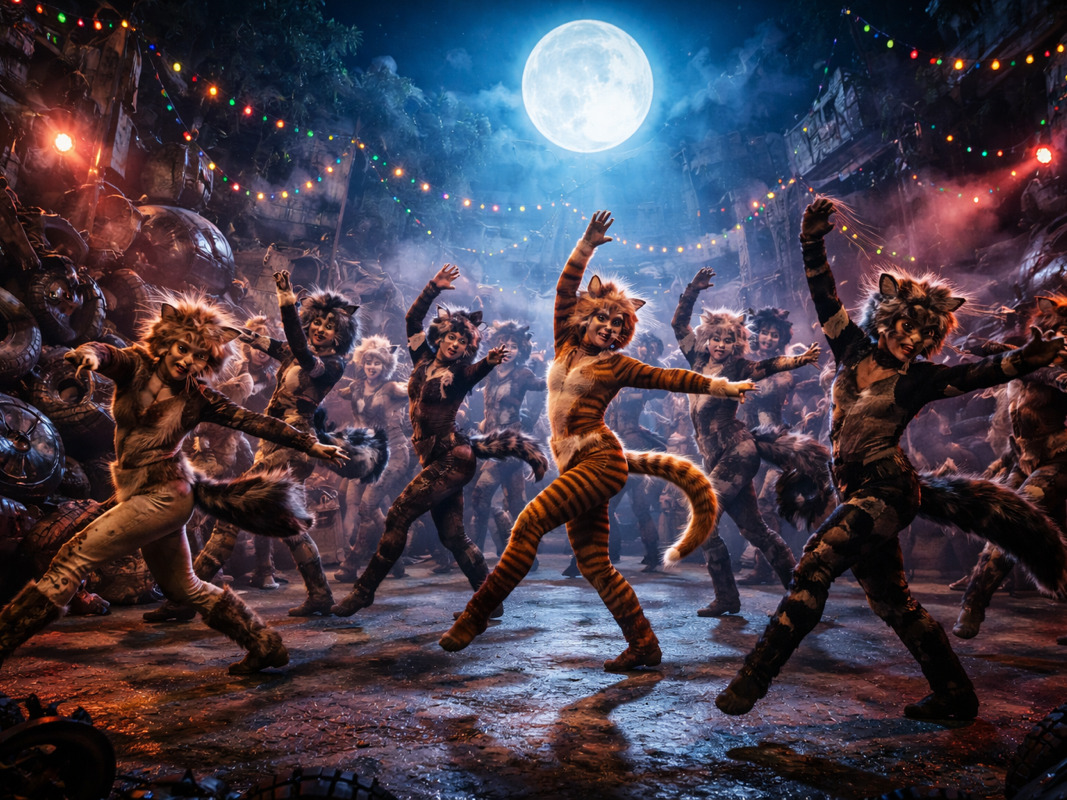
If you are planning Cats in 2026, think like an athlete and a poet. Casting comes first. Choose dancer-singers who can breathe while they move. The Jellicle Ball lasts over ten minutes and does not let up. Stamina matters. In rehearsal, build breath plans into the steps. Mark where a chorus can inhale and where the line must flow.
Honor the original dance story. Gillian Lynne's curved spines, low centers, and paw shapes show who these cats are. Start with those basics, then shape turns and leaps for your cast. If you add ideas from later revivals, lay out traffic so sightlines stay clear.
Text work is key. Eliot's words shine, but only if we hear them. Drill crisp consonants while moving. Feel the pulse in sounds like “Jellicle cats.” Keep vowels pure so harmonies stay in tune when the heart rate climbs.
Music prep must support the dance. Whether using a pit or high-quality tracks, set clear tempos for big sequences. Count-ins and bar counts must be clear for the Jellicle Ball, Mr. Mistoffelees, and Skimbleshanks. Cue points should match lifts and props. This keeps everyone calm and safe.
Rehearse with our Cats backing tracks album, ready for the Jellicle Ball, Mr. Mistoffelees, and each tribe introduction.
Download Cats Backing TracksSound and look complete the world. Body mics with a light ambient wash can keep breathy, feline colors while letting lyrics stand out. Watch the low end in synth patches so voices don’t get buried. Plan makeup and costume flow. Quick routes for tribe introductions matter, and tails and mic cables must be managed to prevent tangling during dance.
Why return to Cats now? Because it offers a simple truth. A group meets, listens, and chooses grace. The show asks the body to speak first, and the heart to answer. For performers and teachers, it is a master class in ensemble trust. For audiences, it is a night of light, rhythm, and hope.