Annie Get Your Gun and the Showmanship Behind a Classic Score
By Broadwaytrax Content Studio · November 24, 2025
Updated May 13, 2026
A rifle cracks, a tin can spins, and a young woman smiles. Annie Oakley is a sharpshooter who never brags. She simply hits the mark, again and again. This is the heart of Annie Get Your Gun, a classic musical that looks closely at gender roles. The story asks who gets to shine in the spotlight and who is told to step back.
The musical follows Annie, a sharpshooter from the backwoods, who joins Buffalo Bill's Wild West Show. She meets Frank Butler, the best marksman. Sparks fly between them, but pride also comes into play. Their rivalry becomes a love story but bumps up against how society expects women to act. The real duel here is between talent and ego and between truth and tradition [(Encyclopaedia Britannica)].
Bring "Annie Get Your Gun and the Showmanship Behind a Classic Score" to life with custom tracks
Get the exact arrangement you need—either customize an existing accompaniment or commission a bespoke build from our team.
Don't see this show in our library yet? We'll build it for you.Irving Berlin created the music and lyrics, while Herbert and Dorothy Fields wrote the book. The show premiered on Broadway in 1946 with Ethel Merman as Annie. It became a huge hit, with over a thousand performances [(Encyclopaedia Britannica)][(Wikipedia).
Berlin's score includes some well-loved songs. There's No Business Like Show Business is full of pride for showbiz. They Say It's Wonderful sings softly and sweetly. I Got the Sun in the Morning is cheerful and bright. And Anything You Can Do plays with the idea of gender in skills, letting Annie meet Frank's bragging with calmness and cleverness [(Encyclopaedia Britannica)].
The show has seen major revivals over the years. A 1966 production at Lincoln Center featured Merman again and included the duet An Old-Fashioned Wedding, which became a favorite [(Wikipedia)].
In 1999, a new version of the show came out. Peter Stone revised the book to create a show-within-a-show. This change removed outdated material and made the end more respectful. Instead of asking Annie to let Frank win for his pride, the final contest ends in a tie. This shift shows mutual respect. This revival won the Tony Award for Best Revival of a Musical, and Bernadette Peters won Best Actress. Reba McEntire's star role brought even more visitors [(Wikipedia)][(Tony Awards)].
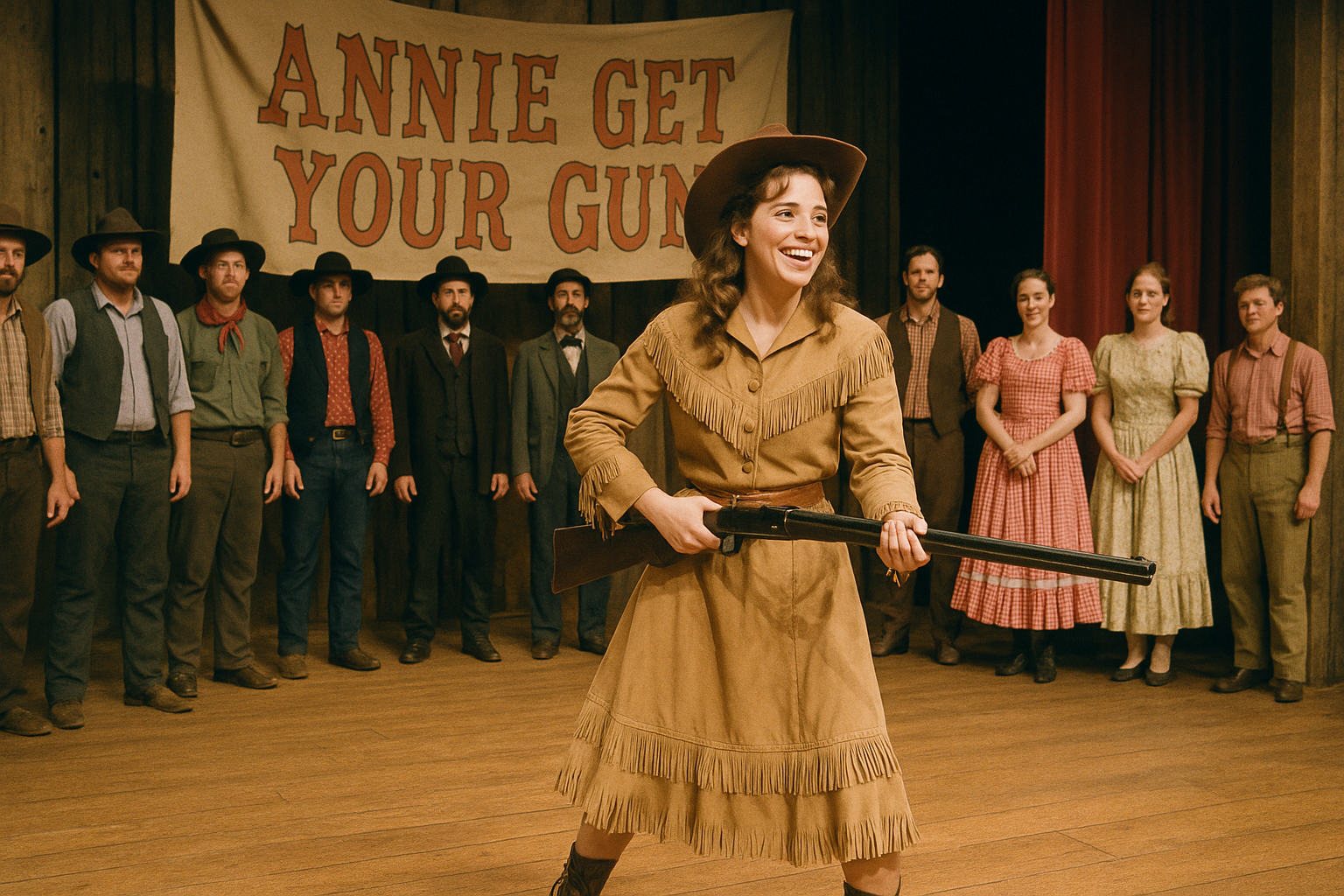
These changes are very important. Annie is a natural sharpshooter, but the world around her often tells her to dim her light. Frank is talented but can be fragile when Annie outshoots him. Songs like Anything You Can Do make this tension feel fun, but the question it raises is serious. Who decides how bright a girl can shine? The 1999 ending says Annie can shine as brightly as she wants, without overshadowing anyone [(Wikipedia)].
Culturally, the impact is wide. There's No Business Like Show Business has become an anthem for theatres everywhere, celebrating their craft. Annie Oakley serves as a role model for many performers, inspiring them to be tough, humorous, and heartfelt. She advises, “Stand tall, sing true, and let the work speak” [(Encyclopaedia Britannica)].
For teachers and directors today, the 1999 Revised Edition fits best. It keeps the original music while emphasizing respect. Many schools choose this version to meet modern standards for representation while keeping the fun and warmth of the show [(Wikipedia)]. If you want to stage this show soon, consider sharing that you are using the revised book. Explaining how classic works evolve helps the audience understand the changes and sparks thoughtful discussions afterward.
When staging, treat the contests like games that require trust. Make Annie's victories feel hard-earned rather than a matter of luck. Let Frank's growth seem honest, not forced. In musical direction, keep Berlin's lively sound. Songs like They Say It's Wonderful need room to breathe, while comic numbers should have clear timing. In Anything You Can Do, make it about friendly competition rather than meanness, so the final note is joyful.
Rehearse and perform with Annie Get Your Gun with custom
Start Your Custom ProjectFor auditions, I Got the Sun in the Morning is good for mezzo-sopranos and belters. It shows bright voice placement without strain. A short section from Anything You Can Do showcases range and timing. For baritones, My Defenses Are Down offers character depth without pushing too hard [(Wikipedia)][(Encyclopaedia Britannica)].
Why focus on this show now? Because the core question remains important: Can love and equality exist together? Annie Get Your Gun says yes, if both people encourage each other. With the revised ending, that support reaches every audience member. The show honors Annie's talent while valuing Frank's pride and brings a message that feels fresh: talent has no gender, just practice and heart.