Little Mermaid Rehearsals Need Tracks That Keep the Room Moving
By Broadwaytrax Content Studio · May 19, 2026
Updated May 19, 2026
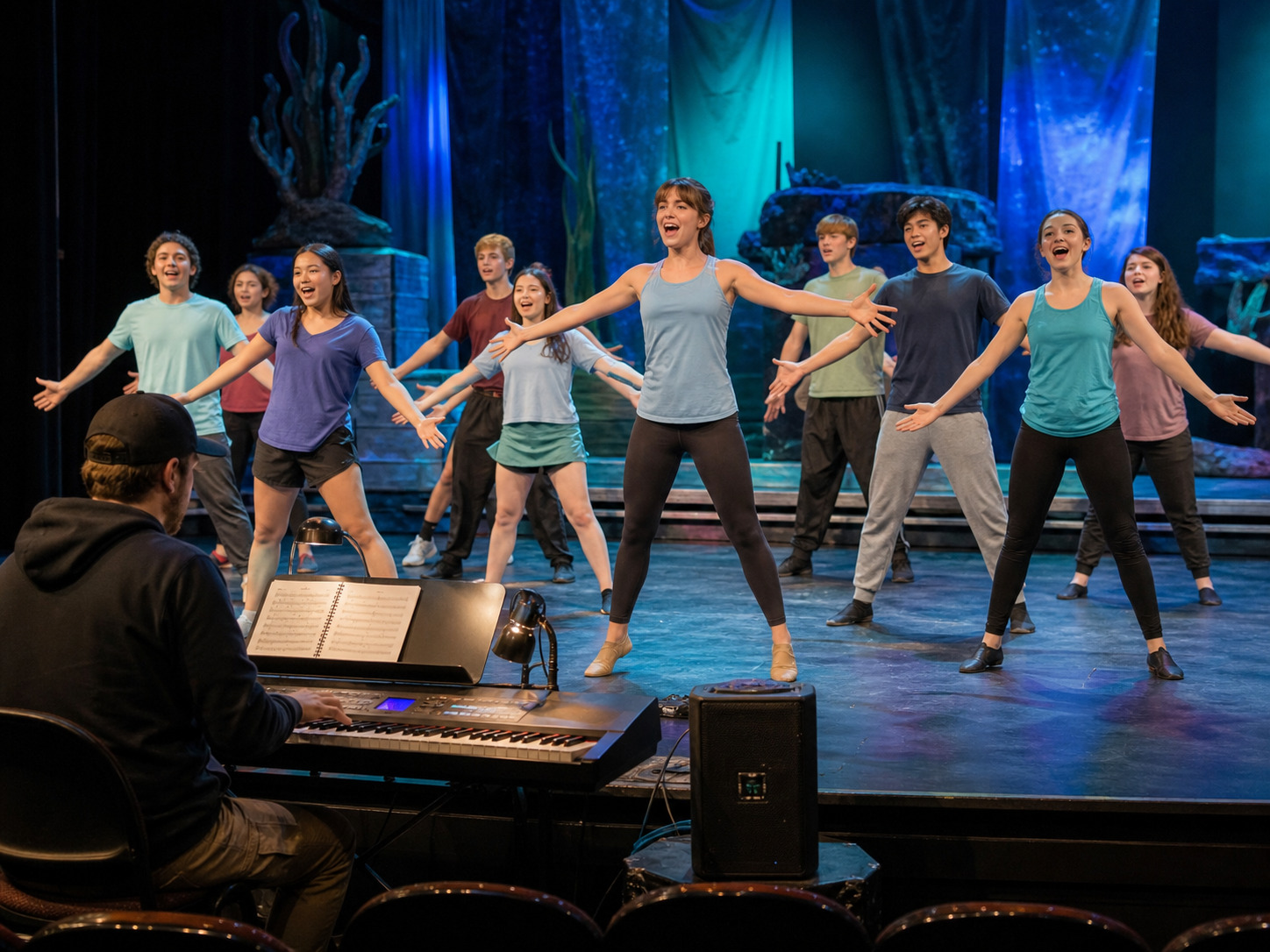
The Little Mermaid moves quickly once rehearsals leave the table. Solo lines turn into ensemble answers, choreography starts to sit on top of dialogue, and songs such as (She's in Love) need a pulse the whole room can trust.
That is where a clear backing track plan helps. A school or community theater production does not need to make tracks complicated. It needs the right version, a reliable cue, and a rehearsal sequence that lets singers stop guessing.
Bring "Little Mermaid Rehearsals Need Tracks That Keep the Room Moving" to life with custom tracks
Get the exact arrangement you need—either customize an existing accompaniment or commission a bespoke build from our team.
Don't see this show in our library yet? We'll build it for you.Build the track plan before staging begins
Before the first full staging rehearsal, make a simple list of every musical number the production will use. Mark whether each song needs guide vocals for teaching, accompaniment only for performance-style rehearsal, or a custom edit for a key, cut, cue, tempo, or lead-in.
For The Little Mermaid, pay special attention to numbers with quick ensemble responses and movement. A track can keep the room organized only if the production team knows which file belongs to which moment.
A practical track map should include:
- song title and scene placement;
- guide vocal or accompaniment-only version;
- cue giver for the start of the track;
- any count-off, pickup, vamp, or dialogue lead-in;
- cuts, repeats, or tempo notes;
- whether the file is for rehearsal only or performance.
This turns the track list into a working production document instead of a folder of MP3s.
Use guide vocals while the cast is still learning
Guide vocals are useful early because they answer questions before they slow the room down. They show entrances, phrasing, and the shape of the arrangement while the cast is still learning how each song works.
Use guide vocals when teaching:
- fast call-and-response sections;
- harmony parts that need a confident first reference;
- featured ensemble lines;
- understudy or swing material;
- rehearsal-at-home assignments.
The goal is not to keep the guide vocal forever. Once the cast knows the material, shift toward accompaniment tracks so singers carry the melody themselves and start listening across the stage.
Give ensemble numbers a consistent pulse
A song like (She's in Love) depends on timing. The humor works when the ensemble knows exactly when to enter, how long to hold the energy, and where the next phrase lands. If every rehearsal uses a different piano tempo, the cast may learn the notes without learning the shape of the number.
A steady accompaniment track helps the choreographer, music director, and cast work from the same reference. It also helps the sound operator learn the cue before tech week, which matters when the song starts after dialogue or stage business.
During staging rehearsals, rehearse the edges of the track as much as the middle:
- Run the dialogue into the cue.
- Start the track from the exact playback device you will use in rehearsal.
- Stop and restart if the entrance is late.
- Mark who gives the cue and what the operator watches.
- Run the final button into the next scene change.
That work can feel small, but it prevents the most common track problems from arriving during tech.
Check keys and cuts early
The Broadwaytrax catalog track may be exactly what the production needs. If the cast needs something more specific, make that decision before habits form.
Key checks are especially important for young casts and community groups with mixed ranges. A song can feel comfortable at the piano and still become difficult once movement, staging, and nerves are added. Test featured moments early, then decide whether the production needs a different key, shorter cut, cleaner lead-in, or adjusted tempo.
Broadwaytrax can support (custom track work) when a production needs a key change, cut, tempo adjustment, cue edit, or other practical rehearsal change. The clearest request names the song, explains the staging need, and gives the desired result in production terms.
Keep rehearsal and performance rights separate
Backing tracks and show rights are not the same thing. A theater-use license for a Broadwaytrax sound recording covers use of that recording in performance. It does not replace the grand rights or performance rights required to stage the musical.
For a school or theater, the clean checklist is:
- secure the show license from the proper rights holder;
- decide whether the production will use tracks, live musicians, or a hybrid;
- purchase the correct Broadwaytrax recording license for performance use;
- keep receipts and license details with the production file;
- rehearse with the same files the operator will use in performance.
That keeps the music plan clear for directors, administrators, and anyone approving the budget.
A rehearsal sequence that works
A simple order usually works best:
- Listen through the key tracks with the music director, director, choreographer, and stage manager.
- Build the track map before staging starts.
- Teach melodies and entrances with guide vocals where needed.
- Move to accompaniment tracks before the cast gets dependent on the demo.
- Rehearse cues, lead-ins, and scene transitions with the actual playback setup.
- Confirm keys, cuts, and licensing before tech.
- Run the show with the final files, file names, and cue order.
The point is not to make the process more formal. It is to make rehearsal calmer. When the cast knows what they are hearing and the operator knows when to press play, the room can focus on the performance.
FAQ: Little Mermaid backing tracks
Can schools rehearse The Little Mermaid with backing tracks?
Yes. Backing tracks can be useful for music rehearsals, choreography, at-home practice, and production planning. For public performances, confirm both the show rights and the correct recording license.
What is the difference between a guide vocal and an accompaniment track?
A guide vocal includes a reference singer to help the cast learn melody, entrances, and phrasing. An accompaniment track removes the reference vocal and works more like a performance backing track.
Can a track be changed for a young cast?
Often, yes. If a song needs a different key, a cut, a clearer cue, or a tempo adjustment, request the change early enough that the cast can rehearse with the final version.
Should the sound operator rehearse before tech week?
Yes. The operator should practice track starts, stops, fades, and scene handoffs before the production reaches full technical rehearsals.
Rehearse She's in Love with a downloadable Broadwaytrax accompaniment track, theater-use licensing options, and custom key or cut support when the production needs it.
View She's in Love TrackThe takeaway
The best backing track plan is the one the whole team understands. Start with the track that supports the rehearsal goal, use guide vocals only while they are useful, move to accompaniment tracks before staging hardens, and request custom edits when the cast or scene needs a more exact fit.