Legally Blonde Needs a Track Plan With Real Energy
By Broadwaytrax Content Studio · June 24, 2026
Updated June 24, 2026
A bright contemporary musical can look simple from the audience. The score moves fast, the scenes change quickly, and the big ensemble numbers need confidence before they need volume.
For a school, community theater, or youth production, that kind of show benefits from a backing-track plan before choreography and vocals start pulling in different directions. The goal is not just to press play. The goal is to make sure the cast, music director, choreographer, stage manager, and sound operator are all rehearsing the same version of the show.
Bring "Legally Blonde Needs a Track Plan With Real Energy" to life with custom tracks
Get the exact arrangement you need—either customize an existing accompaniment or commission a bespoke build from our team.
Don't see this show in our library yet? We'll build it for you.Start with the full album, not a scattered playlist
A single accompaniment track can solve one song. A production needs a map.
The (Legally Blonde full album) gives the team a practical starting point because the numbers live together instead of being treated as unrelated downloads. That matters when the show has quick pickups, tight endings, underscoring, reprises, and ensemble material that has to feel consistent from rehearsal room to performance.
Before the first music call, list every number the production expects to use. Mark whether the cast needs a guide vocal for learning, an accompaniment track for run-throughs, or a custom version for a singer, dance break, cue, or transition.
A simple version map keeps the room from asking the same question every week: which track are we using now?
Protect tempo before the cast learns movement
Fast numbers are exciting when the cast trusts the tempo. They become stressful when dancers learn traffic to one pace and singers practice entrances to another.
Before choreography is set, run the major ensemble numbers with the actual tracks and note where the cast needs help:
- a clearer count-off,
- a longer lead-in,
- a tighter button,
- a dance break that needs to be marked differently,
- a cue that starts after dialogue instead of after silence,
- or a tempo that feels strong in rehearsal but too rushed with staging.
If the stock version is close but not quite right, solve that early. Broadwaytrax custom work can support keys, cuts, tempos, lead-ins, vamps, cue edits, and full-show production needs when the standard album does not match the staging.
Use guide vocals as a learning step
A high-energy score can make singers memorize rhythm before they understand entrances. Guide vocal tracks help the cast hear how the lyric sits in the track, where pickups belong, and how long the ending actually lasts.
Use guide vocals for first learning and problem spots. Then move the cast to accompaniment-only tracks as soon as the structure is secure. That progression matters because the final show needs active performers, not singers depending on a sung model from the speakers.
A clean rehearsal sequence looks like this:
- Listen once with scripts or lyric sheets open.
- Mark entrances, holds, and cutoffs.
- Sing with the guide vocal only long enough to learn the map.
- Rehearse with accompaniment before staging gets locked.
- Return to the guide only for sections that keep slipping.
Build the sound operator's cue list early
The sound operator should not discover the show in tech.
Give them a track list that includes the song title, file name, start cue, expected first sound, who gives the cue, and whether the ending stops, fades, rings, or leads into dialogue. If a number starts from a spoken line, write the spoken line. If the track starts after a stage move, describe the move.
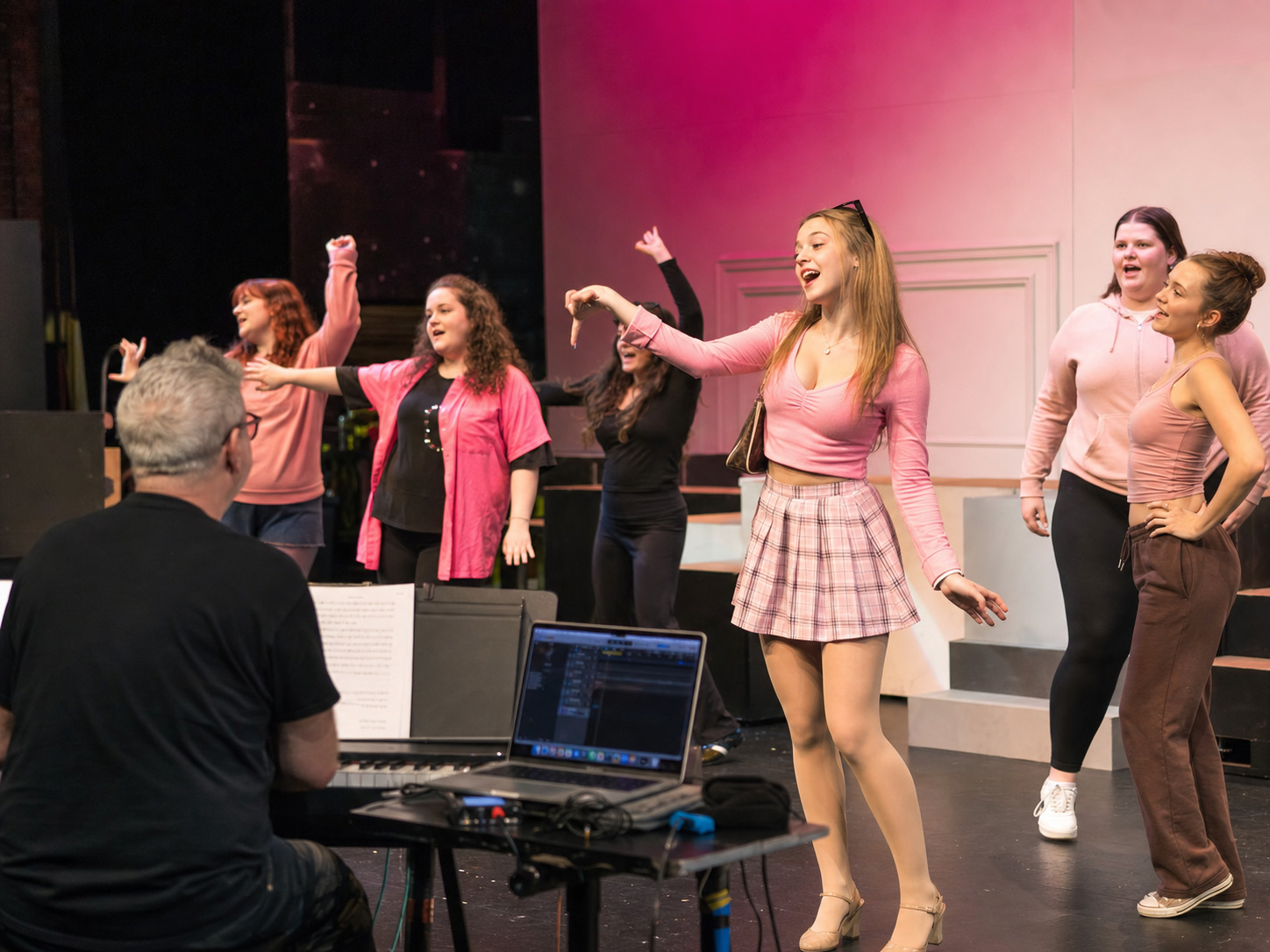
This does not need to be complicated. It needs to be findable.
A shared production folder should include:
- final MP3 files,
- guide vocal files for rehearsal only,
- receipts and theater-use licensing notes,
- cue list,
- custom edit notes,
- backup copies,
- and one document naming the final approved version of each track.
When the same file names appear on every rehearsal laptop, the production feels calmer.
Know when a custom version is worth it
A cast can sometimes adapt to a standard track. Other times the track should adapt to the production.
Consider a custom edit when a soloist needs a different key, the choreography needs a longer dance section, the director needs a shorter transition, or a scene change needs music to land on a practical stage cue. Those requests are not cosmetic. They protect rehearsal time and keep the final performance from sounding patched together.
The best custom request is specific. Name the number, the current version, the problem, the desired result, and the staging reason behind it. If the issue is a cut, include exact timestamps or measure references when available. If the issue is a cue, describe who moves, speaks, or enters before the music begins.
FAQ: Legally Blonde backing tracks
Should a production buy the full album or individual tracks?
If the production is rehearsing the show, the full album is usually the cleaner planning tool. Individual tracks can work for auditions, isolated rehearsals, or selected numbers, but a full production needs a consistent track map.
When should we request key or cut changes?
Request them before the cast has repeated the wrong version for several rehearsals. Early changes are easier for singers, choreographers, and sound operators to absorb.
Are guide vocals for performance?
No. Guide vocals are best for learning and cleanup. The cast should move toward accompaniment-only tracks before final run-throughs and tech.
What should the stage manager know?
They should know which file starts each number, who cues it, what the first sound is, and whether the ending connects to dialogue, movement, or another track.
The takeaway
Rehearse Legally Blonde with the Broadwaytrax full album, then request custom keys, cuts, cues, or tempo changes when your production needs a version built around the cast.
View Legally Blonde AlbumA fast show needs a calm music system behind it.
Start with the (Legally Blonde full album), build one version map, move from guide vocals to accompaniment, and request (custom support) before staging locks in the wrong version.