Let “If I Were a Rich Man” Think Out Loud
By Broadwaytrax Content Studio · November 12, 2026
Updated November 12, 2026
The short answer: rehearse “If I Were a Rich Man” as a private argument that keeps changing shape. The number becomes compelling when the performer thinks each possibility into existence, lets the rhythmic speech stay connected to the thought, and uses the accompaniment as a dependable frame rather than a cue for broad comedy.
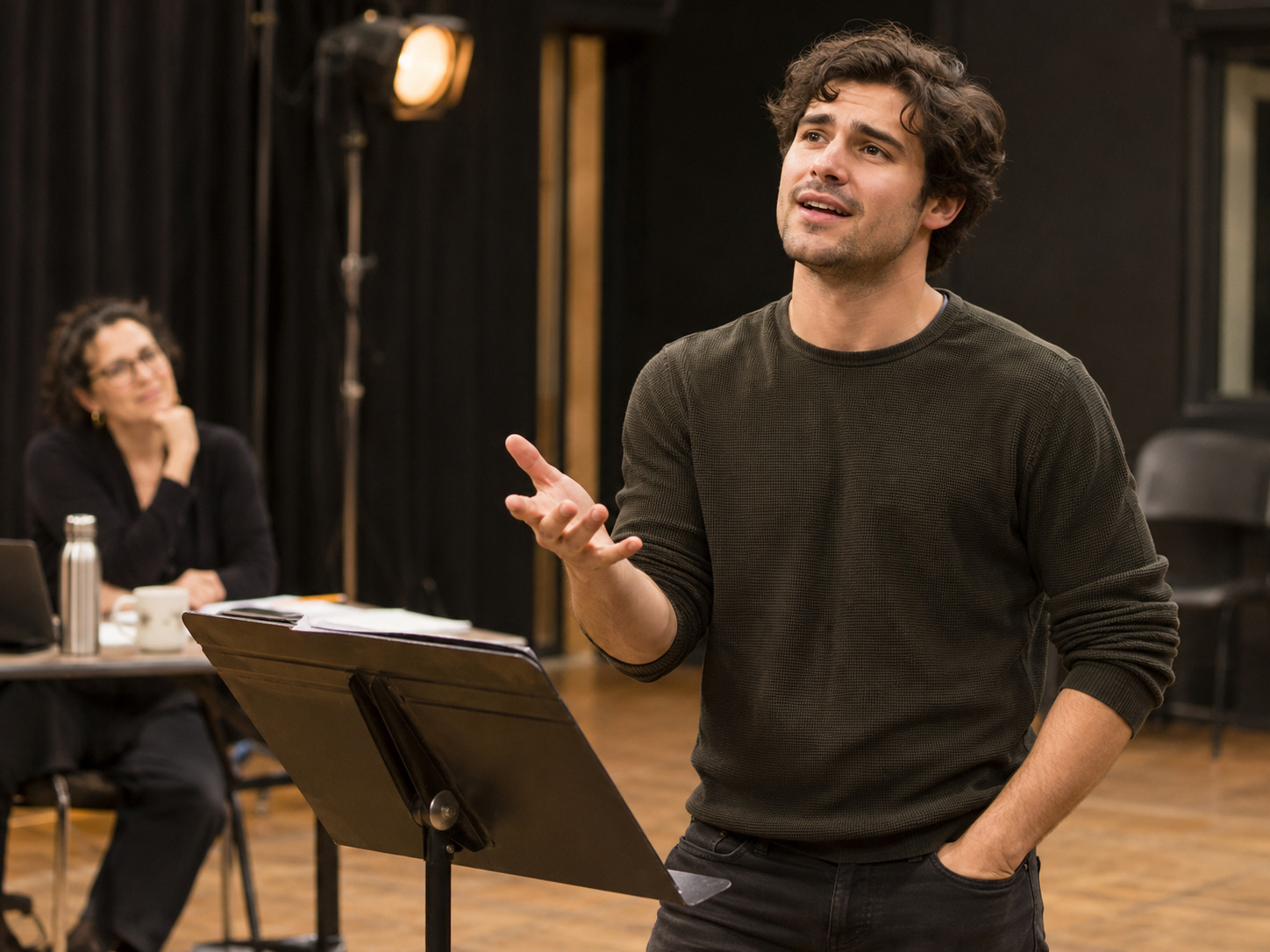
A familiar character song can become a collection of effects: a knowing gesture, an oversized reaction, a louder refrain. Those choices may earn quick responses, but they flatten the scene. The more useful rehearsal question is simple: what new possibility has just occurred to him, and what does imagining it allow him to say next?
Bring "Let “If I Were a Rich Man” Think Out Loud" to life with custom tracks
Get the exact arrangement you need—either customize an existing accompaniment or commission a bespoke build from our team.
Don't see this show in our library yet? We'll build it for you.Begin with the argument, not the routine
Before singing, speak the text in plain language. Do not perform an accent, imitate a famous actor, or plan jokes. Identify the immediate problem and the person—or presence—the character is addressing.
Then divide the number into short thought units. After each one, complete two sentences:
- “If this were true, I could…”
- “That would matter because…”
Keep the answers practical. They should reveal changing priorities, not describe a general mood.
Sing the section again at rehearsal volume. If the thought stays clear without extra gesture or volume, the scene has a strong base.
Give every imagined possibility a different job
The number keeps expanding because one possibility leads to another. Treating every image as the same fantasy makes the middle feel long and the ending predictable.
Assign an active verb to each section:
- propose,
- picture,
- test,
- enjoy,
- justify,
- confess,
- return.
The exact verbs can change, but each new section needs a different action. One idea may be playful. Another may expose a responsibility. A later turn may reveal what the character wants from status, comfort, family, or community.
Run the sequence without stopping and notice whether the ideas cause one another. The next thought should feel discovered, not retrieved from a list.
Let rhythmic speech carry the storytelling
The musical energy works best when rhythm grows out of speech. Heavy emphasis on every beat can make the text sound mechanical; ignoring the track can make the performer feel late or disconnected.
Speak each phrase over the accompaniment and mark:
- the word that launches the thought,
- the word that changes its direction,
- the breath that prepares the next idea,
- the final word that hands the scene forward.
Then sing without adding weight to every syllable. Important words need space, but the line still has to travel.
A useful check is to record one pass and listen without watching. Can you hear the ideas changing, or only the dynamics?
Move from guide vocal to accompaniment
Broadwaytrax’s current Fiddler on the Roof album lists both a guide-vocal version and an accompaniment-only version of “If I Were a Rich Man.” Use them for different stages of preparation.
The guide vocal can help confirm melody, entrances, pacing, and the relationship between the vocal line and the arrangement. Once those details are secure, move to the accompaniment track. That is where the performer proves that the rhythm, words, and dramatic turns can stand without following another singer.
Try this four-pass sequence:
- listen with the score and mark the musical form,
- sing with the guide vocal while checking entrances,
- speak the text over the accompaniment,
- sing a complete accompaniment-only pass without stopping.
On playback, choose one musical adjustment and one acting adjustment. Too many notes at once usually produce a cautious second run.
Build a map of the accompaniment
A fixed track gives the rehearsal room repeatable landmarks. Listen once without singing and name the moments everyone can recognize:
- the opening cue,
- the first clear change in texture,
- a transition into a new imagined possibility,
- the approach to the final section,
- the ending and release.
Give each landmark a dramatic label as well as a musical one. “The plan gets bigger” or “the private truth appears” is more playable than a measure number alone.
Rehearse the transitions into those landmarks separately. Three clean transitions usually improve a performance more than three full runs from the top.
Keep the physical life specific
Physical comedy is strongest when it comes from a decision. Start with relaxed hands and one clear focus. Add movement only when a new idea changes the character’s relationship to the room.
Avoid building the performance from borrowed gestures, generalized dialect, or cultural shorthand. Those choices can turn a specific person into an imitation. Let dialect, movement, and cultural detail come from the licensed production’s direction and an informed rehearsal process—not from a performer’s memory of another production.
Try one run with no planned gestures. Then restore only the movements that help the audience follow a new thought.
Test the cut and the ending
If the song is being used for an audition, rehearse the exact approved cut with the actual accompaniment file. A good cut needs a beginning the room can understand, at least one change of thought, and an ending that feels complete.
Check the final ten seconds separately:
- Is the last entrance secure?
- Does the thought finish before the sound does?
- Does the performer anticipate the accompaniment ending?
- Is the release clean enough for the next audition or stage cue?
If the standard version is close but the key, cut, tempo, lead-in, or ending does not fit the singer or staging, document the specific problem before requesting a custom edit.
FAQ: rehearsing “If I Were a Rich Man”
Should I learn the song from the guide vocal?
Use the guide vocal as a reference for melody, entrances, and phrasing, then move to accompaniment-only rehearsal. The goal is an independent performance, not a copy of the demonstration singer.
How do I keep the number funny without overplaying it?
Make each imagined possibility specific and let the next thought surprise the character. Comedy can come from the size and logic of the ideas; it does not need a planned reaction on every phrase.
Can the Broadwaytrax track be used in a public production?
The current product page distinguishes personal practice or recital use from theater use. It also states that a license for the sound recording does not replace the grand rights required to perform the musical. Confirm both the recording license and the show rights for the planned use.
What if the catalog track does not fit the singer?
The current product and custom pages offer support for key changes, tempo edits, cuts, lead-ins, cues, and other production-specific needs. Describe the exact rehearsal problem and intended use so the request can be scoped around the performer and room.
Ready to turn each imagined possibility into a complete performance? Rehearse with the Broadwaytrax accompaniment track for “If I Were a Rich Man.”
Rehearse “If I Were a Rich Man”The takeaway
“If I Were a Rich Man” works when the performer thinks faster than the routine can settle. Build the argument, give every imagined possibility a new job, let speech drive the rhythm, and move from guide vocal to accompaniment. The number can be funny, musical, and human because the thought stays alive.