Guide Vocal Tracks for Musical Theater Rehearsals and Auditions
By Broadwaytrax Content Studio · May 11, 2026
Updated May 13, 2026
A guide vocal track is not just a singer on top of an accompaniment file. For musical theater rehearsals, it is a learning map: melody, rhythm, entrances, breaths, cutoffs, phrasing, and style in one repeatable reference.
That matters when a school cast is learning quickly, a student is preparing an audition, or a community theater rehearsal needs everyone practicing from the same version before the music director can hear every singer live.
Guide vocals work best when they help performers learn the song clearly, then step out of the way before performance.
What a guide vocal track does
A guide vocal gives the singer a dependable example of how the melody fits the track. It can show:
- the first entrance after the introduction,
- pickup notes and difficult rhythms,
- breath placement,
- diction and consonant timing,
- ensemble cutoffs,
- harmony shape,
- and the difference between a rehearsal version and a performance version.
For singers who learn by ear, a guide vocal can save hours. For teachers and music directors, it creates a shared reference so students are not learning from unrelated recordings, old videos, or mismatched piano demos.
When to use guide vocals in rehearsal
Use guide vocal tracks early. They are especially helpful before the cast knows the score, before choreography is stable, or when students need to practice between rehearsals.
A practical rehearsal sequence looks like this:
- Listen with the guide vocal to learn melody, rhythm, and form.
- Sing with the guide vocal until entrances and cutoffs feel secure.
- Switch to the accompaniment-only track for longer rehearsal runs.
- Use the guide vocal again only for trouble spots, harmonies, or sectional work.
The goal is not to have singers depend on the guide forever. The goal is to help them learn faster so they can perform confidently without it.
Guide vocals for auditions and self-tapes
For auditions, a guide vocal can help the singer learn the cut before recording or walking into the room. It is useful for checking:
- where the vocal starts,
- whether the cut has a clean ending,
- how the tempo supports the story,
- whether the key feels comfortable,
- and whether the singer is rushing because the track is unfamiliar.
When it is time to submit a self-tape or sing live, switch to the accompaniment track without the guide vocal. The guide is for learning. The final take should let the singer carry the story.
Guide vocals for school and community theater
School and community productions often have limited rehearsal time and mixed experience levels. Guide vocals help the cast practice consistently at home, especially when the music director cannot work every role, ensemble group, and harmony part in every rehearsal.
They are useful for:
- younger casts learning melody by ear,
- ensemble numbers with layered entrances,
- dance-heavy sections that need repeated practice,
- understudies or swings learning quickly,
- and casts that need guide vocals first, then performance tracks later.
If the production uses cuts, tempo changes, or custom keys, make sure the guide vocal matches the same version the cast will use in rehearsal. A guide vocal in the wrong key or structure can create more confusion than it solves.
What makes a good guide vocal track
A good guide vocal is clear without being distracting. It should help the singer understand the line, not imitate a cast recording exactly.
Listen for:
- clean entrances,
- understandable diction,
- steady rhythm,
- natural breaths,
- clear endings,
- a key that matches the rehearsal track,
- and a mix where the vocal is easy to hear without covering the accompaniment.
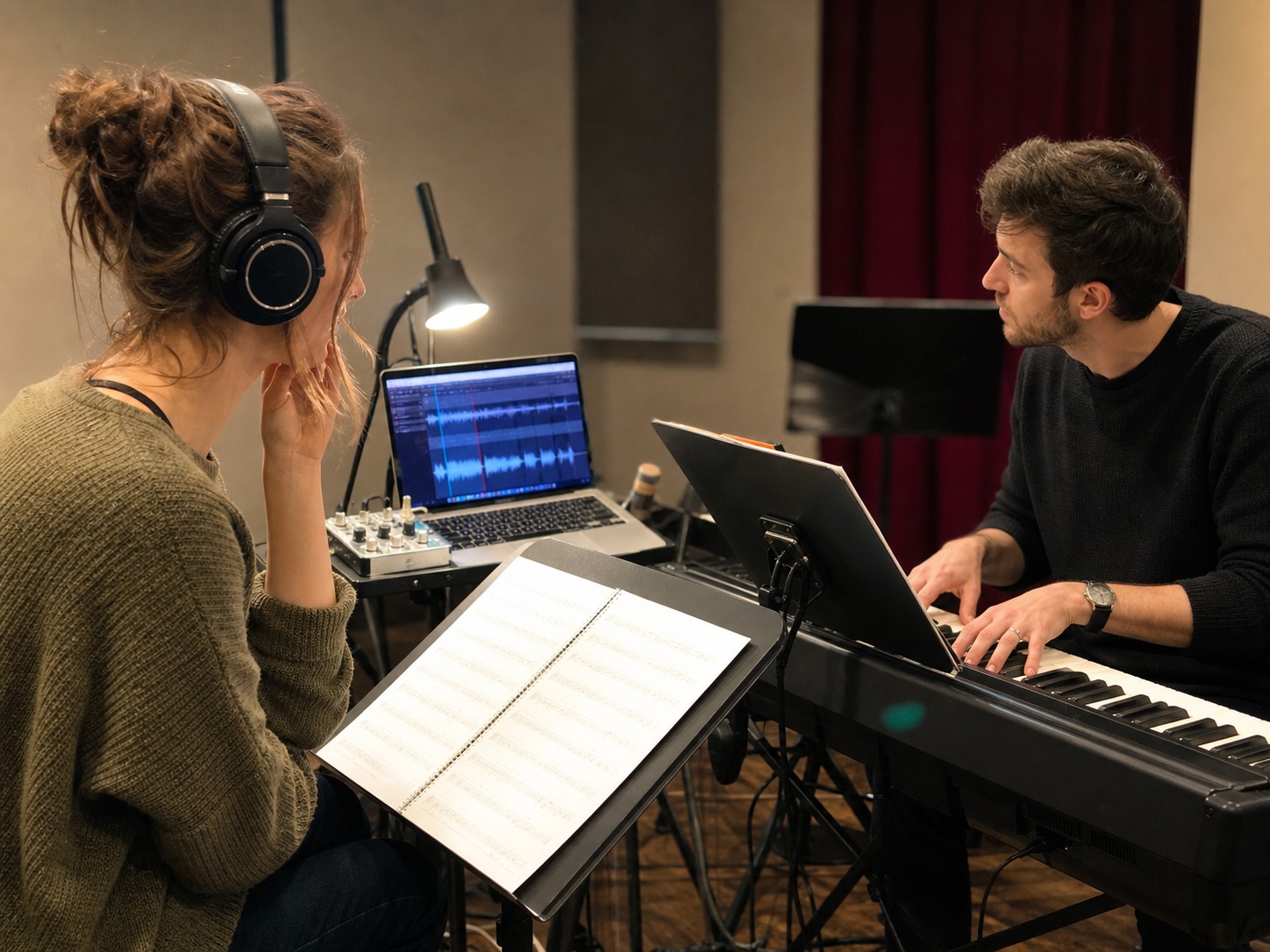
For ensemble work, the guide should make harmony and timing easier to understand. For solo work, it should show phrasing while still leaving room for the performer to make acting choices.
When a custom guide vocal is worth it
A stock guide vocal works well when the catalog version already matches the singer and production. A custom guide vocal is worth considering when the production has changed the track.
Common reasons include:
- a new key for a student or guest performer,
- a shorter audition cut,
- a custom ending,
- a tempo adjustment,
- added lead-ins or cues,
- harmony or sectional support,
- or a full-show package that needs consistent rehearsal materials.
For productions, order guide vocals early enough that the cast practices the final version before choreography and tech week.
Licensing and performance notes
Guide vocals are rehearsal tools. They do not replace show rights, grand rights, or the permissions needed to perform a copyrighted musical. If a production is using Broadwaytrax recordings in public performance, handle the show license and the track-use license as separate planning items.
Also keep rehearsal versions and performance versions labeled clearly. A sound operator should never have to guess whether a file includes guide vocals on opening night.
Quick checklist
Before sending guide vocals to a cast or singer, confirm:
- the song title and show,
- the key,
- the cut or full-song structure,
- whether the file is guide vocal or accompaniment-only,
- the intro length and first entrance,
- any custom cues, vamps, or endings,
- and where the final performance file is stored.
Good file labels prevent rehearsal mistakes. Use names that make the version obvious.
FAQ: guide vocal tracks
What is a guide vocal track?
A guide vocal track is a rehearsal recording with a sung vocal line included so performers can learn melody, rhythm, entrances, phrasing, and cutoffs before using the accompaniment-only version.
Should I perform with the guide vocal track?
Usually, no. Guide vocals are for learning and rehearsal. For auditions, self-tapes, and public performance, use the accompaniment track without guide vocals unless the setting specifically calls for a demo.
Are guide vocals useful for school musicals?
Yes. They are especially useful for younger singers, mixed-experience casts, ensemble numbers, and rehearsal schedules where students need reliable practice files at home.
Can Broadwaytrax make a custom guide vocal?
Yes. Broadwaytrax custom services can support guide vocals, key changes, cuts, tempo adjustments, cues, lead-ins, and production-specific rehearsal versions when a stock track needs to fit a cast or singer more closely.
The takeaway
Need a guide vocal, rehearsal version, custom cut, key change, or performance-ready track for your cast? Broadwaytrax can shape the file around your singer and production.
Learn MoreA guide vocal track helps performers learn the music faster and rehearse with less guesswork. Use it early, label it clearly, then move to the accompaniment-only track before performance.
Start with the best available Broadwaytrax track, then request custom guide vocals, keys, cuts, tempos, or cues when the rehearsal version needs to match your singer or production exactly.