Guide Vocal Tracks for Musical Theater Rehearsals
By Broadwaytrax Content Studio · May 6, 2026
Updated May 6, 2026
A guide vocal track is a rehearsal tool: the same musical theater backing track, but with a reference singer demonstrating melody, entrances, phrasing, and style. Used well, it helps students, auditioners, and community casts learn faster. Used too long, it can keep singers dependent on someone else's line.
Here is the practical rule: start with the guide vocal track when notes, text, harmony, or entrances are still uncertain. Move to the accompaniment track as soon as the singer can carry the phrase independently. That shift is where the real rehearsal progress happens.
If you are still choosing materials, Broadwaytrax has a dedicated (guide vocal tracks catalog). For performance use, pair those practice tracks with the matching accompaniment track and confirm any required show licensing separately.
What guide vocal tracks are best for
Guide vocal tracks are most useful when the singer needs a clear model before singing alone. They are especially helpful for:
- Learning melody and rhythm before the first coaching.
- Checking entrances after dialogue, vamps, or underscoring.
- Teaching harmony parts when a section cannot hear its line yet.
- Helping young performers connect text, breath, and pitch.
- Giving absent cast members a reliable catch-up tool.
- Preparing auditions or prescreens before switching to accompaniment-only practice.
The guide is not a replacement for coaching. It is a temporary model that makes coaching more efficient.
The Guide, Ghost, Go method
For most rehearsals, use a simple three-step sequence.
Guide: Play the guide vocal track at a comfortable level. Ask singers to mark entrances, breaths, cutoffs, and any words that need cleaner diction. At this stage, the goal is accuracy.
Ghost: Lower the guide vocal so it is present but no longer dominant. The singer should feel supported, not carried. This is a good moment to fix vowels, consonants, and phrase shape.
Go: Switch to the accompaniment track. If the singer loses pitch, time, or text, return to the exact four or eight bars that broke down. Do not restart the entire song unless the whole form is the problem.
This approach works for private studios, school rehearsals, audition coaching, and ensemble sectional work because it gives everyone a clear exit path from the model.
A 30-minute rehearsal plan
Use this when you need quick progress on one number.
0-5 minutes: listen and mark Play the guide vocal once. Mark breaths, pickups, tempo shifts, cutoffs, and any word that lands on a tricky rhythm.
5-10 minutes: speak the rhythm Speak the text in time with the guide. This is useful for patter, fast ensemble writing, and students who are singing correct pitches with unclear diction.
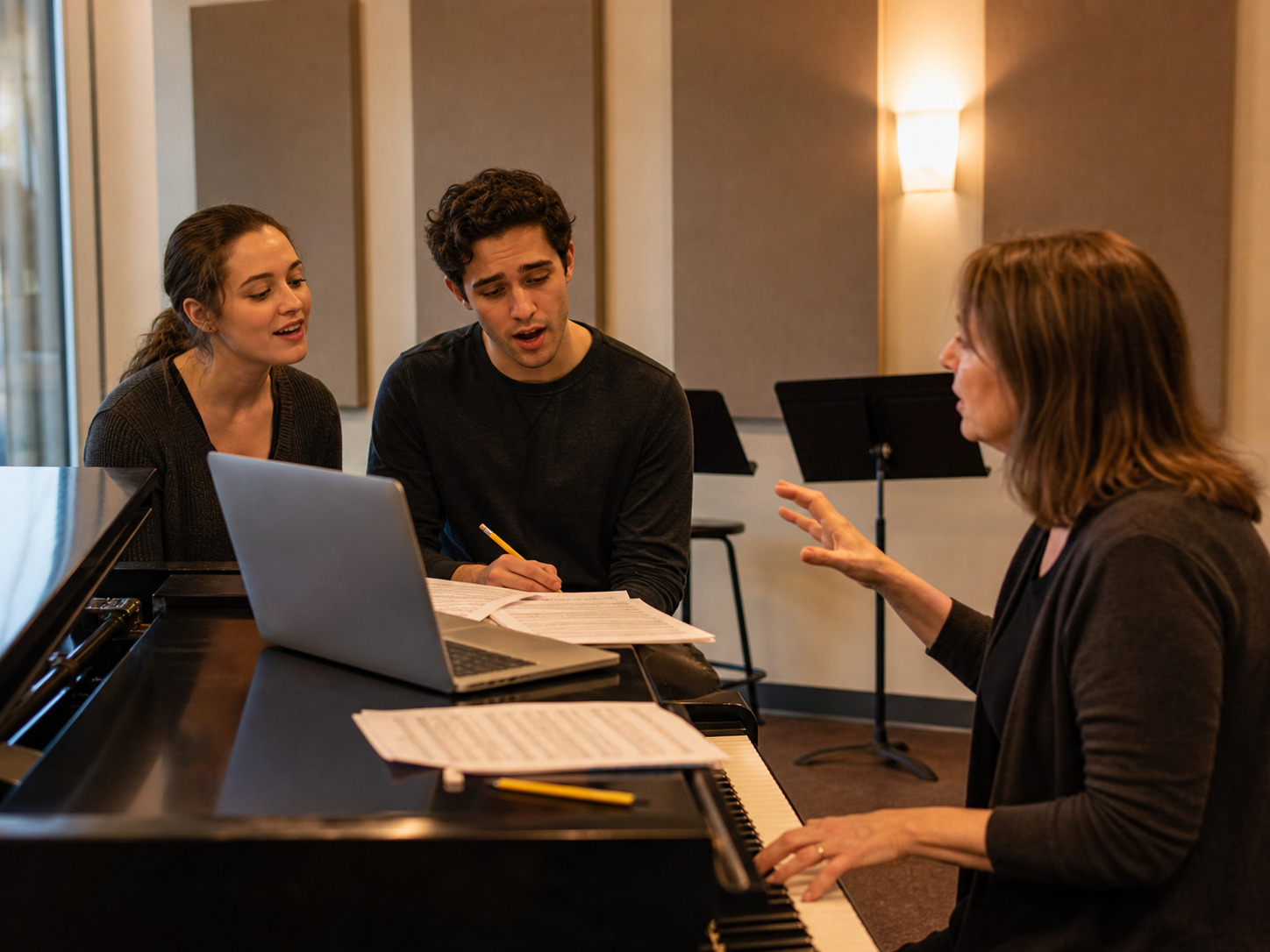
10-18 minutes: sing with the guide Sing in short sections. Stop after each phrase and name one fix: entrance, vowel, pitch, breath, or cutoff. Keep the target narrow.
18-25 minutes: ghost the guide Lower the guide or move it farther back in the room. Ask singers to maintain the same confidence while hearing less help.
25-30 minutes: run with accompaniment Switch to the accompaniment track. Record a quick phone memo if helpful, then choose the next rehearsal target.
How directors and teachers can use guide vocals
For a full cast, guide vocals work best in small doses. Use them to introduce a section, clarify a harmony stack, or give a section leader something dependable to model. Then get the room back to accompaniment-only singing quickly.
For students, guide vocal tracks can reduce the anxiety of learning a new musical theater song. A young performer may not know what the accompaniment is telling them yet. A reference vocal shows where to breathe, how long to hold, and how the line fits inside the track.
For auditions, the transition matters most. Practice with the guide vocal first, then move to the accompaniment track early enough that the singer owns the tempo and storytelling. A guide vocal should help build independence, not mask uncertainty.
Common mistakes to avoid
Leaving the guide on for every run. If the singer can only perform with the model, the track is doing too much work.
Practicing only from the beginning. Loop the exact eight bars where the issue happens.
Ignoring performance licensing. A guide vocal can help you learn a number, but public theatrical use still requires the appropriate rights. For a production-focused overview, see (Backing Tracks, Theater Use, and Grand Rights).
Using the wrong key too long. If the singer is constantly adjusting around range problems, consider a custom key, cut, or tempo change through (Broadwaytrax custom services).
Quick FAQ
Can I use a guide vocal track in performance? Guide vocal tracks are normally for learning and rehearsal. For performance, use the accompaniment track version so the singer or cast carries the vocal line.
Do guide vocal tracks help with harmonies? Yes. They can help singers hear the shape of the line, but harmony sections should still move to accompaniment-only practice once the part is secure.
Browse Broadwaytrax guide vocal tracks when your cast needs a clear melody model before moving to accompaniment-only rehearsal and performance tracks.
Browse Guide Vocal TracksWhen should I stop using the guide vocal? As soon as the singer can enter confidently and stay in time. Keep it nearby for spot checks, not full-run dependency.
Guide vocal tracks are most powerful when they are treated like scaffolding. Put the model in place, build the singer's confidence, then take the model away. That is how a rehearsal track becomes a performance-ready tool.