Guide Vocals Keep Rehearsal From Becoming Guesswork
By Broadwaytrax Content Studio · June 15, 2026
Updated June 15, 2026
A guide vocal track is a rehearsal aid, not a shortcut. It gives singers a sung model for melody, entrances, phrasing, and pacing so the room can move faster before everyone is ready for accompaniment-only practice.
For school productions, community theaters, youth casts, voice studios, and replacement performers, that model can save hours. The key is knowing when to use it, when to put it away, and how to connect it to the performance track the cast will eventually use.
What a guide vocal track should do
A good guide vocal gives the singer a clear reference without turning rehearsal into imitation. It should answer practical questions quickly:
- Where does the vocal line enter after the intro?
- How long is the hold before the next phrase?
- Which pickup belongs before the downbeat?
- How does the melody move through a fast lyric section?
- Where does the phrase release before the next cue?
That matters because many rehearsal problems are not really confidence problems. They are map problems. The singer is trying to learn music, text, breath, staging, and traffic all at once. A sung reference separates the musical map from the rest of the work.
Where guide vocals help most
Guide vocals are especially useful early in the process, when the cast is still learning what the song actually does.
Use them for first-pass learning, individual practice between rehearsals, ensemble clean-up, understudy or swing preparation, and any number where the accompaniment has long intros, vamps, cutoffs, or quick transitions.
They also help when a rehearsal pianist is not available for every session. A teacher, director, or stage manager can run a focused music call with the same reference track the cast heard at home. That consistency keeps the room from relearning the song differently every time.
Do not let the sung model become the performance
The danger is overusing the guide vocal after the singer already knows the song. If the cast keeps practicing with the sung track too long, they may copy every breath, vowel, and phrase shape instead of making active musical choices.
A simple progression works better:
- Listen once with the script or score open.
- Sing along lightly to learn entrances and phrase lengths.
- Mark difficult pickups, holds, cutoffs, and tempo changes.
- Switch to the accompaniment track for real rehearsal.
- Return to the guide vocal only for problem spots.
That keeps the guide vocal in its proper role: a reference, not the final performance.
Pair guide vocals with accompaniment tracks
Guide vocals are strongest when they lead directly into the accompaniment version. The cast learns the structure with the sung model, then rehearses with the track that will actually support auditions, callbacks, run-throughs, or production work.
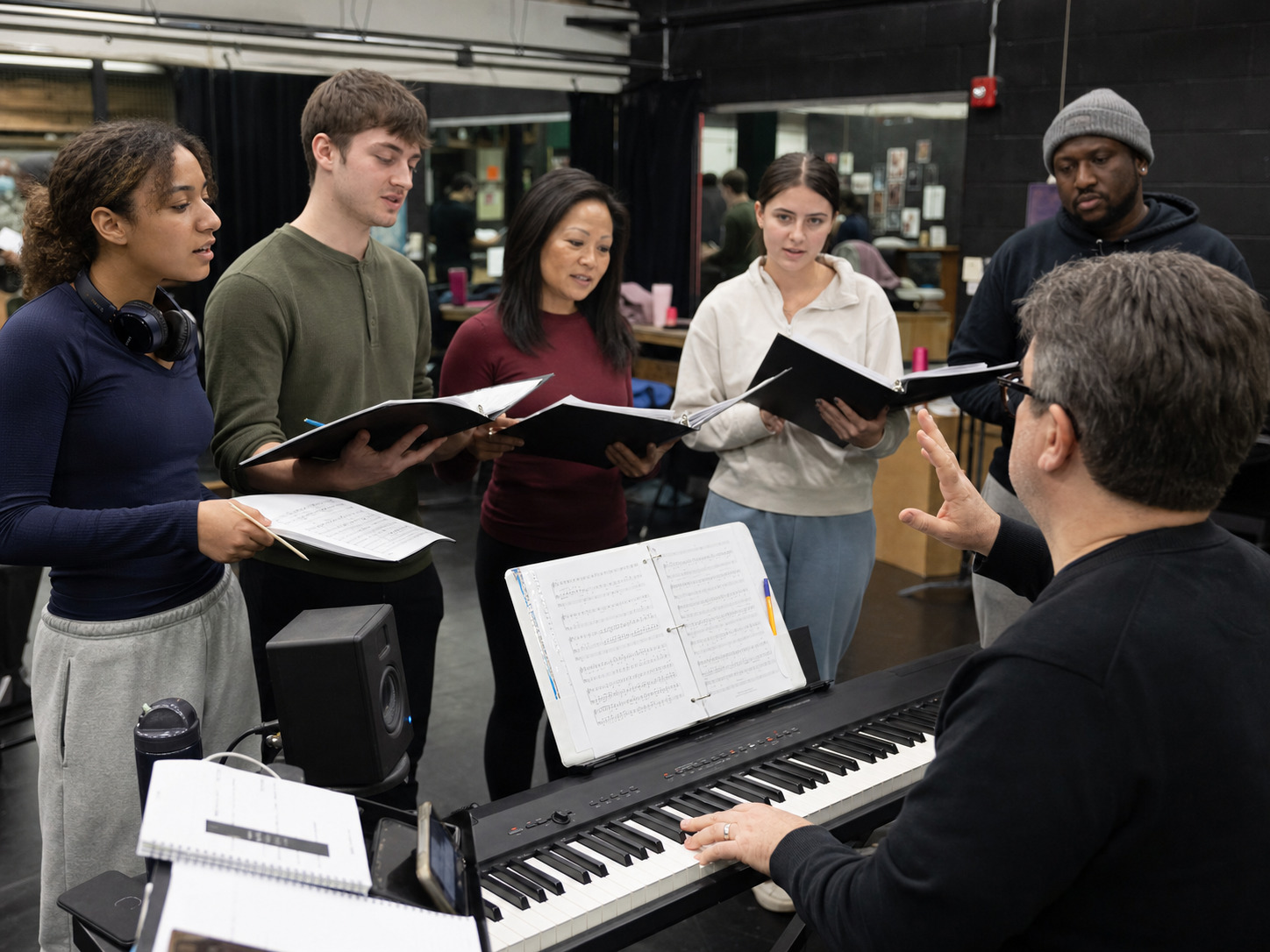
This pairing is useful for music directors because it creates a cleaner handoff. The singer knows the entrance, the director can ask for interpretation, and the accompaniment track keeps the timing stable.
For theater teachers, it also gives students a practical home-practice path. They can use the guide vocal to learn the song, then prove they know it by singing with the accompaniment-only track before rehearsal time is spent on staging.
A rehearsal-room checklist
Before assigning guide vocals to a cast, decide a few things clearly:
- Which songs should be learned with guide vocals first?
- Which singers need the matching accompaniment track right away?
- Are there key changes, cuts, or tempo changes that make the catalog version different from the rehearsal plan?
- Who is responsible for telling the cast when to stop using the guide vocal?
- Which problem sections should be revisited with the sung model during rehearsal?
If the production needs custom keys, cuts, vamps, or cue changes, solve that before the cast builds muscle memory on the wrong version. A clear version map prevents the guide vocal from teaching a structure the production will later abandon.
FAQ: using guide vocal tracks in rehearsal
Are guide vocals the same as accompaniment tracks?
No. A guide vocal includes a sung model so the singer can learn the song. An accompaniment track is the backing track the singer performs with once the melody and entrances are secure.
Should a cast rehearse with guide vocals all the way to tech?
Usually no. They are most useful early, or for fixing specific passages. By run-throughs and tech, the cast should be comfortable with the accompaniment version that matches the performance plan.
Can guide vocals help ensemble numbers?
Yes, especially when the ensemble needs a shared sense of entrances, lyric pace, and cutoffs. They do not replace part teaching, but they give everyone the same reference before rehearsal.
What if the show needs different keys or cuts?
Use the guide vocal carefully until the final version is confirmed. If the production needs custom edits, make the version plan clear before singers practice the wrong structure too many times.
Give singers a reliable model before they rehearse with accompaniment-only tracks. Browse Broadwaytrax guide vocal tracks and pair them with the matching accompaniment versions when the cast is ready.
Browse Guide Vocal TracksThe takeaway
Guide vocals are not there to make the cast sound like someone else. They are there to make the music learnable. Use them early, use them deliberately, then move the room toward the accompaniment tracks that will carry the actual rehearsal and performance.