Godspell Rehearsals Need a Track Plan That Can Move
By Broadwaytrax Content Studio · May 26, 2026
Updated May 26, 2026
Godspell can look easy to stage because the room feels loose: a circle of storytellers, quick character handoffs, movement that can grow from the cast, and songs that feel familiar even before the production has settled. The rehearsal challenge is that the score needs more structure than it first appears to need.
If the accompaniment plan is vague, the room starts guessing. Entrances drift. The ensemble waits for the soloist. Choreography gets built against one tempo and then tested against another. A practical backing-track plan gives the director, music director, choreographer, and stage manager the same map before tech week starts.
Bring "Godspell Rehearsals Need a Track Plan That Can Move" to life with custom tracks
Get the exact arrangement you need—either customize an existing accompaniment or commission a bespoke build from our team.
Don't see this show in our library yet? We'll build it for you.Start with what the album actually gives you
The (Godspell full album) includes accompaniment tracks and guide vocal demonstration versions across the album. That matters in early rehearsal because the cast can learn the shape of the arrangement before they are expected to carry every entrance alone.
Use the guide vocal versions while the ensemble is still learning form, cutoffs, and call-and-response moments. Move to accompaniment-only tracks once the cast understands the roadmap. That transition should happen by section, not all at once. For example, a soloist may be ready for accompaniment-only on "Day by Day" while a group number still benefits from guide vocals for internal entrances.
Build the cue map before staging gets busy
For a flexible show, the cue map is the rehearsal spine. It does not need to be fancy. It needs to be specific enough that every department knows when music starts, who is responsible for the cue, and what must happen before the track rolls.
A useful cue sheet for Godspell should include:
- Track title and version.
- Start cue wording.
- Lead-in length or count-off.
- First sung entrance.
- Any hold, blackout, prop move, or formation change before the track.
- Who gives the final go: stage manager, music director, director, or performer.
- Notes for reprises, transitions, and sections that need extra breath.
Do this early for "Prepare Ye The Way of the Lord," "Save the People," "All for the Best," "Light of the World," and any number where staging depends on the track starting cleanly. When the cast knows the cue language, rehearsals move faster because fewer people are waiting for someone else to define the moment.
Rehearse movement against the real tempo
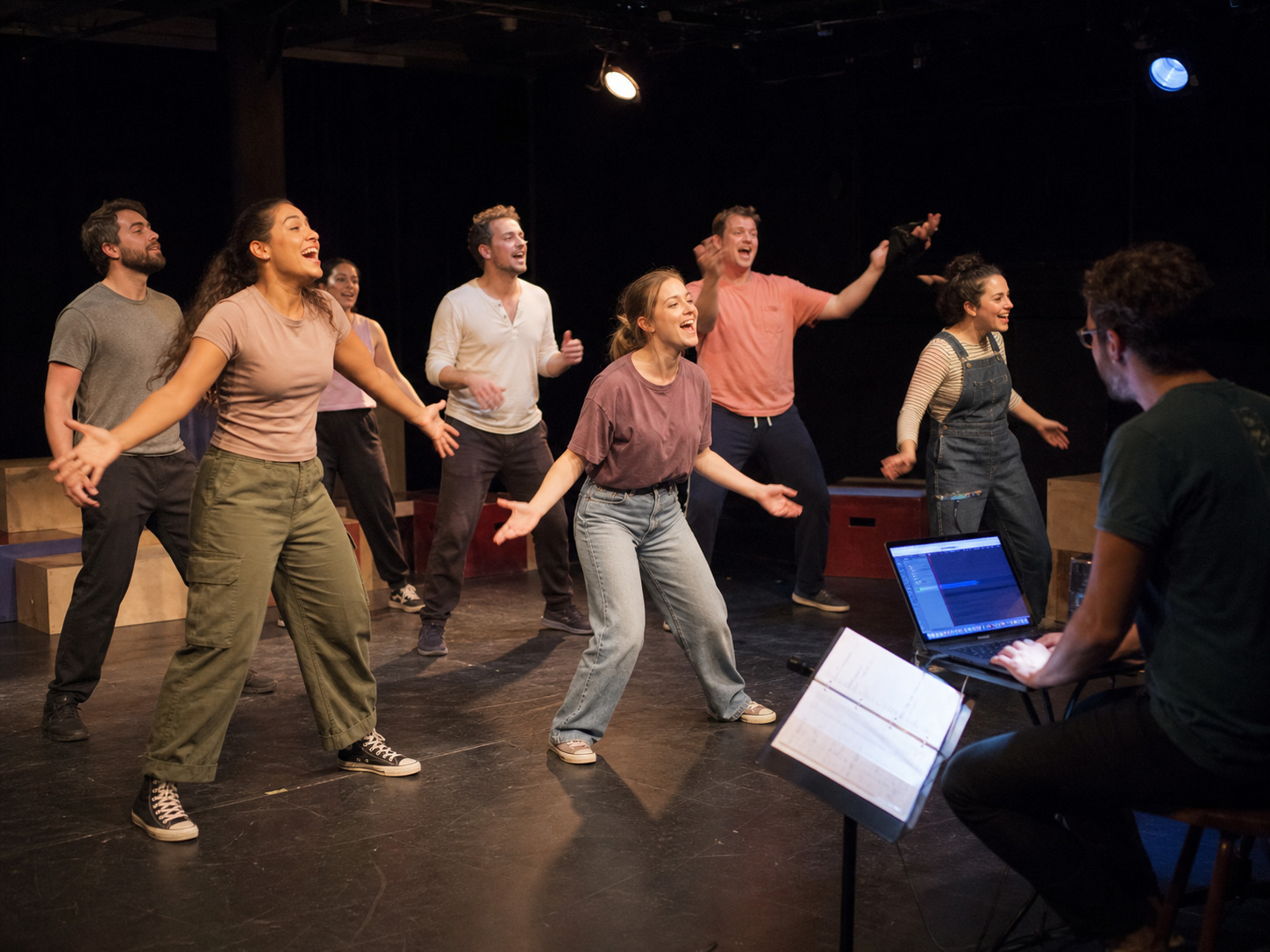
Godspell often asks performers to sing, move, listen, and react at the same time. A pianist can flex with the room in a way a performance track will not. That consistency is useful, but only if the staging is built against the track early enough.
Before choreography is locked, run each number with the same track version you expect to use in performance. Watch for three pressure points:
- Crosses or group moves that land late because the tempo is less flexible than rehearsal piano.
- Solo entrances that need a clearer breath before the first lyric.
- Ensemble cutoffs that look casual on stage but need exact timing in the track.
If a moment consistently fights the track, solve it before tech. Sometimes the fix is staging. Sometimes it is a cleaner cue. Sometimes the cast needs a custom cut, a different key, or an added lead-in so the performance feels intentional instead of rushed.
Plan keys, cuts, and lead-ins before the week you need them
The best time to identify a key or cut issue is not after the first stumble-through. Listen for it during music rehearsals. Godspell has songs that can feel conversational, but the vocal writing still needs to sit well for real singers in a real room.
Ask these questions while there is still time to adjust:
- Does the soloist have a comfortable storytelling key, not just a reachable top note?
- Does the ensemble know whether a number starts from silence, underscoring, or spoken cue?
- Are there dance breaks, vamps, or transition moments that need a cleaner performance cut?
- Is a track being used for rehearsal only, or will the same recording support performances?
- Does the school or theater need a theater-use license for the sound recording in addition to the show's performance rights?
Broadwaytrax can support (custom keys, cuts, tempo adjustments, cue edits, and production packages) when the standard arrangement needs to fit a specific cast or staging plan. The earlier those needs are identified, the easier it is to keep rehearsals moving.
Keep licensing separate from rehearsal convenience
Backing tracks solve the sound-recording side of the production. They do not replace the permission to perform the musical itself. For public performances, schools and theaters still need to confirm the appropriate theatrical rights with the publisher or licensing house.
On the Broadwaytrax album page, the personal-use download and the theater-license option are separate. That distinction helps producers avoid a common mistake: buying a rehearsal track and assuming it covers every performance use. If the tracks will be used in front of an audience, confirm the sound-recording license and the show rights before tickets, programs, or tech schedules are built around the plan.
A simple week-by-week rehearsal track plan
For a school or community theater schedule, this sequence usually works better than waiting until tech:
Week 1: Learn the score with guide vocals, mark track starts, and confirm which numbers need the most timing support.
Week 2: Start cue sheets for every musical number. Add lead-in counts, first entrances, and who calls each cue.
Week 3: Move finished sections to accompaniment-only tracks. Keep guide vocals only where they are still helping the cast learn form.
Week 4: Run choreography with the intended performance tracks. Flag any key, cut, or lead-in issue.
Before tech: Freeze track filenames, cue names, playback device, backup device, and license paperwork. Give the stage manager the exact same language the music team has been using.
Frequently asked questions
Can a cast rehearse Godspell with guide vocal tracks? Yes. Guide vocal tracks are especially helpful while singers are learning entrances, harmonies, and form. Move to accompaniment-only tracks once the cast can carry the number independently.
Do backing tracks replace theatrical rights for Godspell? No. A backing track license covers use of the recording. The right to perform the show is a separate permission that should be confirmed with the appropriate rights holder or licensing house.
Start with the full Godspell album for rehearsal tracks, guide vocal demos, and a theater-license path, then request custom keys or cuts if your cast needs them.
View Godspell AlbumWhen should a production request a custom cut or key? Request it as soon as the standard track consistently fights the singer, staging, transition, or cue flow. Waiting until tech week usually makes the problem more expensive in rehearsal time.
The goal is not to make Godspell rigid. The goal is to give the cast enough musical certainty that the storytelling can stay alive.