Vocal Exercises Musical Theatre Performers Can Use Before Rehearsal
By Broadwaytrax Content Studio · January 13, 2026
Updated May 13, 2026
Musical theatre performers work hard. They sing, dance, and act all at once. This can put a strain on their voices. To keep voices healthy and strong, it's important to warm them up. Here are five great vocal exercises designed for musical theatre.
Why Warm Up? Warm-ups help singers get ready for the stage. They build skills needed for performances. As many shows run for a week or more, these exercises teach students how to sing safely (Playbill). Always begin with gentle exercises to warm up.
- Straw Phonation Sirens (2–3 minutes)
- What it helps: Produces a smooth sound and steady breath.
- Steps: Place a narrow straw in your lips. Hum from low to high. Start soft, grow louder, and then back to soft. Next, blow gently into a cup of water with the straw for 20–30 seconds, making little bubbles.
- Teacher cues: Keep jaws relaxed. Lips should close around the straw. Aim for gentle bubbles.
- Why it works: This method uses back pressure, making it easier to sing (Titze).
- Patter Articulation Sprints (3 minutes)
- What it helps: Clear and fast singing.
- Steps: Say a tongue twister with a metronome at 80–120 beats per minute. Use one pitch on "ee" and then "ah." Add music after that.
- Teacher cues: Tap the tongue lightly. Keep the jaw small. Focus on hitting the front teeth with sound.
- Classroom use: Create stations where each group practices different parts. Rotate every 45 seconds.
- Belt–Mix Bridges (3–4 minutes)
- What it helps: Blend powerful belts with a lighter mix for modern songs.
- Steps: Slide from low to high on "ng," then "geh," and then "yeah." Use a bright "ay" at a loud voice, then soften it. End with descending slides.
- Teacher cues: Aim for a call, not a shout. Keep the ribs open as pitches rise.
- Cardio-Breath Circuits (2–3 minutes per round)
- What it helps: Singing while moving, which is key for dance numbers.
- Steps: Move around for 60 seconds with light choreography, like marching. Then, sing a short piece on just a vowel. Take 30 seconds to recover by using the straw.
- Teacher cues: Breathe easily and don’t hold your breath while moving.
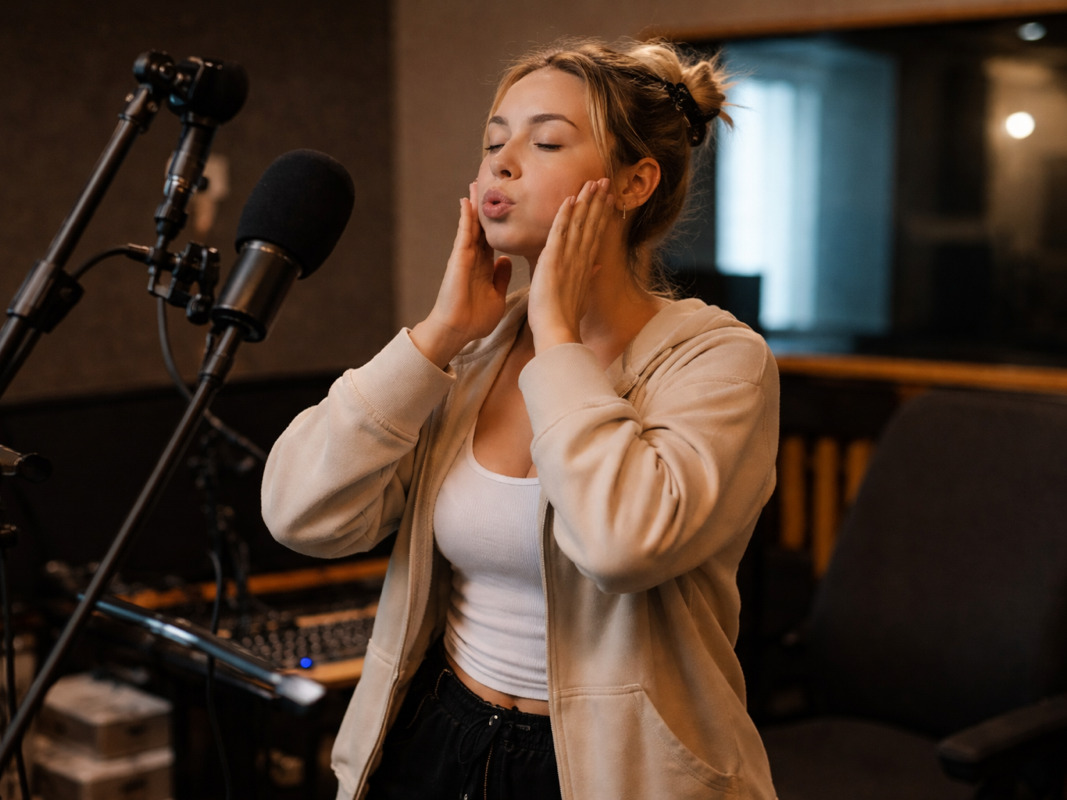
- Flip-Drills: Speech to Legit (3 minutes)
- What it helps: Switch quickly between speaking and singing.
- Steps: Sing short notes on "mum" then on "noo." Alternate between speech and singing within a measure.
- Teacher cues: Keep the throat loose and face active.
10-Minute Class Template
- 2 minutes: Straw sirens.
- 3 minutes: Patter sprints.
- 3-4 minutes: Belt-mix bridges.
- 2 minutes: Cardio-breath circuit.
- Cool down: 30–60 seconds of straw bubbles.
Keep Track of Progress Make it simple. Use a checklist for ease, steady breath, and clear words. Record short clips weekly so students can see their growth. Match tempos for different skill levels.
Care for Voices Winter can dry out voices. Keep hydrated throughout the day and consider using steam if the air is dry. Avoid clearing your throat; instead, try soft sounds or gentle humming (BAPAM).
Prepare your voice with professional musical theater tracks.
Find Backing TracksBring it to the Stage These quick exercises help performers sing their best. They're easy to repeat and essential for rehearsals. Teaching a steady routine will make your students stronger singers in no time. Knowing that these methods are part of research-backed practices will help everyone feel more confident (Titze).
Always keep it simple, set a routine, and do it daily for the best results. Your classroom will turn into an effective singing ensemble.