Engaging Students with Musical Theatre: Innovative Lesson Plans for the New Semester
By Broadwaytrax Content Studio · December 6, 2025
Updated December 17, 2025
Your classroom is about to fill with new energy. Winter 2025-2026 brings fresh faces, short class blocks, and a spring show on the horizon. You want fast wins that also build real skills. This plan gives you both. It focuses on innovation, not just warmups and full-cast run-throughs. It uses language your administrators recognize, so your choices are easy to defend.
A simple frame keeps you on track: Create, Perform, Respond, Connect. These four actions come from the National Core Arts Standards and help you label goals, lessons, and rubrics clearly (National Core Arts Standards). When a student drafts lyrics, they Create. When they sing a 32-bar cut, they Perform. When they discuss choices, they Respond. When they link a scene to a theme in English Language Arts or history, they Connect. Display these words on your slides and trackers. It shows intent and speeds up grading.
Research supports your approach. Schools that boosted arts instruction saw better writing, fewer behavior issues, and increased empathy among students (Brookings). Share this when you request rehearsal blocks, performance days, or quiet rooms for reflection. You are not "stealing time" from academics; you are strengthening them.
Let’s explore five classroom-ready modules you can run over 10-14 periods or mix and match. These are not the same old scene studies. They blend music, theatre, and media skills. They fit into 45 to 90-minute classes and can accommodate any group size.
Ten-Day Micro-Musical Sprint starts your journey. Students create a four to six-minute musical scene from a unit you already teach. On day one, they pitch ideas. Days two and three focus on outlining and drafting lyrics. Days four and five are for melody lines or choosing underscoring. Days six and seven are for staging. On day eight, students work on lighting and props. Day nine is for a quick dress rehearsal. Day ten is sharing the final product. Use a single-point rubric that highlights story clarity, lyric prosody, ensemble listening, staging pictures, and reflection. This module focuses on Creating and Performing. It also honors student choice, allowing them to be writers, composers, performers, stage managers, or designers, fitting Universal Design for Learning (UDL) best practices (CAST UDL Guidelines).
Next, try Data-to-Drama. Each team picks a graph, chart, or dataset from science or social studies. Their task is to turn it into a 16-32 bar patter or list song. They practice scansion, internal rhyme, and text stress. English learners can write bilingual verses. Advanced groups can add modulations. Assess for lyric accuracy to the data, clarity, and rhythm. This connects music skills with interpretation and writing, both shown to improve with arts instruction (Brookings).
Live vs. Camera invites students to explore the world they know. They block and perform the same 32 bars twice: first for the stage, then for a vertical phone lens. They discuss eyelines, framing, and movement. After performing, they reflect on how their approach changed. Did smaller gestures work better on camera? Did their pacing shift? This builds presence, focus, and media literacy while encouraging conversation about posting and privacy.
In the Pit & Tech Lab, demystify the roles of instruments and tech. Set up an "instrument petting zoo" if available. If not, create a “device orchestra” using body percussion, classroom instruments, and phone apps. Teach students about keys and doubling, then help them write a cue sheet. Let them call ten cues for a short scene with lights or sound. Assess accuracy, timing, and rationale behind choices. Students who may not want to sing can excel by arranging or calling cues, broadening access (CAST UDL Guidelines).
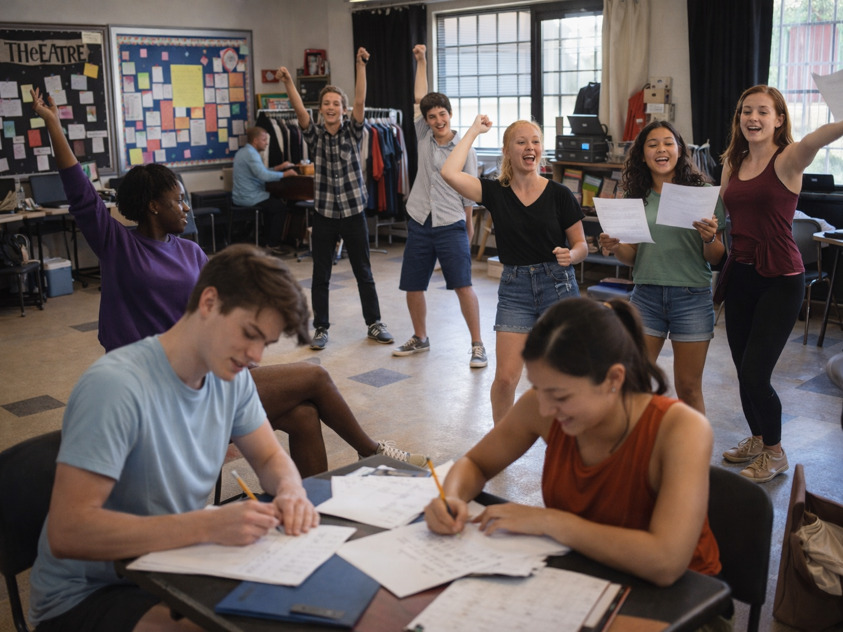
Wrap up with Character Empathy Studio. Before singing, students engage in table work with status games and clear objectives. They build empathy maps for characters, asking what they see, think, feel, and need. Then they perform the song with planned beat changes that reflect shifts in tactics. This makes choices clear and thoughtful while supporting social-emotional learning, a documented benefit of arts instruction (Brookings).
Design each module with UDL principles. Offer multiple ways to engage, present information, and demonstrate learning. Provide scores and lyric slides or color-coded scripts. Allow students to perform, storyboard, arrange, or write notes for directors. Rotate stations if resources are limited. Use body percussion and spoken phrases if you lack a piano. These strategies help mixed-ability groups feel safe and valued (CAST UDL Guidelines).
Remember, assessments should support learning, not hinder it. The single-point rubric aligned with NCAS processes keeps grading clear and manageable. Use an entry ticket before rehearsals where students write a one-line objective or obstacle for the song. Midway through, have them record a short check-in that tags one process, like Perform or Respond. After sharing work, assign a 150-250 word reflection on a choice they made and why. This quick writing ties to research showing gains in literacy and self-management (Brookings). It also gives you helpful quotes for progress notes.
For repertoire this winter, choose songs that allow for flexible and ensemble-driven participation. Opt for numbers that let several students take turns or swap lines. Create 90-120 second cuts to fit your classroom schedule. Teach progressively: start with speaking the text, then rhythmic speaking, singing on a neutral syllable, and finally adding lyrics. If using backing tracks, provide two tempos: a student tempo for learning and a performance tempo for refinement. This simple change lowers barriers to entry and supports pacing for all learners (CAST UDL Guidelines). Frame this as a classroom growth opportunity distinct from audition cuts.
Keep administrators informed with clear documentation. Label each lesson according to NCAS processes: Create, Perform, Respond, or Connect. Save two short video clips per unit with a one-sentence learning target. When you send updates, include one data point (like attendance or on-task time) and one student quote about empathy, teamwork, or confidence. Cite the evidence linking writing, behavior, and empathy benefits to your lesson. This will align your efforts with school goals (Brookings).
Ready to run these modules with clean, classroom-friendly cuts?
Start Your Custom ProjectPlan your next steps now. Outline ten class periods for the micro-musical or empathy studio to build story skills before the busy spring sessions. Schedule a camera day when students’ feeds are full of clips, so you can discuss staging for both live performances and video presentations. Prepare rehearsal ladders and gather simple tools like tape, markers, and straws for voice care.
Your classroom can be a lab, a studio, and a stage. When students engage in making, reflecting, and connecting, they shine. You will see stronger writing, calmer classrooms, and kinder choices. Your spring show will be enriched with deeper craft already in place.