Custom Track Edits Should Happen Before Rehearsal Panic
By Broadwaytrax Content Studio · June 16, 2026
Updated June 16, 2026
Most track emergencies do not start in tech week. They start earlier, when the cast rehearses a version that almost works.
The key is close, but not comfortable. The dance break needs four fewer measures. The intro does not give the singer enough time to cross. The ending is fine for practice, but wrong for the blackout. Everyone keeps saying it can be fixed later, and then later arrives with costumes, microphones, parents, crew, and a room full of people waiting.
Custom track edits are most useful before that pressure builds. They turn the track into a rehearsal tool the whole production can trust.
Start with the exact problem
Do not begin by asking for a "better track." Begin by naming the job the edit needs to do.
A useful request usually fits one of these categories:
- key changes for a specific singer or ensemble,
- cuts that match the script, choreography, or time limit,
- tempo changes for dance, diction, breath, or staging,
- vamps that cover scene movement or dialogue,
- lead-ins that help a singer find the first entrance,
- cue edits for scene changes, bows, underscoring, or blackouts,
- orchestration changes that make the arrangement fit the room.
The clearer the job, the easier it is to build a track that supports rehearsal instead of adding another decision.
Fix the version before the cast memorizes it
Singers learn more than notes. They learn where to breathe, when to move, how long to wait before an entrance, and how the end of one phrase sets up the next cue.
If the production rehearses the wrong version for too long, a later edit can feel like a surprise even when it solves the musical problem. The cast may keep entering early, holding too long, or expecting a vamp that no longer exists.
That is why the first planning question should be simple: is this the version we want people to practice?
If the answer is no, solve the version before distributing files widely.
Decide what must be custom and what can stay standard
Not every track needs custom work. A catalog accompaniment track may be exactly right for auditions, classroom practice, voice lessons, or a straightforward rehearsal.
Custom edits become more important when the track has to support real staging.
Consider a custom version when:
- the singer is straining in the available key,
- a dance section needs a precise number of counts,
- a scene transition needs more or less music,
- the director has approved a cut that the catalog track does not match,
- the production needs a clean button, blackout, or bow sequence,
- the cast needs a rehearsal version and a performance version with different jobs.
The goal is not to customize everything. The goal is to customize the parts that affect confidence, timing, and repeatability.
Build a request note the producer can use
A strong custom request note does not have to be long. It has to be specific.
Include:
- the track title or album,
- the desired key if known,
- where the cut starts and ends,
- whether a tempo should change for the whole song or only a section,
- how long a vamp or lead-in should last,
- what happens onstage during the edit,
- whether the file is for rehearsal, performance, auditions, or all of the above.
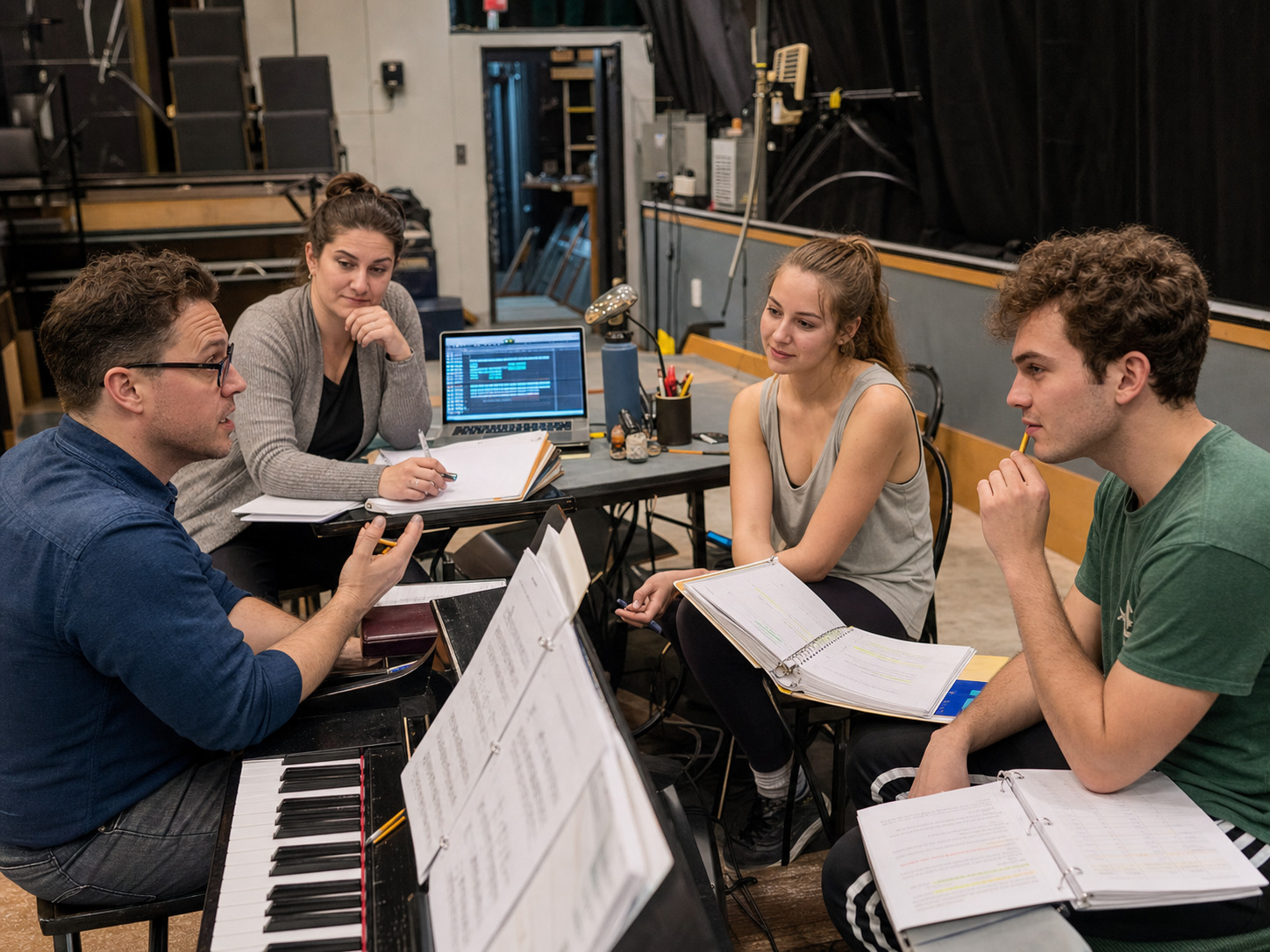
If you have a script page, score marking, rehearsal recording, or timing note, use it as a reference. The producer does not need a dramatic explanation. They need the musical coordinates.
Give every file a job
A clean production plan may use more than one version.
For example, a music director might keep a guide vocal version for early learning, an accompaniment version for regular rehearsal, and a custom performance version with the final key, cut, vamp, and ending. A theater teacher might need one audition cut and one full-song classroom version. A community theater might need a rehearsal file with count-in help and a show file without extra spoken notes.
Name the files so the room knows what each one is for. That prevents the wrong version from showing up at rehearsal, in the sound booth, or in a student's practice folder.
Check edits in the room, not only at the desk
An edit can make sense on paper and still feel different when people move through it.
Before locking the file, run the section with the actual singer, choreography, and cue path whenever possible. Listen for practical issues:
- Does the singer hear the entrance?
- Does the transition cover the movement without dragging?
- Does the cut land musically?
- Does the ending give the stage manager a clear cue?
- Does the sound operator know when to start, stop, or fade?
Small corrections are easier before the full company depends on the file.
FAQ: custom backing track edits for rehearsal
Should we request a key change before or after casting?
Usually after you know the singer, but before the cast starts building habits around the wrong version. If a role is not cast yet, keep notes on likely key needs and confirm quickly once the voice is known.
Is a cut different from a cue edit?
Yes. A cut changes the musical structure by removing or shortening material. A cue edit is about how the track starts, stops, leads in, vamps, or connects to a staging moment.
Can one custom file cover both rehearsal and performance?
Sometimes. If rehearsal needs count-ins, extra lead-ins, or guide support, a separate rehearsal version may be cleaner. If the production only needs a final key or cut, one file may be enough.
What should the sound operator receive?
Give the exact file name, start cue, stop or fade note, and any section that depends on a visual cue. Do not make the operator guess from the track title alone.
The takeaway
Need a key, cut, tempo change, vamp, lead-in, cue edit, or full-show version plan? Start a Broadwaytrax custom project before the rehearsal room learns the wrong track.
Start a Custom Track ProjectA custom edit is not a last-minute rescue plan. It is a way to make the rehearsal room honest earlier.
Fix the key, cut, tempo, lead-in, vamp, or cue before the cast practices the wrong version, and the track becomes something the production can lean on instead of something everyone has to work around.