Custom Key Changes for Musical Theater Backing Tracks
By Broadwaytrax Content Studio · May 8, 2026
Updated May 13, 2026
A backing track can be beautifully produced and still be wrong for the singer in front of you. The melody may sit a half step too high, the money note may arrive after a long phrase, or the original key may sound exciting on a cast recording but unforgiving in a school rehearsal room.
That is where a custom key change becomes practical. The goal is not to make every song easy. The goal is to put the track where the singer can act, phrase, breathe, and repeat the performance consistently.
For auditions, rehearsals, and staged productions, the best key is the one that serves the voice and the story at the same time.
When a key change is worth it
Some songs should stay close to the published or familiar key, especially when the musical context depends on a recognizable orchestration. But many theater situations benefit from a thoughtful transposition.
Consider a custom key change when:
- the singer can hit the notes but cannot sustain the phrase night after night,
- the low notes disappear in the room,
- the song loses character because the singer is managing range instead of acting,
- a student cast needs a safer tessitura,
- an audition cut needs the strongest section to sit in the singer's best range,
- the production is using backing tracks instead of a live music director who can adjust in the moment.
A half step can matter. A full step can change the color of the song. More than that can work, but it needs careful listening so the track still feels theatrical rather than mechanically shifted.
Start with the voice, not the original recording
Cast recordings are useful references, but they are not neutral templates. They reflect a specific singer, arrangement, tempo, microphone, and production style. Your singer may need a different solution.
Before requesting a new key, test the song in three places:
- The opening phrase.
- The highest sustained moment.
- The final eight bars.
Those spots usually reveal whether the key is truly working. If the singer sounds comfortable at the top but weak in the opening, the key may be too low. If the opening feels good but the ending becomes tense, the key may be too high. If the passaggio is exposed in every phrase, a smaller move may be better than a dramatic transposition.
For auditions, also test the cut after the singer has spoken the slate and stood still for a few seconds. For productions, test it after choreography or scene work. Range feels different when the body is doing the show.
Key changes and audition backing tracks
Audition tracks need clarity. The accompanist is not in the room to follow a breath, rescue an entrance, or stretch a button. If the track is too high, the singer may spend the whole audition surviving. If it is too low, the performance can feel underpowered before the panel understands the choice.
A custom audition track should answer practical questions:
- What key lets the singer tell the story?
- Does the first note speak immediately?
- Is the climactic note exciting without sounding forced?
- Does the cut have a clean intro and ending?
- Can the singer rehearse with the exact same file they will use in the room?
Broadwaytrax accompaniment tracks are a strong starting point for audition prep because they give singers a reliable, theater-style arrangement. When the catalog version is close but not quite right, a custom key or cut can make it audition-ready.
Key changes for school and community productions
In a full production, the key is not only about one singer. It affects ensemble blend, choreography, fatigue, cueing, and the emotional arc of a scene.
School musicals often need special care. A role written for an adult professional may be performed by a younger singer whose range is still settling. A community theater cast may include excellent actors with different vocal strengths than the original production. A director may need a cleaner button after a scene change, or a music director may need a lower key so a student can repeat the number through tech week without strain.
If you are using backing tracks, make these decisions early. Changing the key after the cast has learned choreography, harmonies, and entrances can create avoidable stress.
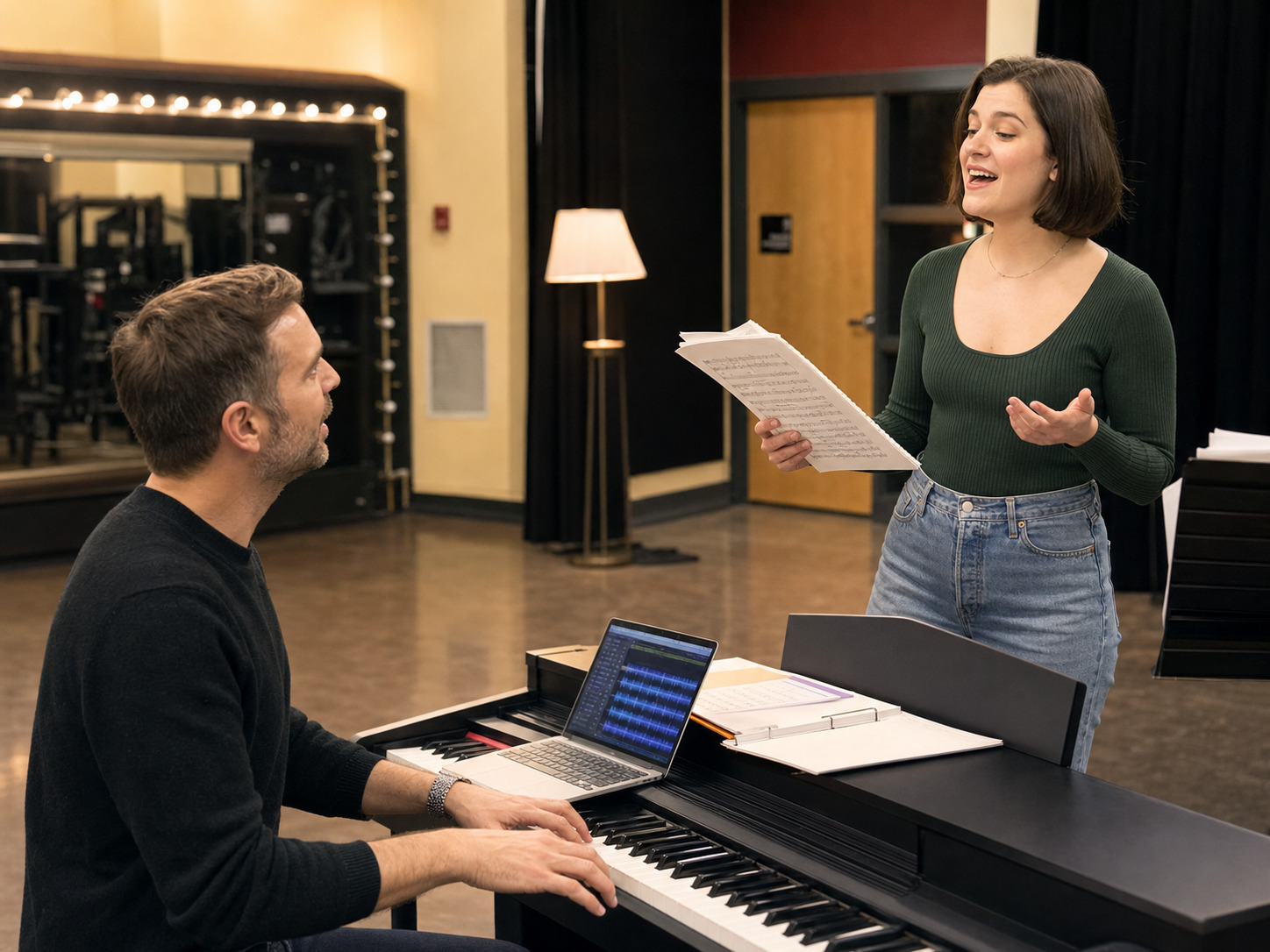
Do not separate key, cut, and tempo
The key is only one part of the track. A transposition may solve the range but expose a different issue.
For example:
- A lowered key may need a brighter tempo so the song does not feel heavy.
- A shortened audition cut may need a new ending.
- A dance break may need a vamp or cleaner count-off.
- A student singer may need a stronger lead-in before the entrance.
- A production track may need a cue that matches staging instead of the album structure.
That is why custom work should be described in production terms, not only musical terms. Instead of asking for "down a whole step," explain who is singing it, where the cut begins, where it ends, what the rehearsal problem is, and whether the track is for audition, classroom, rehearsal, or public performance.
A quick checklist before requesting a new key
Use this before ordering or approving a custom backing track:
- Confirm the current key and the desired key.
- Test the singer in the full phrase, not only on the highest note.
- Mark the exact start and end of any cut.
- Decide whether you need guide vocals for rehearsal.
- Note any tempo, fermata, vamp, or cue concerns.
- Confirm whether the file will be used for audition, rehearsal, or performance.
- Leave enough time to rehearse with the final version.
- Keep licensing questions separate from musical edits.
For performances, remember that a backing track license covers use of the recording. It does not replace the show rights or grand rights needed to stage a copyrighted musical. Handle both sides before opening night.
FAQ: custom key changes for backing tracks
Can Broadwaytrax change the key of a backing track?
Yes. Broadwaytrax custom services can handle key changes, cuts, tempo changes, lead-ins, cueing, and other production-specific track edits when a catalog track needs to fit a singer or staging plan more closely.
How much should I change the key?
Start with the smallest move that solves the vocal problem. A half step or whole step often makes a major difference while preserving the character of the arrangement.
Should I choose the key from the highest note?
No. Check the whole phrase. A key that makes the high note easier may make the low notes disappear, and a key that feels comfortable at the start may become too heavy by the end.
Can I use a custom key for an audition?
Yes. A custom audition track is often useful when the standard key does not show the singer well. Make sure the cut, intro, and ending are also clear.
Is changing the key the same as changing the show license?
No. A track edit changes the recording. The right to perform the show, alter protected materials, or present the musical publicly belongs with the publisher or licensing house.
The takeaway
Need the track in a better key, cut, tempo, or cue structure? Broadwaytrax custom services can shape accompaniment around your singer and production.
Start a Custom Track ProjectThe right key lets the singer stop negotiating with the track and start performing the song. For auditions, that means a cleaner first impression. For rehearsals, it means fewer bad habits. For productions, it means a track that supports the cast instead of fighting them.
Start with the best available Broadwaytrax accompaniment track, then request a custom key, cut, tempo, or cue change when the production needs a more exact fit.