Bring a Better Brief to a Custom Full-Show Track Quote
By Broadwaytrax Content Studio · July 8, 2026
A custom track request gets better when the production team can describe the room.
For a school, community theater, voice studio, or professional production, the first question is not only which songs need tracks. It is what each track has to support: rehearsal, choreography, tech, final performance, an audition cut, a special transition, or a singer who needs a different key.
The more clearly a team can name those needs, the easier it is to scope the right custom package and avoid last-minute revision loops.
Start with the production, not the file list
Before asking for pricing, write a short production brief. It does not need to be polished. It needs to be specific.
Include:
- show title and production context;
- school, community, studio, or professional use case;
- rehearsal and performance dates;
- whether the request is one song, several songs, or a full-show package;
- who will operate playback;
- whether the team needs practice files, performance files, or both;
- any known licensing, staging, or approval constraints already handled by the production.
That brief helps the custom team understand the practical job behind the music request.
Build a track-by-track table
A simple table saves time because it turns a conversation into production notes.
| Track need | Useful details to include |
|---|---|
| Key change | Original key, requested key, singer range concern |
| Cut | Start point, end point, bars or lyric cue if available |
| Tempo change | Current tempo problem and desired rehearsal feel |
| Lead-in | How much time the performer needs before singing or moving |
| Cue | Who gives the cue and what happens on stage |
| Ending | Button, cutoff, vamp, fade, or transition |
| Guide vocal | Whether singers need a learning reference |
| Performance file | Final version expected for tech and shows |
If the team does not know exact bar numbers yet, describe the moment in plain language. A useful note is better than a silent guess.
Separate rehearsal support from performance delivery
A cast may need guide vocals, slower learning versions, or early rehearsal edits before the final files are ready. The performance operator needs a tighter folder: final tracks, clear names, cue notes, and no near-duplicate versions.
Keep those needs separate:
- learning files for singers;
- choreography test files;
- custom edits in progress;
- final performance tracks;
- backup files for the sound operator.
That organization matters most during tech week, when the wrong file can waste rehearsal time or shake confidence in the playback plan.
Name the problem behind each change
Custom work is strongest when the note explains the reason.
Instead of only writing "make this faster," say the choreography loses energy after the dance break. Instead of only writing "shorten it," say the audition cut needs to land before the second verse. Instead of only writing "add an intro," say the actor enters from upstage and needs eight counts before singing.
Those details help turn edits into production support.
Know when a catalog track is enough
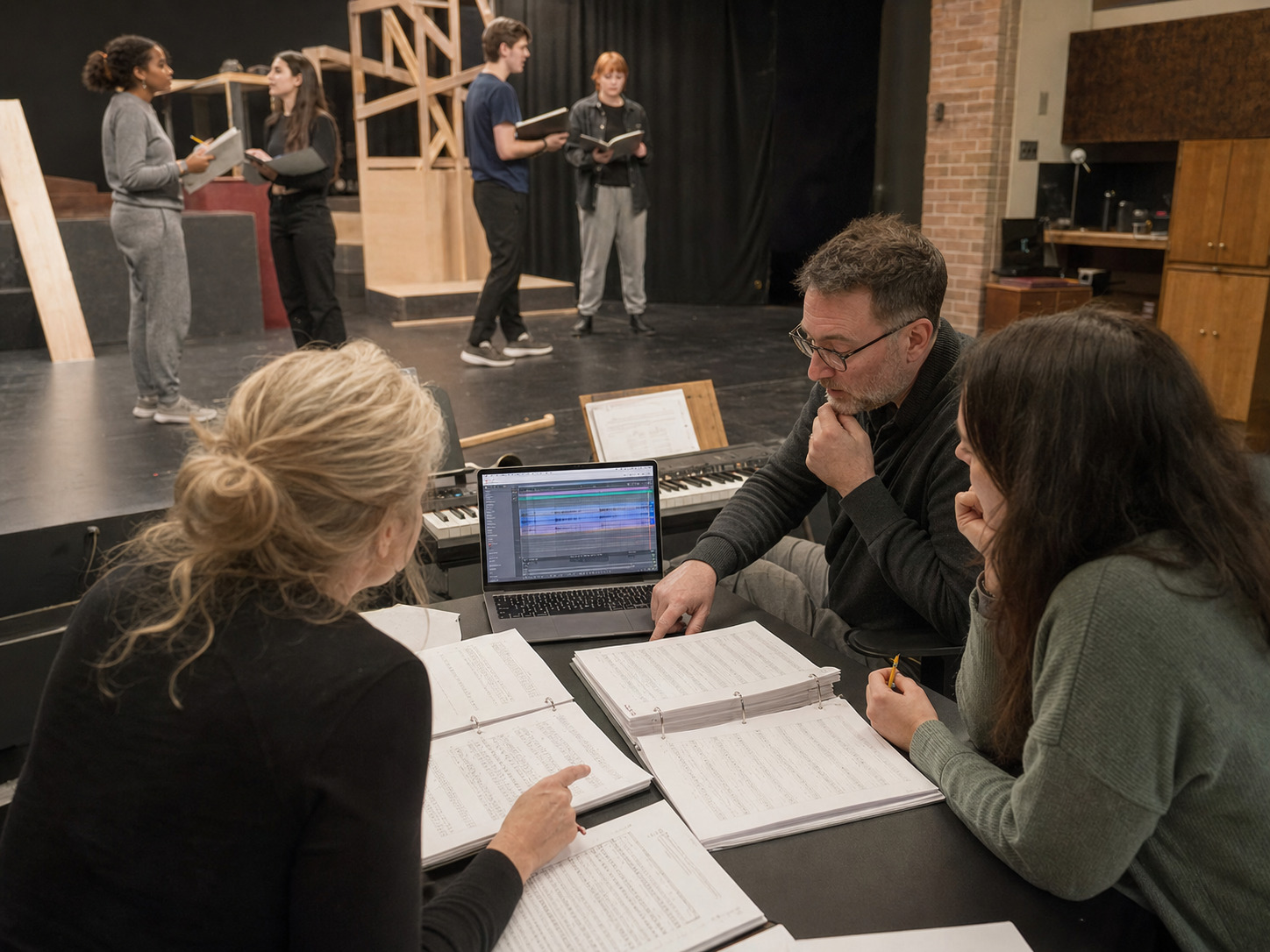
Not every production needs a full custom build. A standard (accompaniment track) is often the right answer when the key, tempo, intro, ending, and arrangement already fit.
Use custom support when the same friction keeps appearing in rehearsal: key, cut, tempo, lead-in, cue, staging, or file organization.
When to ask for a full-show package
A full-show request makes sense when the team needs a coordinated set rather than a pile of unrelated files.
Common signals include:
- many songs need keys or cuts;
- transitions depend on staging;
- the production needs both learning and final files;
- the sound operator needs a clean cue order;
- revisions should be managed across the show instead of one track at a time;
- the team wants one production-ready plan before tech.
That is where (Broadwaytrax custom tracks) can support the production workflow, not only the individual song.
A quote-ready checklist
Before you submit the request, gather:
- show title and production dates;
- song list or expected track list;
- needed keys, cuts, tempos, and cue notes;
- whether guide vocals are needed;
- whether the final files must be performance-ready;
- preferred deadline and any rush concerns;
- one contact who can approve revisions.
If some details are still changing, say that. A clear unknown is easier to manage than a hidden one.
FAQ: custom full-show backing track requests
Do I need exact bar numbers before asking for a quote?
Exact bar numbers help, but they are not always required for the first conversation. Plain-language staging notes, lyric cues, or rehearsal goals can still make the request useful.
Should we request custom work before rehearsals begin?
Earlier is usually better when keys, cuts, tempos, or cue structure affect how the cast learns the show. Waiting until tech can compress decisions that should have been rehearsed.
What is the difference between a single custom edit and a full-show package?
A single edit solves one track. A full-show package organizes multiple tracks around the production's rehearsal and performance needs.
Can custom tracks help if the catalog version is close?
Yes, when the catalog version sounds right but does not quite match the singer, staging, cut, tempo, lead-in, or ending.
Send the track list, keys, cuts, cues, and production dates when your show needs custom support.
Start a Custom Track ProjectThe takeaway
The best custom request does not start with a vague wish for a better track. It starts with a practical production brief: what the room needs, where the current file falls short, and how the final track will be used.