Be Prepared Is a Scene, Not Just a Villain Song
By Broadwaytrax Content Studio · July 24, 2026
Updated July 24, 2026
The quickest way to make “Be Prepared” feel theatrical is to rehearse it as a scene with a musical engine—not as one actor singing while the ensemble waits for its turn.
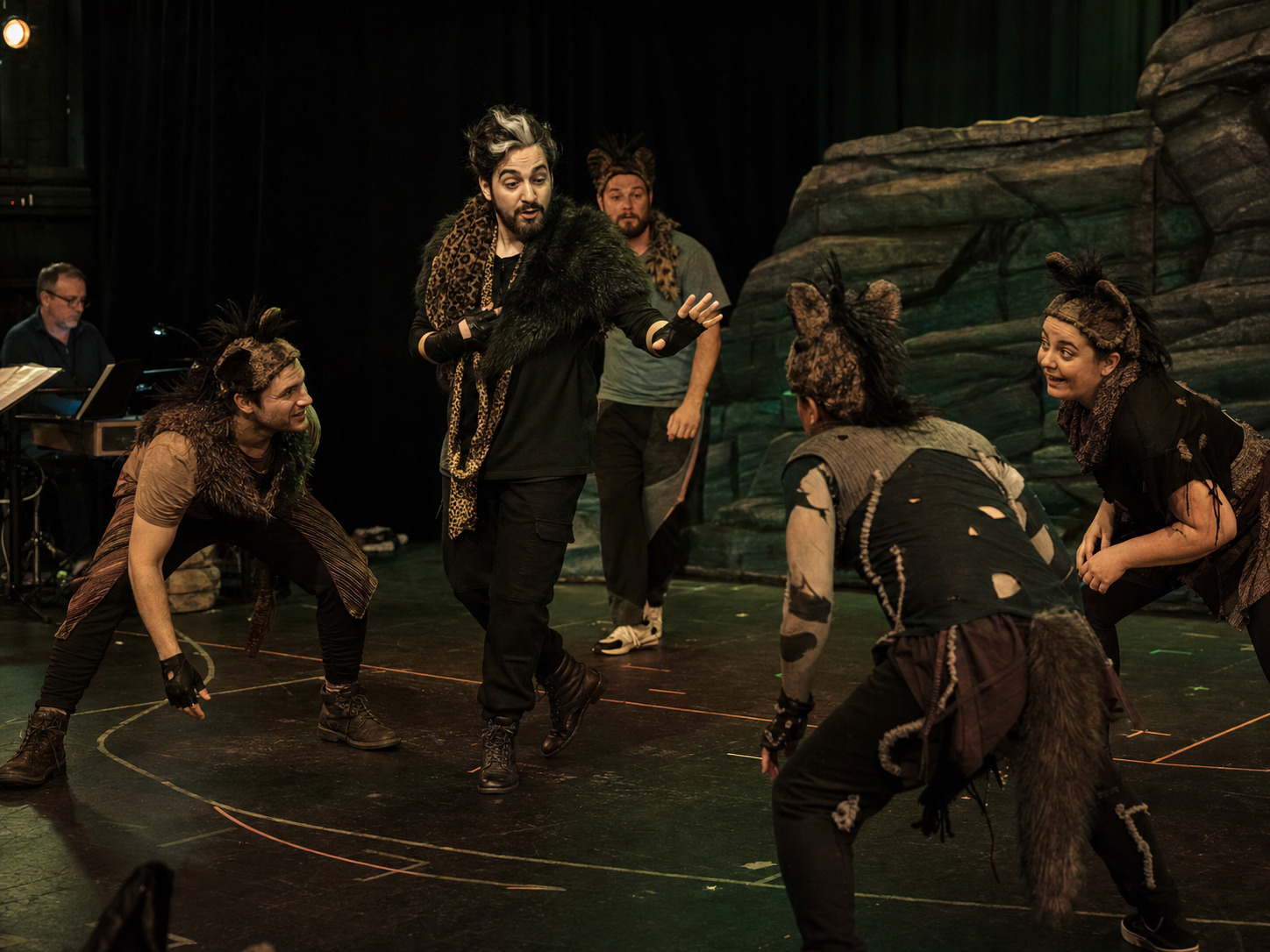
Scar carries the argument, but the hyenas change the scale, rhythm, and danger of the moment. The backing track holds the structure underneath both. A useful rehearsal therefore maps three things at the same time: Scar’s thought, the ensemble’s response, and the exact musical landmark that moves the scene forward.
Bring "Be Prepared Is a Scene, Not Just a Villain Song" to life with custom tracks
Get the exact arrangement you need—either customize an existing accompaniment or commission a bespoke build from our team.
Don't see this show in our library yet? We'll build it for you.Start with the scene’s jobs
Before blocking, give every section a job. Scar may be persuading, testing, or commanding. The hyenas may be listening, interrupting, echoing, gathering, or committing to the plan. Those actions are more useful than asking everyone to “be bigger.”
The (Be Prepared accompaniment track) gives the company a consistent version for that work. Use it to identify:
- the opening musical atmosphere,
- the first vocal entrance,
- the moment the ensemble begins to affect the scene,
- repeated or layered responses,
- instrumental space that needs movement,
- the final build,
- and the exact cutoff.
Write those landmarks in the rehearsal script. “After the low brass figure” or “on the third repeated response” is much faster than scrubbing through the file while everyone waits.
Rehearse Scar’s text before adding volume
The role can invite a performer to push too early. A more useful first pass is spoken or lightly sung text over the accompaniment.
Ask the actor to mark:
- which words introduce a new idea,
- where the thought turns toward the hyenas,
- which phrases can stay conversational,
- where the orchestration creates urgency,
- and where breath must be planned before movement.
This keeps the performance intelligible when the full arrangement arrives. Character does not have to mean constant growling, shouting, or holding one dark vocal color for the entire number. Contrast gives the audience somewhere to follow.
If the published key is not a healthy fit for the performer, address that before the staging becomes fixed. A different key, cut, tempo, or lead-in may require a (custom track request). Confirm any permitted musical or structural change with the show’s licensing representative as well.
Give the hyenas precise entrances
An ensemble response is not background noise. It is a cue with a reason.
For each entrance, name four things:
- Who starts it? One performer, one side of the group, or everyone together?
- What triggers it? A word from Scar, a musical figure, a gesture, or a change in the accompaniment?
- What changes? Focus, spacing, level, rhythm, or allegiance?
- Where does it end? A cutoff, freeze, transition, or handoff to the next idea?
Then run the entrances without full choreography. Let the ensemble step, turn, or change focus on the correct cue. Once the timing is reliable, the choreographer can add more complicated movement without hiding a musical problem inside a staging problem.
Use a five-pass rehearsal
Pass 1: listen and map
Listen once with scripts open. Do not perform at full energy. Mark the form, entrances, instrumental spaces, repeated material, and ending.
Pass 2: Scar alone
Run Scar’s text and melody with minimal movement. Fix breath, diction, and any place where the performer begins chasing the track instead of riding it.
Pass 3: ensemble responses
Add the hyenas only at their named cues. Stop for late entrances, unclear consonants, or an ending that spreads. Keep the correction attached to the landmark: “enter on the next brass hit” is actionable; “come in sooner” is not.
Pass 4: movement and spacing
Layer in staging. Check that travel does not steal breath from Scar or turn the ensemble away from the sound source at a critical entrance. Rehearse the instrumental sections as carefully as the sung material.
Pass 5: full scene with no coaching
Run from the cue before the track starts through the transition after the final cutoff. The director, music director, choreographer, stage manager, and playback operator should all watch the same version.
Build a reset plan
“Be Prepared” can lose rehearsal time if every correction requires restarting from the beginning. Choose a small set of restart points before the room gets busy.
Useful restart points might include:
- Scar’s first entrance,
- the first ensemble response,
- a major instrumental transition,
- the start of the final build,
- and the last shared cutoff.
The person controlling playback should know the file name, the restart landmark, and who is allowed to call the reset. If the rehearsal app or device cannot jump cleanly, create a note with the time position—but keep the musical description too, so the cue still makes sense on another system.
Keep the rehearsal and performance files aligned
The cast should not learn from one version and discover different timing in tech. Keep one read-only master download, label the approved rehearsal copy clearly, and give the booth the same accompaniment version.
A simple file name works:
Be Prepared - ACCOMP - approved show version
Avoid new, latest, or final-final. Those labels become unreliable as soon as a cut or mix changes.
Before tech, give the sound operator:
- the exact file,
- the start cue,
- the volume reference from rehearsal,
- the planned restart points,
- the ending and transition note,
- and a tested backup copy.
The (playback-backup checklist) can help the company rehearse the handoff instead of merely owning a second device.
Treat rights and recordings as separate questions
Purchasing a backing track gives the production access to that recording under its stated terms. It does not grant permission to present The Lion King or alter protected show material. Secure the theatrical performance rights and confirm proposed changes with the publisher or licensing house.
The Broadwaytrax guide to (backing tracks, theater use, and grand rights) explains the distinction in plain language.
Rehearsal checklist
- Name Scar’s objective in each section.
- Mark the ensemble’s first cue and every major response.
- Give instrumental music a staging purpose.
- Fix breath and diction before adding full movement.
- Choose restart points and label them musically.
- Move to the approved accompaniment version early.
- Give the booth the same file used in rehearsal.
- Test the final cutoff, transition, and backup playback.
- Confirm show rights and any permitted changes separately.
FAQ: rehearsing Be Prepared
Should Scar rehearse with the full ensemble from the start?
Not for every pass. Establish the text, breath, and musical landmarks first, then add ensemble responses and movement in layers.
How can the hyena entrances stay together?
Attach each entrance to one visible or audible trigger and name who initiates it. Rehearse that cue with simple movement before adding full choreography.
When should the company move to the accompaniment track?
As soon as melody and entrances are secure enough to expose weak spots. Do not wait until tech to remove a teaching vocal or switch versions.
What if the actor needs a different key or cut?
Discuss the production need early, then confirm both the track work and any show-license restrictions before the cast depends on a changed version.
The takeaway
Rehearse the complete scene with the Be Prepared accompaniment track, then keep the same musical landmarks as Scar and the ensemble add staging, movement, and performance detail.
Explore the Be Prepared Track“Be Prepared” works when Scar, the hyenas, and the orchestration keep changing one another.
Map the scene, rehearse the text before the volume, give the ensemble precise triggers, and keep one approved accompaniment file from staging through performance. The result is clearer, easier to reset, and much more alive than a villain solo with background traffic.